
What is a building performance survey, and do I need one?
A building performance survey looks at how your home actually behaves as a system — heat loss, air leakage, moisture and ventilation together — rather than at any single symptom. It combines measurement (thermal imaging, a blower door test, moisture and humidity monitoring) with building-physics interpretation to find the root cause of cold, damp, mould, draughts or high bills, and to plan work in the right order. You need one when a problem keeps recurring, when several issues coincide, or before committing to a retrofit.
 Reviewed by George Sora, Certified Passive House DesignerUpdated June 2026
Quick answer & key takeaways
6 min read- A building performance survey assesses the home as one heat-air-moisture system.
- It combines measurement with building-physics interpretation to find root causes.
- It is broader than a damp survey or an EPC — it connects the symptoms.
- Most useful for recurring or multiple problems, or before a retrofit.
- Biggest misconception: each problem is separate. They usually share underlying causes.
- Retrofit IQ's approach: diagnose the whole system, then prioritise the fixes.
What this usually means
Most home problems — cold rooms, condensation, mould, draughts, high bills — are connected, because they all arise from how the building handles heat, air and moisture. A building performance survey treats the home as that single interacting system. Instead of looking at one symptom in isolation, it measures the whole: where heat is lost, how airtight the home is, where moisture comes from and how it is ventilated, and how these interact to produce the problems you experience.
It does this by combining methods and interpreting them together: thermal imaging to find missing insulation and thermal bridges, a blower door test to quantify and locate air leakage, moisture and humidity monitoring to characterise damp and condensation risk, and a ventilation review. The point is the synthesis — a cold corner with mould, for example, may combine a thermal bridge, high humidity and weak ventilation, and only seeing all three explains it. The survey turns scattered symptoms into a coherent diagnosis.
This is broader and more useful than a single-issue inspection. A damp survey may look only at damp; an EPC is a standardised rating, not a measurement; a thermal image alone shows cold spots without the moisture and ventilation context. A building performance survey connects them, finds the root causes, and — crucially — sets out the right order of work so measures support rather than undermine each other. You need one when problems recur or coincide, when previous fixes have failed, or before spending on a retrofit you want to get right first time.
Common causes
Interacting heat, air and moisture problems
Cold, damp, mould and draughts usually share underlying causes that only a whole-system view reveals.
Recurring problems after single fixes
Issues that keep returning point to a root cause a broader survey can identify.
Multiple symptoms at once
Several coinciding problems are best diagnosed together rather than one at a time.
Planning a retrofit
Investing in measures warrants a whole-system survey so the work is correct and well-sequenced.
Conflicting advice
When previous opinions disagree, a measured, physics-based survey resolves the cause.
Signs and symptoms
Several problems together
Cold, damp, mould and draughts occurring together suggest shared causes worth surveying as a system.
Problems that keep coming back
Recurring issues despite fixes indicate an unaddressed root cause.
Previous fixes that failed
Treatments that did not work point to misdiagnosis a whole-system survey corrects.
About to invest in a retrofit
Significant planned spend is a strong reason to diagnose the whole home first.
Conflicting advice received
Disagreeing opinions are resolved by measured, building-physics diagnosis.
What most people check first
- Whether you have several problems at once or one recurring issue.
- Whether previous single fixes have failed.
- Whether you are about to commit to retrofit spend.
- Whether you need the causes connected, not just one symptom inspected.
What most people miss
- That cold, damp, mould and draughts usually share underlying causes.
- That single-issue inspections miss the interactions between them.
- That sequencing matters — measures must support each other.
- That a whole-system diagnosis prevents repeated, wasted spend.
The building physics
A dwelling is a coupled system of heat, air and moisture, and its symptoms emerge from their interaction. Heat loss sets surface temperatures; air leakage moves both heat and moisture; moisture generation and ventilation set humidity; and condensation and mould appear where humid air meets cold surfaces. Because these variables are linked, a symptom rarely has a single isolated cause — and treating one variable without the others can shift the problem elsewhere, which is why whole-system assessment is more reliable than single-issue inspection.
A building performance survey measures each part and interprets them together. Thermal imaging maps surface temperatures and locates insulation defects and bridges; a blower door test quantifies and locates air leakage; moisture and humidity monitoring characterise the moisture regime; and a ventilation review establishes whether moisture is being removed. The diagnosis comes from combining these — relating a cold surface to the local humidity and ventilation, or a high bill to the balance of fabric loss and leakage — through building-physics reasoning.
The output is both a root-cause explanation and a sequenced plan. Because measures interact — sealing changes ventilation needs, insulation changes surface temperatures and dew points — the order and detailing matter, and a whole-system survey can specify them so each step supports the next (fabric-first, moisture-safe). This is what makes it the right basis for recurring problems, multiple coinciding issues, or retrofit investment: it diagnoses the cause once and directs spend correctly, rather than treating symptoms in isolation and risking repeated failure.
How a building performance survey helps
Use it to diagnose the home as one system, find the root causes, and get a prioritised, moisture-safe plan — rather than treating symptoms separately.
- 01
Assess the whole system
Measure heat loss, air leakage, moisture and ventilation together, not one symptom alone.
- 02
Connect the symptoms
Interpret the measurements as building physics to find the shared root causes.
- 03
Prioritise the actions
Rank the measures by impact and sequence them so each supports the next.
- 04
Ensure moisture safety
Check that the plan keeps the home dry and well ventilated as it is improved.
- 05
Implement in order
Carry out the measures fabric-first in the recommended sequence.
- 06
Verify the outcome
Re-measure to confirm the problems are resolved and the home performs.
How to prevent it coming back
- Diagnose the whole system before acting on a recurring problem.
- Survey before committing to retrofit spend.
- Sequence measures so they support each other.
- Re-measure to confirm the diagnosis and the result.
How Retrofit IQ investigates this
We assess the home as one system and synthesise the findings into a root-cause diagnosis and prioritised plan.
Do not spend money fixing symptoms before you understand the cause — investigate first, then build with confidence.
Do I need a professional investigation?
A building performance survey is worth it when problems recur or coincide, when previous fixes have failed, or before a retrofit — so the home is diagnosed as one heat-air-moisture system, the root causes are found, and the work is prioritised and sequenced to get it right first time.
Where to go next
Relevant services
Related comparisons
From the Academy
Evidence from Real Projects (21)
Real project and investigation images from our own fieldwork, matched to this page — not stock photography.
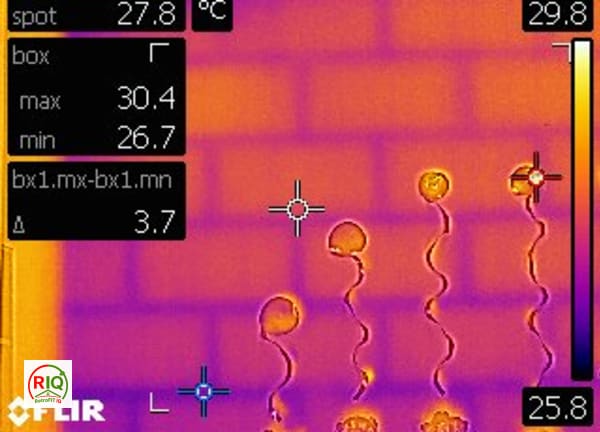
Thermal Bridging Visible Through Masonry Blockwork Wall

Sample Building Performance Investigation Report — Thermal Imaging
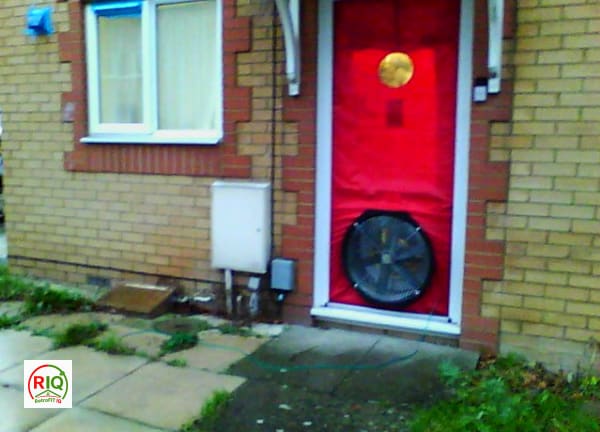
Blower Door Airtightness Test Setup

Thermal Bridge at Internal Corner Wall Junction

Airtightness Testing in a Stratford Victorian Terrace

Thermal Bridge at Wall-Ceiling Junction Near Window
No related investigations yet.
Browse all investigationsFrequently asked questions
What is a building performance survey?+
An assessment of how your home actually behaves as a system — heat loss, air leakage, moisture and ventilation together — combining measurement with building-physics interpretation to find the root cause of problems and plan the right work in the right order.
How is it different from a damp survey or an EPC?+
A damp survey looks at damp alone and an EPC is a standardised rating, not a measurement. A building performance survey connects the symptoms, measures the whole system and finds the shared root causes.
Do I need one?+
It is worth it when problems recur or coincide, when previous fixes have failed, or before committing to a retrofit — so the cause is diagnosed once and spend is directed correctly rather than treating symptoms in isolation.
What does it involve?+
Typically thermal imaging, a blower door test, moisture and humidity monitoring and a ventilation review, interpreted together as building physics to explain the problems and produce a prioritised, moisture-safe plan.
Why diagnose the whole house for one problem?+
Because the problems are connected. A cold corner with mould can combine a thermal bridge, high humidity and weak ventilation; only seeing all three explains it and prevents the fix shifting the problem elsewhere.
Will it tell me what order to do work in?+
Yes — because measures interact, it sets a fabric-first, moisture-safe sequence so each step supports the next, which is essential for a retrofit that works.
How do you carry out the survey?+
We measure heat, air, moisture and ventilation together, interpret them through building physics to find the root causes, and produce a prioritised, sequenced plan, then verify the outcome after work.
Stop guessing — find the real cause
Do not spend money fixing symptoms before you understand the cause. Every home behaves differently, and the only reliable way to know what is happening in yours is professional building performance diagnostics. At RetrofitIQ we verify buildings using the right combination of investigations:
- Thermal imaging
- Blower door testing
- Moisture & dew point readings
- Ventilation review
- Building physics assessment
- Passive House methodology