
How much does a thermal imaging survey cost, and is it worth it?
The cost of a thermal imaging survey varies with the size and complexity of the property, what you need it to answer, and — most importantly — whether it is carried out properly under the right conditions and interpreted by someone who understands building physics. A cheap survey done in the wrong weather, with no temperature difference across the walls and no analysis, can be worthless; a well-conducted, properly interpreted survey can save many times its cost by directing money to the defects that actually matter and away from work that would not have helped. Rather than asking only what it costs, the better question is what makes a thermal survey worth commissioning, and when it pays for itself.
 Reviewed by George Sora, Certified Passive House DesignerUpdated June 2026
Quick answer & key takeaways
8 min read- Cost depends on property size, scope, and whether the survey includes proper analysis.
- Conditions matter: a meaningful survey needs a temperature difference across the fabric.
- An image alone is not a survey — interpretation by a building-physics specialist is the value.
- It pays for itself when it stops you spending on the wrong fix or confirms a defect.
- Biggest misconception: any infrared photo is a survey. Calibrated, analysed results are the point.
- Retrofit IQ's approach: survey under valid conditions and explain what the patterns mean and what to do.
What this usually means
A thermal imaging survey uses an infrared camera to map surface temperatures across a building, revealing where heat is escaping, where insulation is missing or has slumped, where air is leaking, and where cold surfaces risk condensation and mould. The headline price reflects the obvious variables — the size of the property, how many elevations and rooms are covered, whether it is internal, external or both, and travel — but those are only part of what determines value. Two surveys at the same price can be worlds apart in usefulness, because the camera only records surface temperature; the worth lies in capturing valid data and interpreting it correctly.
Conditions are decisive. Thermal imaging relies on a temperature difference between inside and outside — typically the building needs to be warmer than the air outside by a meaningful margin, and the survey is best done when the fabric is not confused by direct sun, recent rain or wind. A survey carried out on a mild day with little temperature difference produces flat, ambiguous images in which real defects are invisible, so a low price for a survey done in poor conditions is no bargain. A competent surveyor controls for these factors, often pre-conditioning the building and timing the visit, so that the patterns recorded genuinely reflect the fabric rather than the weather.
Interpretation is where the value is realised. An infrared image showing a cold patch can mean missing insulation, air leakage, thermal bridging, a cold service void or transient surface wetting — and these have entirely different remedies. A specialist who understands building physics reads the patterns in context, cross-checks against the construction and, where needed, against air-leakage and moisture data, and translates the images into a prioritised set of actions: what is a genuine defect, what it will cost not to fix, and what work would be wasted. This is why the survey is worth it when it prevents a homeowner from spending on, say, new windows that were not the problem, or confirms exactly where insulation has failed so a claim or a repair can be targeted. The diagnostic, not the photograph, is what you are paying for.
Common causes
Property size and scope
Larger homes and wider scope (internal and external, more elevations) take longer and cost more.
Survey conditions
A valid survey needs a temperature difference, so timing and pre-conditioning affect both cost and worth.
Level of analysis included
A reported, interpreted survey costs more than raw images but is the part that delivers value.
Combined diagnostics
Pairing thermal imaging with a blower door test or moisture logging adds cost but resolves ambiguity.
Surveyor expertise
A building-physics specialist interprets patterns correctly, which is where the saving comes from.
Signs and symptoms
Persistent cold spots or mould
Recurring cold patches and mould are exactly what a thermal survey can locate and explain.
High bills with no obvious cause
Unexplained heat loss is a strong case for mapping where the warmth escapes.
Suspected insulation defects
Slumped or missing insulation shows clearly on a properly conducted survey.
About to spend on a major fix
Before new windows, insulation or a heat pump, a survey checks the money is aimed correctly.
A defect to prove for a claim
Documented thermal evidence supports a snagging or workmanship claim.
What most people check first
- Whether the survey will be done under valid temperature-difference conditions.
- Whether interpretation and a report are included, not just images.
- What specific question you need the survey to answer.
- Whether combining it with airtightness or moisture testing would resolve ambiguity.
What most people miss
- That a cheap survey in poor conditions can be worthless.
- That an image is not a diagnosis without expert interpretation.
- That the saving comes from avoiding the wrong fix, not the survey fee.
- That cold patches have several possible causes needing cross-checks.
The building physics
An infrared camera measures the radiation emitted from surfaces and converts it to a temperature map, so its output depends entirely on there being meaningful temperature contrasts to record. In buildings, those contrasts arise when heat flows through the fabric — which requires a temperature difference between inside and outside. With little difference, the surface temperatures converge and genuine defects vanish into noise; with strong solar gain or recent rain, surfaces carry spurious patterns unrelated to the fabric. This is why valid surveys are conditioned and timed, and why a low price attached to a survey done in the wrong conditions buys data that cannot answer the question.
Reading a thermal image correctly requires understanding what produces a given pattern. A cold area on an internal wall might be missing or slumped insulation, a thermal bridge at a junction, cold air leaking in and washing the surface, a cold service void behind the plaster, or transient evaporative cooling from surface moisture. Each has a distinct signature in context — its shape, location, sharpness and how it changes with conditions — and each demands a different remedy. Distinguishing air leakage from missing insulation, for example, often needs the camera used alongside a blower door test, because depressurising the building exaggerates leakage paths and separates them from purely conductive losses.
The economic value therefore comes from the diagnostic chain, not the camera. A specialist interprets the surface-temperature patterns against the known construction, resolves ambiguity with complementary measurements where needed, and converts the findings into a prioritised, costed set of actions — confirming the real defects, ruling out the irrelevant, and preventing expenditure on fixes that would not have improved the home. Measured against the cost of, for instance, replacing windows that were never the cause, or of leaving a hidden insulation failure to keep wasting heat, a properly conducted and interpreted survey routinely returns several times its fee. The investment is justified when it changes a decision; its worth is in the certainty and the avoided waste, not in the infrared picture itself.
How to get a thermal imaging survey that is worth the money
Commission a survey conducted under valid conditions, interpreted by a building-physics specialist, and aimed at a specific question — so it changes a decision rather than just producing images.
- 01
Define the question
Be clear what you need the survey to answer — heat loss, insulation defects, leakage or condensation risk.
- 02
Check the conditions
Ensure the survey is timed for a meaningful temperature difference and free of sun and rain effects.
- 03
Confirm interpretation is included
Make sure a building-physics specialist will analyse and report, not just hand over images.
- 04
Consider combined diagnostics
Pair with a blower door test or moisture logging where the answer would otherwise be ambiguous.
- 05
Get a prioritised action list
Use the report to direct spending to the defects that matter and avoid the ones that do not.
- 06
Use it before you commit
Run the survey before major work or a claim so it informs the decision rather than confirming a mistake.
How to prevent it coming back
- Avoid surveys done in mild conditions with no temperature difference.
- Treat raw images with no analysis as incomplete.
- Combine diagnostics where a single tool cannot resolve the cause.
- Commission the survey before spending on a major fix.
How Retrofit IQ investigates this
We conduct the survey under valid conditions and interpret the results against the building's physics, so you receive a diagnosis and a plan, not just images.
Do not spend money fixing symptoms before you understand the cause — investigate first, then build with confidence.
Do I need a professional investigation?
A thermal imaging survey is worth commissioning when you face an unexplained problem — persistent cold, high bills, recurring mould — or before committing to major work such as insulation, new windows or a heat pump, or to evidence a defect. Conducted under valid conditions and interpreted properly, it directs money to the issues that matter and saves the far larger cost of fixing the wrong thing.
Where to go next
Relevant services
Related comparisons
From the Academy
Related case studies
Related problems you may also have
Evidence from Real Projects (16)
Real project and investigation images from our own fieldwork, matched to this page — not stock photography.
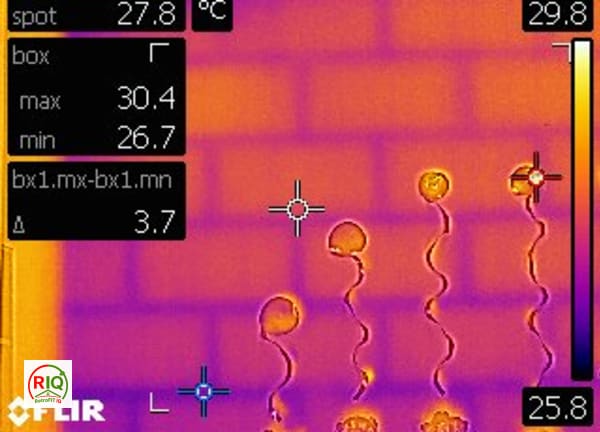
Thermal Bridging Visible Through Masonry Blockwork Wall

Sample Building Performance Investigation Report — Thermal Imaging

Thermal Bridge at Wall-Ceiling Junction Near Window

Thermal Bridge at Internal Corner Wall Junction
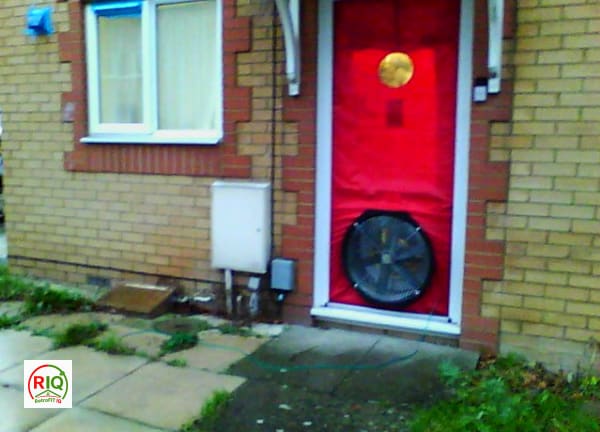
Blower Door Airtightness Test Setup

Airtightness Testing in a Stratford Victorian Terrace
No related investigations yet.
Browse all investigationsFrequently asked questions
How much does a thermal imaging survey cost?+
It depends on the size and complexity of the property, the scope (internal, external or both), and crucially whether proper interpretation and a report are included. The headline price is less important than whether the survey is done under valid conditions and analysed by a building-physics specialist — that is what makes it worth the money.
Is a thermal imaging survey worth it?+
Yes, when it changes a decision — by confirming exactly where a defect is, ruling out fixes that would not help, or evidencing a claim. A well-conducted survey routinely saves several times its fee by stopping you spending on the wrong thing, such as new windows that were not the cause.
Why can a cheap survey be worthless?+
Because thermal imaging needs a meaningful temperature difference across the fabric. A survey done on a mild day, or with sun or rain confusing the surfaces, produces flat or misleading images in which real defects are invisible — so a low price for poor conditions buys data that cannot answer your question.
Is an infrared photo the same as a survey?+
No. An image only records surface temperature; a cold patch can mean missing insulation, air leakage, a thermal bridge, a cold void or surface moisture. The value is the expert interpretation that identifies which it is and what to do about it.
When should I have one done?+
Before committing to major work — insulation, new windows, a heat pump — or to investigate persistent cold, high bills or recurring mould, or to prove a defect for a claim. Running it first ensures the money goes to the real problem.
Should I combine it with other tests?+
Often, yes. Pairing thermal imaging with a blower door test separates air leakage from conductive loss, and moisture logging confirms condensation risk. Combining diagnostics resolves ambiguity that a single tool cannot, which is why we recommend it where the cause is unclear.
Stop guessing — find the real cause
Do not spend money fixing symptoms before you understand the cause. Every home behaves differently, and the only reliable way to know what is happening in yours is professional building performance diagnostics. At RetrofitIQ we verify buildings using the right combination of investigations:
- Thermal imaging
- Blower door testing
- Moisture & dew point readings
- Ventilation review
- Building physics assessment
- Passive House methodology