
Do I need a retrofit survey before I start?
A retrofit survey measures how your home performs and plans the measures in the right, moisture-safe order before any work begins — and it is one of the best investments you can make, because the most expensive retrofit mistakes come from acting without one. Insulating, sealing or replacing windows out of sequence or without regard to moisture can leave a home damper, no warmer, or with new mould. A survey turns retrofit into an evidence-based, sequenced plan rather than a series of hopeful, disconnected measures.
 Reviewed by George Sora, Certified Passive House DesignerUpdated June 2026
Quick answer & key takeaways
7 min read- A retrofit survey measures the home and plans measures before any spend.
- The costliest retrofit mistakes come from acting without diagnosis or sequencing.
- It ensures measures are fabric-first, moisture-safe and in the right order.
- It prevents new damp, mould or disappointing results from piecemeal work.
- Biggest misconception: you can just add measures as budget allows. Order and interaction matter.
- Retrofit IQ's approach: survey, model and sequence the whole-house retrofit.
What this usually means
Retrofit is not a list of independent upgrades; it is a series of changes to a single interacting system, and the order and detailing decide whether they work. A retrofit survey establishes the starting point — where the home loses heat, how airtight it is, how moisture moves and how it is ventilated — and uses that to plan which measures to do, in what order, with what detailing, to reach the desired comfort and efficiency safely. It is the design stage that makes the build stage succeed.
Without it, the common failures follow predictably. A measure is chosen because it is visible or affordable rather than because it tackles the biggest loss; sealing is done without adding ventilation, so moisture is trapped; walls are insulated without treating junctions, so condensation concentrates on the bridges; windows are replaced while the walls still dominate the loss. Each is an avoidable mistake that a survey would have caught by measuring first and sequencing the work fabric-first and moisture-safe.
So the answer to 'do I need a retrofit survey?' is almost always yes, especially for anything beyond a single simple measure. It is the cheapest part of the project and the part that protects all the rest, ensuring the money targets the right losses in the right order and that the home ends up warmer, drier and healthier rather than suffering the unintended consequences that give retrofit a bad name. For phased work, it also provides a roadmap so each stage builds on the last instead of stranding it.
Common causes
Acting without diagnosis
Choosing measures by assumption rather than measured need sends money to the wrong place.
Wrong sequence
Doing measures out of a fabric-first order can strand later work and miss the biggest losses.
Ignoring moisture and ventilation
Insulating or sealing without moisture and ventilation planning causes condensation and mould.
Untreated junctions
Insulating without addressing thermal bridges concentrates condensation on the cold spots left.
Piecemeal, disconnected work
Independent measures that ignore the system interactions undermine each other.
Signs and symptoms
Planning insulation, sealing or windows
Any significant fabric work is a reason to survey and sequence first.
A phased retrofit budget
Staged work needs a roadmap so each phase builds on the last.
Past measures that disappointed
Previous work that did not deliver points to missing diagnosis and sequencing.
Concern about damp or mould risk
Worry that insulating could cause damp is exactly what a survey addresses.
Significant spend at stake
Large planned investment warrants the evidence and plan a survey provides.
What most people check first
- Whether the planned work is more than a single simple measure.
- Whether the retrofit will be phased and needs a roadmap.
- Whether moisture and ventilation have been considered.
- Whether the measures have been chosen by measurement or by assumption.
What most people miss
- That retrofit measures interact, so order and detailing decide the outcome.
- That the costliest mistakes come from acting without a survey.
- That a survey is the cheapest part and protects all the rest.
- That moisture safety must be designed in, not hoped for.
The building physics
Retrofit alters a coupled heat-air-moisture system, so each measure changes the conditions for the others. Reducing heat loss changes surface temperatures and dew points; tightening the envelope changes ventilation requirements; insulating changes where moisture can accumulate. A survey captures the starting state by measurement — heat loss, airtightness, moisture, ventilation — and models the end state, so the interactions are anticipated and the measures chosen and ordered to reach the target without unintended consequences.
Sequencing follows from these interactions. The fabric-first logic — reduce heat loss and air leakage, then size ventilation and heating to the improved fabric — works because each step changes the requirements of the next; out of order, the pieces do not fit, and work can be stranded or made to fail. Moisture safety is designed in by checking dew points and ventilation for each measure, so insulation and sealing dry the home rather than trapping moisture. These are design decisions a survey makes explicit before any spend.
The economics strongly favour surveying first. The assessment is a small fraction of the retrofit cost, while the mistakes it prevents — trapped moisture, untreated bridges, measures targeting minor losses, stranded work — are expensive to remedy and can damage the building. A survey therefore protects the whole investment, turning retrofit from a hopeful sequence of upgrades into an evidence-based, sequenced, moisture-safe programme, with a roadmap for phased work. This is precisely the investigation-first principle that distinguishes retrofit done well from retrofit that backfires.
How a retrofit survey sets you up to succeed
Survey and model the home first, then plan fabric-first, moisture-safe measures in the right order — so the spend works and nothing backfires.
- 01
Measure the starting point
Assess heat loss, airtightness, moisture and ventilation to establish how the home performs now.
- 02
Model the target
Define the comfort and efficiency goal and model the measures needed to reach it.
- 03
Sequence the measures
Plan the work fabric-first so each step supports the next and the biggest losses come first.
- 04
Design for moisture safety
Check dew points and ventilation so insulation and sealing keep the home dry.
- 05
Provide a roadmap for phasing
Set out the stages so phased work builds on, rather than strands, earlier measures.
- 06
Verify as you go
Re-measure at stages to confirm the retrofit is performing as planned.
How to prevent it coming back
- Survey before committing to any significant retrofit measure.
- Plan measures fabric-first and in the right order.
- Design moisture safety and ventilation into the plan.
- Use the survey as a roadmap for phased work.
How Retrofit IQ investigates this
We survey and model the whole home so the retrofit is evidence-based, sequenced and moisture-safe before you spend.
Do not spend money fixing symptoms before you understand the cause — investigate first, then build with confidence.
Do I need a professional investigation?
Before starting a retrofit — anything beyond a single simple measure — it is worth surveying and sequencing the work, because the survey is the cheapest part of the project and the part that prevents the expensive mistakes of trapped moisture, untreated bridges and misdirected, stranded measures.
Where to go next
Relevant services
Related comparisons
From the Academy
Related problems you may also have
Evidence from Real Projects (20)
Real project and investigation images from our own fieldwork, matched to this page — not stock photography.
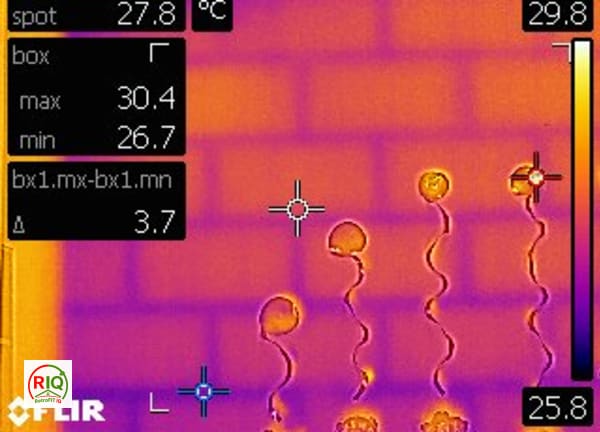
Thermal Bridging Visible Through Masonry Blockwork Wall

Sample Building Performance Investigation Report — Thermal Imaging
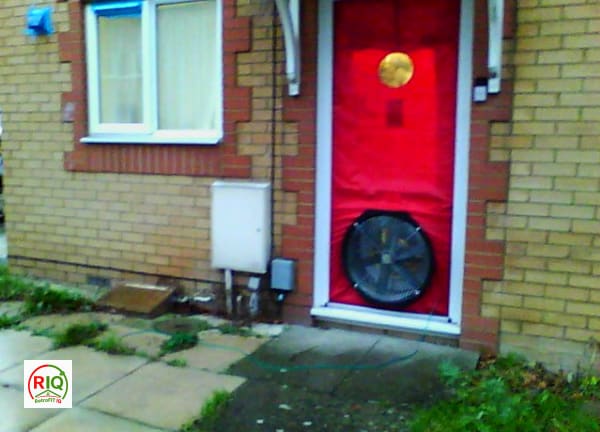
Blower Door Airtightness Test Setup

Thermal Bridge at Internal Corner Wall Junction

Thermal Bridge at Wall-Ceiling Junction Near Window

Acoustic Floor Upgrades: Mineral Wool Insulation Between Joists
No related investigations yet.
Browse all investigationsFrequently asked questions
Do I need a retrofit survey before I start?+
For anything beyond a single simple measure, almost always yes. A retrofit survey measures your home and plans the measures in the right, moisture-safe order, preventing the expensive mistakes — trapped moisture, untreated bridges, misdirected spend — that come from acting without one.
Why can't I just add measures as budget allows?+
Because retrofit measures interact: sealing changes ventilation needs, insulation changes dew points. Out of order or without moisture planning, measures can be stranded or cause damp. A survey sequences them so each supports the next.
What does a retrofit survey include?+
Typically a heat-loss calculation, a blower door test, thermal imaging and a moisture and ventilation review, interpreted as building physics to produce a fabric-first, moisture-safe, sequenced plan — and a roadmap for phased work.
Is a retrofit survey worth the cost?+
Yes — it is a small fraction of the project cost and protects the whole investment by ensuring the money targets the right losses in the right order and the home ends up warmer, drier and healthier.
Can a retrofit cause damp or mould?+
It can, if done without moisture planning — sealing without ventilation, or insulating without treating thermal bridges. A survey designs moisture safety in, which is one of its main purposes.
I'm doing the work in phases — do I still need one?+
Especially then. A survey provides a roadmap so each phase builds on the last rather than stranding it, which is hard to achieve without an overall plan.
How do you carry out a retrofit survey?+
We measure the home's heat loss, airtightness, moisture and ventilation, model the target, and produce a sequenced, moisture-safe retrofit roadmap, verifying performance as the work proceeds.
Stop guessing — find the real cause
Do not spend money fixing symptoms before you understand the cause. Every home behaves differently, and the only reliable way to know what is happening in yours is professional building performance diagnostics. At RetrofitIQ we verify buildings using the right combination of investigations:
- Thermal imaging
- Blower door testing
- Moisture & dew point readings
- Ventilation review
- Building physics assessment
- Passive House methodology