
Why did my retrofit make things worse?
It is a dispiriting and surprisingly common story: money is spent on insulation, new windows or draught-proofing, and the home ends up damper, stuffier or no warmer than before. The work was not necessarily done badly — but it was almost always done without first measuring how the building actually behaves. A retrofit that ignores moisture, airflow and the order of operations does not just underperform; it can move problems around and create new ones.
 Reviewed by George Sora, Certified Passive House DesignerUpdated June 2026
Quick answer & key takeaways
7 min read- Retrofits backfire when single measures are added without understanding the whole building.
- Insulation, sealing and ventilation are interdependent — change one and you change the others.
- Moisture that used to escape through draughts and cold bridges has to go somewhere after a retrofit.
- Most failures trace back to no diagnosis, no sequencing and no ventilation strategy.
- Biggest misconception: any energy-saving measure must help. Out of sequence, it can do harm.
- Retrofit IQ's approach: measure heat loss, air leakage and moisture first, then plan measures in the right order.
What this usually means
A home is a single interacting system of heat, air and moisture. Before a retrofit, that system is in a rough balance: heat leaks out through the fabric, air leaks in and out through countless gaps, and the moisture people generate is carried away on that uncontrolled airflow or escapes through cold, leaky junctions. When a retrofit changes part of the fabric — adds insulation here, seals draughts there — it disturbs the whole balance, and if the consequences were not anticipated, the new balance can be worse than the old one.
The classic pattern is moisture redistribution. Draughty old homes are accidentally ventilated, so humidity stays moderate and condensation is spread thinly. Tighten the envelope without adding deliberate ventilation and that same moisture now has nowhere to go: humidity rises, and it condenses on whatever cold surface remains — a reveal, a corner, a spot the insulation missed. The occupant experiences this as new damp or mould appearing after improvement work, which feels like a defect in the work but is really a predictable physics outcome.
The second pattern is disappointment rather than damage: a measure that simply does not deliver because it was not the dominant problem. New windows fitted to a home losing most of its heat through uninsulated walls; loft insulation topped up while air leaks straight past it; a bigger boiler bought for a home that cannot hold heat. In each case the money was real but the diagnosis was missing, so it was spent on a smaller loss while the larger one remained.
Common causes
No diagnosis before work
Measures chosen by assumption or by what a contractor sells, rather than by measuring where heat, air and moisture actually move.
Sealing without ventilation
Tightening the envelope removes accidental ventilation, so moisture builds up and condenses unless deliberate ventilation replaces it.
Single measures, wrong order
Doing the easy or visible measure first, out of a fabric-first sequence, leaves the dominant loss untouched and can strand later work.
Ignored thermal bridges
Insulating the main wall but not junctions and reveals concentrates condensation on the remaining cold spots.
Vapour and material mistakes
Insulation built up without considering vapour movement can trap moisture inside the construction.
Signs and symptoms
New damp or mould after the work
Damp appearing where there was none is the signature of moisture redistributed by a tighter, warmer envelope without ventilation.
The house feels stuffier
A stale, close feeling after sealing or new windows shows ventilation was reduced and not replaced.
Still cold despite the spend
Rooms no warmer after a measure suggest the dominant heat loss was elsewhere and went untreated.
Condensation moved, not gone
Glass clear but walls or reveals now wet means the moisture was relocated rather than removed.
Higher bills than hoped
Savings that never materialise point to a measure that addressed a minor loss while major ones remained.
What most people check first
- Whether any measurement of heat loss, air leakage or moisture was done before the work.
- Whether ventilation was added or considered when the envelope was tightened.
- Whether the measure tackled the home's biggest loss or just the easiest one.
- Whether new damp tracks the timing of the retrofit rather than the weather alone.
What most people miss
- That heat, air and moisture are one system — changing one part changes the others.
- That removing accidental ventilation without replacing it concentrates moisture.
- That the order of measures decides whether each one delivers.
- That a quick diagnosis beforehand prevents far more expensive corrections later.
The building physics
Every dwelling sits at a balance point set by its fabric, its air leakage and the moisture its occupants produce. Heat loss is the sum of conduction through each element and the energy carried out by leaking air; moisture balance is the rate it is generated against the rate ventilation removes it. A retrofit alters the inputs to this balance, and because the variables are coupled, an intervention aimed at one — say cutting conductive loss with insulation — inevitably shifts the others, changing surface temperatures, airflow patterns and where moisture accumulates.
This coupling is why sequencing matters. The fabric-first logic — reduce heat loss and air leakage, then size ventilation and heating to the improved fabric — works because each step changes the requirements of the next. Reverse or fragment that order and the pieces no longer fit: a heating system sized for a leaky house, ventilation designed for the old air-change rate, or insulation that strands a later airtightness layer. Measuring the starting point and modelling the end point keeps the steps coherent.
Moisture is the unforgiving part of the system because its failures are slow and damaging. Warm air holds more water vapour, and when it meets a surface below its dew point it condenses; tighten a building and raise its internal humidity without ventilation, and the dew point rises until ordinary cold spots begin to condense and grow mould. The same applies inside constructions, where vapour can accumulate if the build-up is not designed to let it dry. A building-physics assessment predicts these risks before the work, which is the only reliable way to avoid them.
How to put a backfired retrofit right
Diagnose the home as a system, find what the previous work disturbed, and correct the balance of insulation, sealing and ventilation in the right order.
- 01
Measure the whole building
Use thermal imaging, a blower door test and moisture monitoring to see how heat, air and moisture now move after the work.
- 02
Identify what was disturbed
Establish whether ventilation was lost, moisture relocated, or the dominant loss left untreated by the previous measures.
- 03
Restore a ventilation strategy
Add controlled ventilation — trickle vents, continuous extract or MVHR — to remove the moisture the tighter envelope now traps.
- 04
Treat the remaining cold spots
Insulate the thermal bridges, reveals and junctions where condensation has concentrated since the retrofit.
- 05
Resequence outstanding work
Plan any further measures fabric-first so each one builds on, rather than fights, the last.
- 06
Verify the new balance
Re-measure humidity, airtightness and surface temperatures to confirm the home is warmer, drier and healthier.
How to prevent it coming back
- Commission a diagnosis before committing to any major measure.
- Treat ventilation as part of every airtightness or window upgrade.
- Follow a fabric-first sequence rather than doing the easiest measure first.
- Model moisture and thermal-bridge risk before insulating.
How Retrofit IQ investigates this
We assess the home as one heat-air-moisture system to find what the previous work disturbed and how to correct it.
Do not spend money fixing symptoms before you understand the cause — investigate first, then build with confidence.
Do I need a professional investigation?
If a home is damper, stuffier or no warmer after insulation, windows or sealing, it is worth measuring how heat, air and moisture now move — so the real cause is corrected and any further spend is sequenced correctly rather than adding to the problem.
Where to go next
Relevant services
Related comparisons
From the Academy
Related problems you may also have
Evidence from Real Projects (20)
Real project and investigation images from our own fieldwork, matched to this page — not stock photography.
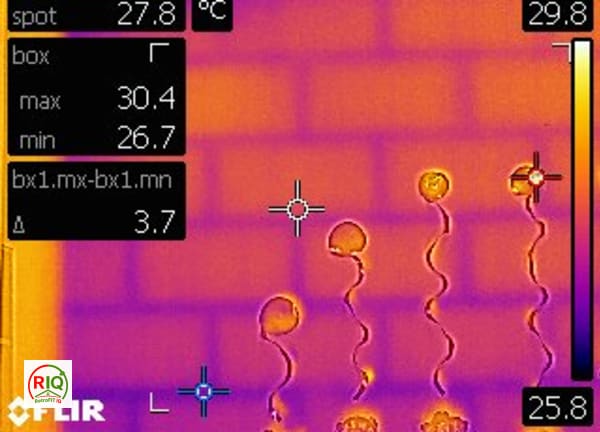
Thermal Bridging Visible Through Masonry Blockwork Wall

Sample Building Performance Investigation Report — Thermal Imaging
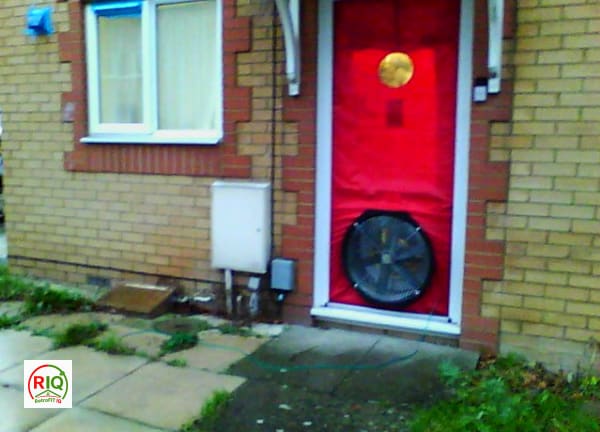
Blower Door Airtightness Test Setup

Thermal Bridge at Internal Corner Wall Junction

Airtightness Testing in a Stratford Victorian Terrace

Thermal Bridge at Wall-Ceiling Junction Near Window
No related investigations yet.
Browse all investigationsFrequently asked questions
Why did my retrofit make things worse?+
Usually because the work was done without diagnosis or a ventilation strategy. Tightening or insulating a home changes how heat, air and moisture move, and if that is not anticipated, moisture can be trapped or relocated and damp or stuffiness can appear.
Can adding insulation cause damp?+
Yes, if it raises internal humidity by reducing ventilation, or if it leaves cold thermal bridges where condensation then concentrates, or if the build-up traps vapour. Insulation has to be designed with moisture in mind.
Why is my house stuffy after improvements?+
Sealing draughts and fitting airtight windows removes the accidental ventilation the home relied on. Without deliberate ventilation to replace it, the air goes stale and humidity rises.
Why am I no warmer after spending on a measure?+
Because it probably was not the dominant loss. If most heat escapes through the walls and you replace the windows, the room stays cold. Measuring first shows where the biggest losses are.
Is this the contractor's fault?+
Not necessarily. The installation may be sound; the problem is usually that no one assessed the building as a system or planned ventilation and sequencing. That is a design and diagnosis gap, not always a workmanship one.
Can a backfired retrofit be put right?+
Yes. Measuring how the home now behaves shows what was disturbed — usually lost ventilation or untreated cold spots — and those can be corrected so the home becomes warmer and drier.
How do I avoid this on future work?+
Diagnose before you buy, treat ventilation as part of any sealing or window work, follow a fabric-first sequence, and model moisture and thermal-bridge risk before insulating.
Stop guessing — find the real cause
Do not spend money fixing symptoms before you understand the cause. Every home behaves differently, and the only reliable way to know what is happening in yours is professional building performance diagnostics. At RetrofitIQ we verify buildings using the right combination of investigations:
- Thermal imaging
- Blower door testing
- Moisture & dew point readings
- Ventilation review
- Building physics assessment
- Passive House methodology