
Did making my house airtight cause condensation?
Sealing draughts and fitting airtight windows is sound building physics — but only when ventilation is provided to match. Airtightness without a ventilation strategy is one of the most common retrofit mistakes: the home stops losing heat through leaks, but it also stops losing the moisture it produces, so humidity rises and condensation and mould appear. Airtightness and ventilation are two halves of the same measure, and doing one without the other causes the very problems it was meant to prevent.
 Reviewed by George Sora, Certified Passive House DesignerUpdated June 2026
Quick answer & key takeaways
6 min read- Airtightness saves energy, but only works healthily when paired with ventilation.
- Draughts were accidentally ventilating the home and removing moisture.
- Seal the leaks without adding ventilation and humidity rises, causing condensation and mould.
- The principle is 'build tight, ventilate right' — the two go together.
- Biggest misconception: a sealed home is a healthy home. Without ventilation it traps moisture.
- Retrofit IQ's approach: measure airtightness and design ventilation as one combined step.
What this usually means
Older homes leak air through hundreds of small gaps, and that uncontrolled leakage does two jobs at once: it wastes heat, and it accidentally ventilates the home, carrying away the water vapour from cooking, washing, drying and breathing. When a retrofit seals those gaps to save the heat, it also removes the accidental ventilation — and unless deliberate ventilation is put in its place, the moisture that used to leave now stays indoors. Humidity climbs, the dew point rises, and condensation begins to form on cold surfaces that were previously fine.
This is why a home can feel stuffy and start growing mould shortly after draught-proofing, new windows or general sealing, even though every individual measure was sensible. The occupant has done the right thing for energy but only half of the measure: tightened the envelope without controlling the air change. The symptoms — misted windows, damp corners, a close stale feeling, mould behind furniture — are all signs of moisture that the home can no longer shed.
The correct approach treats airtightness and ventilation as a single design decision: seal the uncontrolled leaks so you choose where air comes in and out, then provide controlled ventilation — trickle vents and extract, continuous mechanical extract, or mechanical ventilation with heat recovery — sized to remove the moisture and supply fresh air. Done this way, the home is both efficient and healthy: it keeps its heat and loses its moisture, which is exactly what uncontrolled draughts could never do well.
Common causes
Sealing without ventilation
Draught-proofing and sealing remove accidental ventilation; without a replacement, moisture is trapped indoors.
Airtight windows, no trickle vents
New sealed windows fitted without trickle vents leave a room with no background air change.
Extract fans missing or unused
Without working extract in kitchens and bathrooms, the wettest rooms cannot clear their moisture.
High moisture generation
Indoor drying, cooking and bathing add a lot of vapour that a sealed home cannot disperse.
No whole-home strategy
Piecemeal sealing with no plan for air change means humidity is never deliberately managed.
Signs and symptoms
Stuffy, stale air after sealing
A close, stale feeling indicates the air-change rate has dropped too far.
Condensation that started after the work
Misted windows and damp corners appearing after sealing point to trapped moisture.
Mould behind furniture and in corners
Mould on still, cold surfaces shows humidity is now high enough to condense there.
Lingering cooking and bathing moisture
Steam and smells that hang around reveal inadequate extract and air change.
High measured humidity
Consistently high indoor humidity confirms ventilation is insufficient for the tighter home.
What most people check first
- Whether condensation or stuffiness began after sealing, new windows or draught-proofing.
- Whether the new windows include working trickle vents.
- Whether kitchen and bathroom extract fans exist and are used.
- Whether indoor humidity stays high day to day.
What most people miss
- That draughts were doing the ventilating, so sealing them removes it.
- That airtightness and ventilation are one combined measure, not two choices.
- That trickle vents and extract are essential after sealing, not optional.
- That the cure is controlled ventilation, not reopening the draughts.
The building physics
Indoor humidity is set by a balance between the moisture occupants generate and the rate ventilation removes it. Air leakage contributes an uncontrolled, weather-driven share of that ventilation; under cold, windy conditions it is high, which is why leaky homes rarely suffer chronic condensation even though they are uncomfortable. Sealing the envelope cuts that uncontrolled share dramatically, so unless controlled ventilation replaces it, the moisture-removal rate falls, indoor humidity rises and the dew point climbs toward the temperature of ordinary cold surfaces.
Once the dew point rises to meet a surface temperature, condensation forms there and persists long enough for mould. The surfaces most at risk are the coldest and least ventilated — window reveals, corners, the wall behind furniture, the back of a wardrobe — which is exactly where post-sealing mould appears. The physics is identical to ordinary condensation; the retrofit simply pushed the humidity up by removing the leakage that used to keep it down.
The remedy is controlled ventilation matched to the tightened fabric: enough fresh-air supply and moist-air extract to hold humidity at a healthy level, ideally with heat recovery so the energy benefit of airtightness is kept. This is the meaning of 'build tight, ventilate right' — airtightness lets you choose and control the air paths, and ventilation then does the moisture removal that random leakage did badly. Measuring the airtightness achieved and designing ventilation to suit is what makes the pair work together.
How to fix condensation after sealing a home
Keep the airtightness — it saves energy — and add the controlled ventilation it needs. Do not reopen the draughts; replace them with ventilation you can control.
- 01
Measure airtightness and humidity
Establish how tight the home now is and how high humidity runs, to size the ventilation needed.
- 02
Add background ventilation
Fit trickle vents or a continuous supply so fresh air enters in a controlled way.
- 03
Ensure effective extract
Provide working extract in kitchens and bathrooms to remove moisture at source.
- 04
Consider MVHR for tight homes
Where the home is genuinely airtight, mechanical ventilation with heat recovery removes moisture while keeping the heat.
- 05
Manage moisture sources
Reduce indoor drying and use extract while cooking and bathing to lower the load.
- 06
Verify healthy humidity
Re-measure to confirm humidity and condensation have returned to safe levels.
How to prevent it coming back
- Plan ventilation whenever you seal a home or fit airtight windows.
- Always include trickle vents with new sealed windows.
- Keep kitchen and bathroom extract working and used.
- Aim for 'build tight, ventilate right' as one combined measure.
How Retrofit IQ investigates this
We measure how tight the home is and how much moisture it holds, then design ventilation to match the sealed fabric.
Do not spend money fixing symptoms before you understand the cause — investigate first, then build with confidence.
Do I need a professional investigation?
If a home became stuffy or started suffering condensation after sealing, draught-proofing or new windows, it is worth measuring airtightness and humidity and designing ventilation to match — so the energy benefit is kept while the moisture problem is removed.
Where to go next
Relevant services
Related comparisons
From the Academy
Evidence from Real Projects (18)
Real project and investigation images from our own fieldwork, matched to this page — not stock photography.
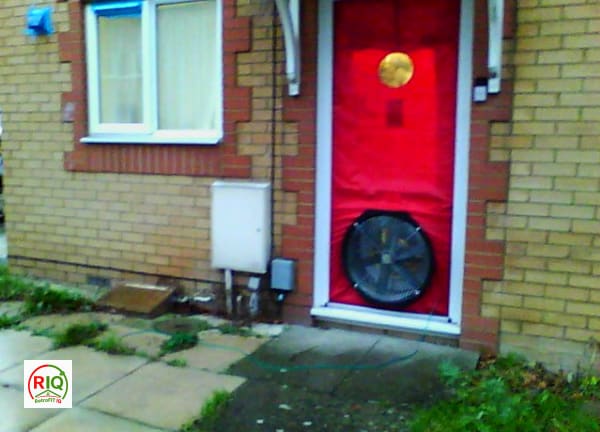
Blower Door Airtightness Test Setup
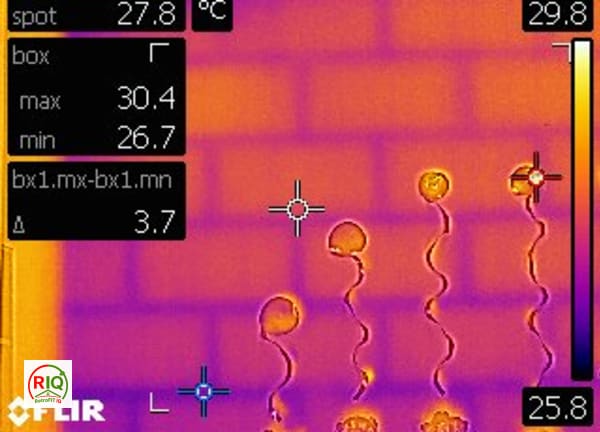
Thermal Bridging Visible Through Masonry Blockwork Wall

Sample Building Performance Investigation Report — Thermal Imaging

Thermal Bridge at Internal Corner Wall Junction

Airtightness Testing in a Stratford Victorian Terrace

Thermal Bridge at Wall-Ceiling Junction Near Window
No related investigations yet.
Browse all investigationsFrequently asked questions
Did making my house airtight cause condensation?+
If you sealed the home without adding ventilation, very likely yes. Draughts were accidentally removing moisture; sealing them traps it, so humidity rises and condensation forms. The fix is controlled ventilation, not reopening the leaks.
Should I undo the draught-proofing?+
No. Airtightness saves energy and is worth keeping. The right response is to add controlled ventilation — trickle vents, extract or MVHR — so you remove moisture deliberately instead of by random leakage.
Why is my house stuffy since I sealed it?+
Because the air-change rate has dropped too far. The home no longer refreshes its air or sheds moisture, so it feels close and stale and humidity builds up.
Do new windows need trickle vents?+
In most cases, yes. Airtight windows remove the background ventilation that old leaky ones provided, so trickle vents are needed to keep air changing and humidity down.
What is 'build tight, ventilate right'?+
It is the principle that you should seal a home to control where air moves, then provide deliberate ventilation to supply fresh air and remove moisture. Airtightness and ventilation are two halves of one measure.
Do I need MVHR?+
If the home is genuinely airtight, mechanical ventilation with heat recovery is often the best way to remove moisture while keeping the heat. Less tight homes may manage with trickle vents and good extract.
How do you diagnose condensation after sealing?+
We measure airtightness with a blower door test, monitor humidity, assess the existing ventilation against the tighter fabric, and then design the ventilation needed to make the home healthy and efficient.
Stop guessing — find the real cause
Do not spend money fixing symptoms before you understand the cause. Every home behaves differently, and the only reliable way to know what is happening in yours is professional building performance diagnostics. At RetrofitIQ we verify buildings using the right combination of investigations:
- Thermal imaging
- Blower door testing
- Moisture & dew point readings
- Ventilation review
- Building physics assessment
- Passive House methodology