
Dehumidifier vs Fixing the Fabric: Managing or Solving Damp
Dehumidifier vs Fixing the building fabric.
 Reviewed by George Sora, Certified Passive House DesignerUpdated June 2026
Quick answer & key takeaways
5 min read- Bottom line: A dehumidifier manages the symptom by drying the air; fixing the fabric removes the cause by stopping condensation forming.
- When Dehumidifier is enough: You need short-term humidity control
- When Fixing the fabric is the better choice: You want a permanent end to condensation
- When you need both: You need relief now and a lasting fix later
- Biggest misconception: “A dehumidifier will solve my condensation.” — It manages humidity while it runs, but it never warms the cold surfaces or improves ventilation, so the problem returns when it is off.
- Retrofit IQ’s approach: We see a dehumidifier as symptom management, not a cure: we investigate why surfaces are cold and humidity high, then warm the fabric and fix ventilation so condensation stops forming — rather than running an appliance indefinitely against the cause.
Quick answer
A dehumidifier manages the symptom by drying the air; fixing the fabric removes the cause by stopping condensation forming. A dehumidifier can be a sensible short-term or supplementary measure, but it costs money to run indefinitely and never addresses the cold surfaces and poor ventilation behind the problem. The lasting answer is to warm the surfaces, correct thermal bridges and ventilate properly — then the home stays dry without an appliance running.
At a glance
| Attribute | Dehumidifier | Fixing the building fabric |
|---|---|---|
| Role | Manages symptoms | Removes the cause |
| Tackles cold surfaces | No | Yes |
| Tackles ventilation | No | Yes |
| Ongoing cost | Electricity, indefinitely | Upfront works, then little |
| Durability | Only while running | Permanent |
| Best as | Short-term / supplementary | Root-cause solution |
What is Dehumidifier?
An appliance that removes moisture from the air, lowering indoor humidity. It can relieve condensation symptoms and is a useful short-term or supplementary tool, but it runs on electricity and does nothing to warm cold surfaces or improve ventilation.
What is Fixing the building fabric?
Addressing the underlying causes of damp — cold surfaces, thermal bridges, poor insulation and inadequate ventilation — so that condensation no longer forms. It is the durable, root-cause solution rather than ongoing symptom management.
What each method measures — and what it doesn’t
Dehumidifier
- Reduces airborne moisture content
- Lowers indoor relative humidity while running
- The cold surfaces causing condensation
- Ventilation adequacy
- Anything once it is switched off
Fixing the fabric
- Raises surface temperatures above dewpoint
- Improves insulation continuity and ventilation
- Removes the conditions condensation needs
- Nothing critical — it addresses the root cause
The building science
Condensation forms when a surface falls below the dewpoint of the indoor air. There are two ways to stop that happening: lower the dewpoint by removing moisture from the air, or raise the surface temperature so it stays above dewpoint. A dehumidifier does the first; fixing the fabric does the second — and the second is permanent.
A dehumidifier has genuine uses. During drying-out after a leak, in an unheated store, or as a stop-gap while fabric works are planned, lowering humidity can relieve symptoms quickly. But it treats the air, not the building: the cold wall is still cold, the thermal bridge is still there, and the ventilation is still inadequate. Switch the appliance off and the conditions return.
Fixing the fabric attacks the cause. Insulating cold surfaces and correcting thermal bridges keeps them above dewpoint; improving ventilation removes moisture at source. Once the surfaces are warm and the air is controlled, condensation simply does not form, and the home stays dry with no running cost and no appliance noise.
There is also a comfort and energy dimension. A dehumidifier consumes electricity continuously and does nothing for warmth; fabric improvements make the home warmer, cheaper to heat and more comfortable as well as drier. The dehumidifier is a tool for the interim; the fabric fix is the solution.
Key differences
- A dehumidifier dries the air; fixing the fabric warms the surfaces.
- One manages symptoms while running; the other removes the cause permanently.
- The dehumidifier has an ongoing electricity cost; fabric works pay back in comfort and lower bills.
- Use the dehumidifier short-term; fix the fabric for the long term.
Common misconceptions
Myth: A dehumidifier will solve my condensation.
It manages humidity while it runs, but it never warms the cold surfaces or improves ventilation, so the problem returns when it is off.
Myth: Running a dehumidifier is cheaper than fixing the cause.
Over time the electricity adds up, and you still have a cold, condensation-prone home. Fabric works pay back in comfort and reduced bills.
Myth: If the air is dry, the fabric is fine.
Dry air today does not fix cold surfaces or poor ventilation; the underlying vulnerability remains.
Real-world situations
Persistent winter condensation and mould
Diagnose and fix the fabric — warm the cold surfaces and improve ventilation; a dehumidifier is at best a temporary aid.
Drying out after a leak or flood
A dehumidifier is genuinely useful here to accelerate drying, alongside identifying and fixing the leak.
Waiting for retrofit works to begin
Use a dehumidifier as a stop-gap to control humidity until the fabric and ventilation are improved.
Cold, mouldy room you use daily
Fabric and ventilation works for a comfortable, dry room; relying on a dehumidifier leaves it cold and costly.
Which do you actually need?
When Dehumidifier is enough
- You need short-term humidity control
- You are drying out after a leak
- You are bridging the gap before fabric works
When Fixing the fabric is the better choice
- You want a permanent end to condensation
- The room is cold as well as damp
- You are planning insulation or ventilation improvements
When you need both
- You need relief now and a lasting fix later
- Severe damp requires immediate management plus root-cause works
What Retrofit IQ checks on site
We see a dehumidifier as symptom management, not a cure: we investigate why surfaces are cold and humidity high, then warm the fabric and fix ventilation so condensation stops forming — rather than running an appliance indefinitely against the cause.
- Surface-temperature and humidity logging to quantify condensation risk
- Thermal imaging to locate the cold surfaces and thermal bridges
- Ventilation assessment to check moisture removal at source
- Identification of cost-effective fabric improvements
- Advice on sensible interim humidity control where needed
- A root-cause plan so the home stays dry without an appliance
What a Certified Passive House Designer recommends
A dehumidifier is a perfectly good tool in the right situation — drying out after a leak, or holding the line while works are arranged. What it is not is a solution to condensation, because it never touches the cold surfaces and poor ventilation that cause it. Leave it running for years and you are paying to manage a problem you could have fixed.
I would rather spend that money once on the fabric: warm the surfaces, correct the bridges, ventilate properly. The home then stays dry on its own, and it is warmer and cheaper to run as a bonus. Manage with the appliance if you must, but plan to fix the cause.
— George Sora, Certified Passive House Designer, Founder, RetrofitIQ
Reviewed using current building physics principles and Passive House methodology.
Related services
Related comparisons
Related investigations
Compare another way
Closely related comparisons our clients read next.
Anti-mould Paint vs Solving the Moisture Source
Anti-mould paint suppresses growth on a surface temporarily; solving the moisture source removes the reason mould grows at all.
Read comparisonCondensation vs Rising Damp
Condensation comes from warm, humid indoor air meeting cold surfaces; rising damp draws groundwater up through the wall.
Read comparisonMould vs Condensation
Mould is the symptom; condensation is usually the cause.
Read comparisonCondensation vs Penetrating Damp vs Rising Damp
Condensation comes from moist indoor air meeting cold surfaces; penetrating damp comes from water getting in through an external defect; rising damp comes from groundwater moving up through the wall by capillarity.
Read comparisonEvidence from Real Projects (10)
Real project and investigation images from our own fieldwork, matched to this page — not stock photography.

Sample Building Performance Investigation Report — Thermal Imaging
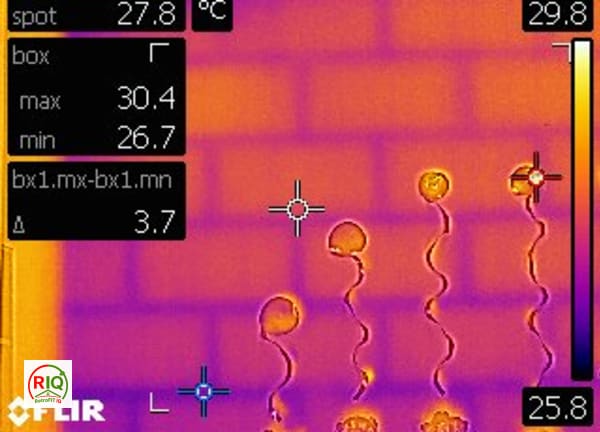
Thermal Bridging Visible Through Masonry Blockwork Wall

Thermal Bridge at Internal Corner Wall Junction

Thermal Bridge at Wall-Ceiling Junction Near Window

Airtightness Testing in a Stratford Victorian Terrace

Bathroom
No related investigations yet.
Browse all investigationsFrequently asked questions
Will a dehumidifier stop condensation?+
It reduces humidity while running, which relieves symptoms, but it does not warm cold surfaces or improve ventilation, so the condensation returns when it is switched off.
Is a dehumidifier ever the right answer?+
Yes — for drying out after a leak, in unheated spaces, or as a short-term stop-gap before fabric works. It is a tool, not a cure.
Is running a dehumidifier expensive?+
Over months and years the electricity adds up, and you still have a cold, condensation-prone home. Fixing the fabric usually makes better financial sense.
What does 'fixing the fabric' involve?+
Warming cold surfaces with insulation, correcting thermal bridges and improving ventilation, so surfaces stay above dewpoint and condensation cannot form.
Will fixing the fabric also make the room warmer?+
Yes — insulation and thermal-bridge correction improve comfort and reduce heating costs as well as solving the damp.
Can I use both?+
Yes — a dehumidifier for interim relief while you plan and carry out the fabric and ventilation improvements that provide the lasting fix.
Does a dehumidifier help with mould?+
By lowering humidity it can slow mould, but the cold surfaces remain, so it manages rather than cures the problem.
How do I know which surfaces are the problem?+
Thermal imaging and surface-temperature logging identify the cold surfaces and bridges where condensation forms.
Is poor ventilation part of the cause?+
Often yes — inadequate ventilation lets indoor humidity build up. A ventilation assessment checks this alongside the fabric.
Will building works be disruptive?+
It depends on the measures; we prioritise cost-effective, proportionate improvements and explain the scope before any work.
Can you assess my home first?+
Yes — we diagnose the cause with measured data before recommending any works, so you fix the right thing.
Who carries out the assessment?+
A Certified Passive House Designer, focused on removing the cause of condensation rather than managing the symptoms.
Need professional advice?
A comparison like this helps you understand the theory, but every property behaves differently. The only reliable way to establish the real cause in your home — rather than guessing — is professional building performance diagnostics. At RetrofitIQ we verify buildings using the appropriate combination of investigations:
- Thermal imaging
- Blower door testing
- Moisture investigation
- Building physics assessment
- Passive House methodology