

Heat Pump Readiness Assessment
Before you install a heat pump, find out whether your home can actually run one efficiently. A measured heat-loss survey, fabric and airtightness assessment and emitter review — so a low-temperature heat pump performs as promised, instead of running hot, expensive and disappointing.
One process — every service is a stage of it.
This is engineering-led work, so our process adds a Predict stage — building-physics modelling, heat-loss and condensation-risk calculation and performance forecasting before anything is built.
The Predict stage is where engineering decisions are made on calculations, not assumptions — see the Building Physics Assessment.
Heat Pump Readiness Assessment — in plain English.
A Heat Pump Readiness Assessment establishes, before you commit, whether your home can run a heat pump efficiently. We carry out a measured room-by-room heat-loss survey, assess the fabric and airtightness, and review whether your existing emitters can deliver heat at the low flow temperatures a heat pump needs — so the system is sized correctly and runs efficiently, rather than hot, expensive and disappointing.
Why heat pump readiness assessment is important.
A heat pump is only as efficient as the building it heats. These systems are designed to run at low flow temperatures, which only works in a home with low, well-understood heat loss — otherwise the unit runs hot, expensive and disappointing, and the homeowner blames the technology rather than the fabric. A readiness assessment measures the real heat demand room by room, checks the fabric and airtightness, and reviews whether existing emitters can deliver heat at low temperatures. Doing this before installation means a smaller, cheaper, quieter, genuinely efficient system — and avoids the all-too-common badly performing heat pump.
The right time to bring us in.
- Before getting heat-pump quotes, so the design is based on measured data not a desktop estimate
- When existing radiators already struggle on the coldest days
- When you want to know which fabric upgrades are needed first to size a smaller system
- Before committing to a grant-funded installation that assumes a ready building
- When a previous heat-pump quote seems oversized, noisy or expensive to run
The symptoms that bring people to this service.
- 01Considering a heat pump but unsure the home can run one efficiently
- 02Radiators that already struggle to heat rooms on cold days
- 03Cold rooms, draughts and high bills hinting at significant heat loss
- 04An installer quote based on a desktop estimate, not a measured survey
- 05Uncertainty about which fabric upgrades are needed first
- 06A wish to avoid an oversized, noisy or costly-to-run system
What you tend to notice first.
- Considering a heat pump but unsure whether the home can run one efficiently
- Existing radiators that already struggle to heat rooms on cold days
- Cold rooms, draughts and high bills suggesting significant heat loss
- An installer quote based on a desktop estimate rather than a measured survey
- Uncertainty over which fabric upgrades are needed before installation
- A wish to avoid an oversized, noisy or costly-to-run system
Our diagnostic approach
- 01Measured room-by-room heat-loss survey using a fabric assessment, not a desktop estimate
- 02Thermal imaging and airtightness checks to quantify real losses
- 03Review of wall, roof and floor insulation and the realistic upgrades available
- 04Emitter survey — whether existing radiators / underfloor can run at low flow temperatures
- 05Assessment of ventilation and moisture behaviour as the fabric is tightened
- 06Modelling of the heat demand a low-temperature system would need to meet
What we bring on site
- Calibrated FLIR thermal imaging camera
- Blower door fan for airtightness assessment
- Moisture meters and surface-temperature probes
- Temperature and humidity data loggers
- Fabric U-value and heat-loss modelling tools
The science behind the diagnosis.
Heat pumps achieve their high efficiency (a COP of 3–4) by delivering heat at low flow temperatures — typically 35–45 °C rather than the 60–70 °C of a gas boiler. That only works if the building's heat loss is low enough for large, low-temperature emitters to keep rooms warm. Reduce heat loss through fabric and airtightness first and you can size a smaller, cheaper, quieter heat pump that runs efficiently; skip that step and the system runs hard, costs more and underperforms. Fabric first, heat pump second is building physics, not preference.
Measured benefits — not vague promises.
- A measured whole-house heat-loss figure and an honest readiness verdict
- A prioritised, fabric-first plan to reach the required heat demand
- Guidance on the realistic flow temperature your home could run at
- Emitter and distribution recommendations for low-temperature heating
- A smaller, cheaper, quieter and more efficient system once ready
- An independent report to hand to your installer or MCS designer
What we design and deliver next.
Every recommendation follows our methodology — Investigate → Design → Verify — so the diagnosis on this page leads directly into an engineered, buildable and independently verified solution.
- A measured whole-house heat-loss figure and an honest readiness verdict
- A prioritised, fabric-first plan to reach the heat demand a heat pump needs
- Guidance on the realistic flow temperature your home could run at
- Emitter and distribution recommendations to support low-temperature heating
- Airtightness and thermal-bridge improvements that reduce the required system size
- An independent report to hand to your heat-pump installer or MCS designer
What goes wrong on site — and why it matters.
Our diagnoses are grounded in real site experience. These are the workmanship and detailing failures we repeatedly find on this kind of work — the difference between a building that should perform and one that actually does.
Sizing based on floor area or a quick desktop estimate routinely oversizes the unit and ignores the fabric upgrades that would let it run efficiently.
Radiators sized for a 70 °C boiler cannot deliver enough heat at a heat pump's 35–45 °C flow temperature, so rooms run cold or the system runs hot.
Narrow legacy pipework throttles the larger flow rates a low-temperature system needs, hurting both output and efficiency.
An untested, leaky envelope adds a large uncontrolled load that forces a bigger, less efficient heat pump than the home really needs.
Uncorrected cold surfaces keep rooms feeling cool at low flow temperatures, prompting occupants to push the system harder.
What we assess
- Whole-house heat loss (room-by-room) using a measured fabric survey, not a desktop estimate
- Wall, roof and floor insulation levels and the realistic upgrades available
- Airtightness and uncontrolled air leakage that drives up the heat demand
- Thermal bridges and cold surfaces that undermine low-temperature heating
- Existing emitters (radiators / underfloor) and whether they can deliver heat at a low flow temperature
- Ventilation and moisture behaviour as the fabric is tightened
What you receive
- A measured heat-loss figure and an honest readiness verdict — ready now, ready after specific works, or not yet viable
- A prioritised, fabric-first improvement plan to reach the heat demand a heat pump needs
- Guidance on the flow temperature your home could realistically run at
- Emitter and distribution recommendations to support a low-temperature system
- An independent report you can hand to your heat-pump installer or MCS designer
Why fabric first, heat pump second
- Heat pumps are most efficient at low flow temperatures — which only works in a low-heat-loss home
- Reducing heat loss before sizing the heat pump means a smaller, cheaper, quieter unit
- Existing radiators often only work at high flow temperatures unless the fabric is improved
- Airtightness and insulation improvements cut running cost whatever heating you choose
- We are independent of installers — our verdict is about your building, not a sale
What we commonly discover during heat pump readiness assessment investigations
- 01Whole-house heat loss far higher than a desktop estimate assumed
- 02Existing radiators undersized for the low flow temperatures a heat pump needs
- 03Significant air leakage inflating the heat demand and the required system size
- 04Uninsulated or under-insulated walls, floors and lofts dominating the heat loss
- 05Cold bridges keeping rooms cool at low flow temperatures
- 06Microbore or restrictive pipework limiting achievable flow rates
Findings reflect patterns observed across completed RetrofitIQ projects — every survey is interpreted in the building’s specific context.
See this service applied on real investigations
Heat Pump Readiness Assessment — common questions
What is a heat pump readiness assessment?+
It is a measured survey that establishes whether your home can run a heat pump efficiently before you commit. We carry out a room-by-room heat-loss assessment, review insulation, airtightness and thermal bridging, and check whether your existing radiators or underfloor heating can deliver heat at the low flow temperatures a heat pump needs. You receive an honest readiness verdict — ready now, ready after specific works, or not yet viable — and a fabric-first plan to get there.Why do I need a heat-loss survey before installing a heat pump?+
A heat pump is only efficient at low flow temperatures, and that only works in a home with low, well-understood heat loss. A measured survey sizes the system correctly, identifies the fabric improvements that reduce running cost, and prevents the common outcome of an oversized, expensive unit running hot in an under-insulated home — the main reason people end up disappointed with a heat pump.What flow temperature should a heat pump run at, and why does it matter?+
Heat pumps are most efficient at low flow temperatures — typically 35–45 °C, compared with 60–70 °C for a gas boiler. The lower the flow temperature, the higher the efficiency (a better coefficient of performance). But low flow temperatures only keep rooms warm if heat loss is low and emitters are large enough, which is exactly what the assessment checks.Will I definitely need to insulate before a heat pump?+
Not always — some homes are already adequate. But many UK properties, especially solid-wall and pre-2000 stock, benefit from targeted fabric improvements first. Our assessment tells you exactly what, if anything, is needed to reach a sensible heat demand, rather than assuming either way.Will my existing radiators work with a heat pump?+
Some will, some will not. Radiators sized for a 70 °C boiler often need upsizing to deliver the same heat at 45 °C. We assess each emitter and identify which can stay, which need upsizing and where underfloor heating might be appropriate, so the distribution system matches the low-temperature design.Does airtightness affect heat pump performance?+
Yes. Uncontrolled air leakage adds a large, variable heat load that forces a bigger, less efficient heat pump than the building really needs. Reducing air leakage lowers the heat demand, allows a smaller unit and improves comfort — which is why airtightness is part of the readiness assessment.Are you independent of heat-pump installers?+
Yes. We do not sell or install heat pumps, so our readiness verdict is about your building, not a product sale. The independent report can be handed to your chosen MCS installer or heat-pump designer to inform a correctly sized, efficient design.How is this different from the survey a heat-pump installer does?+
Many installer quotes rely on a desktop heat-loss estimate from floor area and age. Our assessment measures the actual fabric performance — thermal imaging, airtightness and a room-by-room heat-loss survey — so the design is based on how your home really behaves. The two are complementary: our report gives your installer accurate inputs to work from.What fabric improvements most often help a home become heat-pump ready?+
Typically a fabric-first sequence: loft and roof insulation, targeted wall insulation, airtightness improvements and thermal-bridge correction, followed by emitter upgrades where needed. The right combination is specific to your property, and the assessment prioritises it by impact on the heat demand.What do I receive after the assessment?+
A measured heat-loss figure and an honest readiness verdict, a prioritised fabric-first improvement plan, guidance on the realistic flow temperature your home could run at, emitter and distribution recommendations, and an independent report you can hand to your installer or MCS designer.Can you carry out the recommended fabric works as well?+
Yes. Following our Investigate → Diagnose → Design → Remediate → Verify process, the same team can design and deliver the insulation, airtightness and thermal-bridge works that bring the home to readiness, and verify the improvement before the heat pump is installed.
Weighing this up against the alternatives?
Independent, building-physics-led comparisons from our knowledge base — written to help you understand the difference before you decide which survey or approach you actually need.
- Heat Pump vs Gas Boiler: The Fabric-First ViewHeat Pumps
- Thermal Imaging vs Heat Loss SurveyThermal Imaging
- Blower Door Test vs EPCBlower Door & Airtightness
- Heat Pump Readiness: Fabric-First vs System-FirstHeat Pumps
Common problems we diagnose
The symptoms that most often lead homeowners to a heat pump readiness assessment. Each guide explains the building physics behind the problem — and how we diagnose the real cause before any work begins.
- Do I need a bigger boiler or better insulation?
- Do I need a heat loss survey before getting a heat pump?
- Should I replace my radiators with bigger ones?
Part of one connected building-performance journey.
Every Retrofit IQ service is one stage of a single methodology — Investigate → Design → Verify. Explore how this service connects to the wider network of diagnostics, engineering and quality assurance.
The engineering and quality-assurance services that most often follow this one.
One company. One process. One point of responsibility.
We don’t simply identify problems. We investigate, diagnose, design solutions, carry out the work and verify the results. Book a Home Health Diagnostic Survey and we’ll tell you exactly which remedial works (if any) are actually needed.
Commission a Retrofit IQ Building Physics Assessment
After this investigation, you can commission a Building Physics Assessment for an advanced engineering analysis. A standard survey identifies the problems; this uses advanced building physics modelling to predict how your building is expected to perform after the proposed upgrade — before any work begins.
Most contractors recommend insulation. Retrofit IQ predicts how your building is expected to perform first.
Investigate → Diagnose → Design → Remediate → Verify
RetrofitIQ is not only a diagnostics company. We take projects from first investigation through to verified improvement — and you decide how far we go. Engage us for an investigation on its own, an investigation plus targeted remedial works, or a complete building-performance and retrofit project.
A measured diagnosis — thermal imaging, blower door testing, moisture and building-physics analysis — with a clear, costed report you can act on however you choose.
We investigate, then carry out targeted remedial works — airtightness, insulation, ventilation or thermal-bridge corrections — and verify the result.
A full fabric-first, Passive House-informed retrofit from diagnosis through design, installation and verification — one accountable team, one point of responsibility.
- Airtightness improvements & draught-proofing
- Internal wall insulation (IWI)
- External wall insulation (EWI)
- Loft & roof insulation
- Suspended floor & underfloor insulation
- Thermal-bridge detailing & correction
- Extract ventilation & MVHR installation
- Soundproofing & acoustic upgrades
- General building-fabric improvements
Evidence from Real Projects (8)
Real project and investigation images from our own fieldwork, matched to this page — not stock photography.
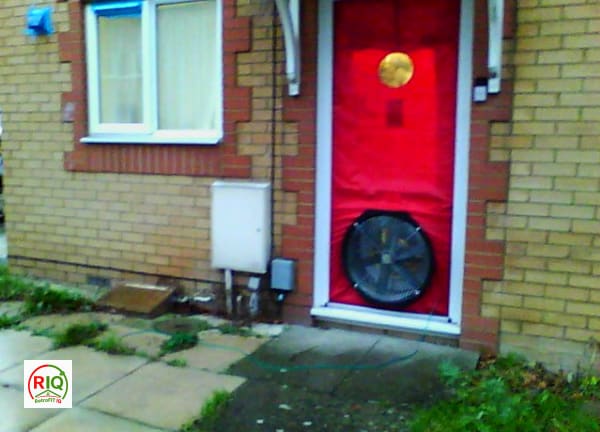
Blower Door Airtightness Test Setup
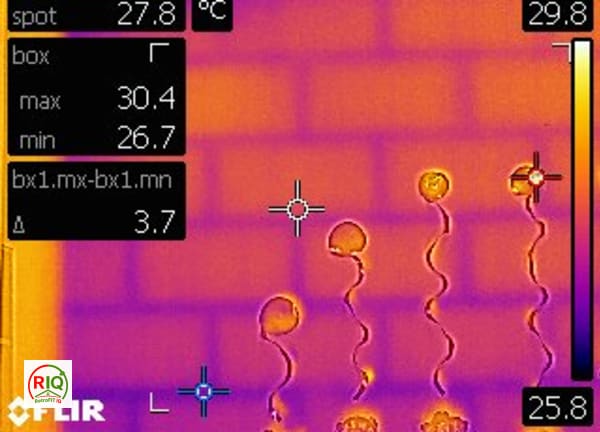
Thermal Bridging Visible Through Masonry Blockwork Wall

Sample Building Performance Investigation Report — Thermal Imaging

Acoustic Floor Upgrades: Mineral Wool Insulation Between Joists

Thermal Bridge at Internal Corner Wall Junction

Thermal Bridge at Wall-Ceiling Junction Near Window
No related investigations yet.
Browse all investigationsHeat Pump Readiness Assessment across London & the surrounding areas.
Explore building performance diagnostics, damp and condensation investigations, airtightness testing and retrofit advice in your area. We cover London, Greater London, East London, Essex, Kent, Surrey, Hertfordshire and the surrounding counties.