

Heat Loss Investigation
A focused investigation into where, how and why your home is losing heat — combining FLIR thermal imaging, surface-temperature mapping and fabric analysis to pinpoint the real sources of heat loss before any money is spent on remediation.
One process — every service is a stage of it.
This is engineering-led work, so our process adds a Predict stage — building-physics modelling, heat-loss and condensation-risk calculation and performance forecasting before anything is built.
The Predict stage is where engineering decisions are made on calculations, not assumptions — see the Building Physics Assessment.


Real FLIR thermal images from completed heat-loss surveys — cold corners, windows, reveals and wall areas where the building is losing heat.
Why a Heat Loss Investigation is different from a standard assessment
Most assessments estimate performance from building age, construction type and standard assumptions. Retrofit IQ investigates actual performance using measured data from the building itself. Instead of relying solely on standardised inputs, we combine:
…to identify where heat is genuinely being lost and which improvements will deliver the greatest benefit. This allows recommendations to be tailored to the specific property rather than relying on generic assumptions.
Built on Passive House design principles
Passive House design is internationally recognised as one of the most rigorous building-performance standards in the world. Our investigations apply the same building-physics principles used in high-performance buildings:
The result is not simply a list of retrofit measures, but a clear understanding of how the building actually performs and where investment will have the greatest impact.
Before you spend money
Many homeowners already know they have cold rooms, condensation or high heating bills. The difficult question is: “Which improvement should I do first?”
A Heat Loss Investigation helps prioritise investment by identifying — before major retrofit work begins:
We are not simply identifying problems — we help you avoid spending money on the wrong solution, so your budget goes to the measures that will make the biggest difference.
Heat Loss Investigation — in plain English.
A heat loss investigation uses calibrated FLIR thermal imaging to measure the surface temperature of your building's fabric and reveal exactly where heat is escaping. Rather than guessing from your energy bills, we map the cold surfaces, doors, glazing and junctions that are draining heat — and quantify which ones matter most.
Why heat loss investigation is important.
Heat loss is the root cause behind most cold homes, high energy bills and poor heat-pump performance — yet it is almost never measured before money is spent. Standard assessments estimate performance from a building's age and construction type; a heat loss investigation measures what is actually happening, surface by surface. That distinction matters because the fabric determines everything downstream: the size of heat pump you need, the comfort you experience, the condensation risk on cold walls and the realistic return on any insulation work. Quantifying heat loss first turns retrofit from a hopeful guess into an engineering decision.
The right time to bring us in.
- Before committing to insulation, a new boiler or a heat pump, so the budget targets the real losses
- When rooms stay cold or bills are high despite previous upgrades
- Ahead of a purchase, to understand the true cost of bringing a property up to standard
- When planning a phased retrofit and you need to know which measure to do first
- Where condensation or mould suggests cold surfaces that need quantifying
The symptoms that bring people to this service.
- 01Rooms that never feel warm no matter how high the heating is set
- 02Heating bills far higher than comparable homes
- 03Cold walls, draughts and uncomfortable spots near windows and doors
- 04A new boiler or more radiators that didn't fix the cold
- 05Suspected missing or under-performing insulation
- 06Cold, hard-to-heat extensions, bays and loft rooms
What you tend to notice first.
- Rooms that never feel warm however high you turn the heating
- Cold walls, cold floors and a noticeable chill near windows and external doors
- Heating bills well above comparable homes on the street
- Cold extensions, bay windows and loft rooms that the heating struggles to reach
- Condensation or mould appearing on the coldest wall surfaces in winter
- A new boiler or extra radiators that never quite solved the cold
Our diagnostic approach
- 01Walkthrough to record where the home feels coldest and why
- 02Internal FLIR thermal imaging under a stabilised indoor/outdoor temperature differential (≥10 °C)
- 03External thermal scans (where access allows) to confirm fabric heat loss
- 04Surface-temperature comparison between affected areas and sound reference areas
- 05Findings interpreted against construction type, age and any previous works
What we bring on site
- FLIR thermal imaging camera (calibrated, radiometric)
- Surface-temperature probe and infrared spot thermometer
- Humidity / dewpoint logger to relate heat loss to condensation risk
- Blower door fan (depressurisation reveals draught-driven heat loss)
The science behind the diagnosis.
Heat always flows from warm to cold, through conduction, convection and radiation. The greater the temperature difference and the poorer the insulation, the faster heat escapes. A thermal camera reads the radiation from each surface — so insulation gaps, cold bridges and leaky openings appear as cold patches, showing precisely where, and how fast, your home is losing heat.
Measured benefits — not vague promises.
- Know exactly where heat is being lost — before spending on remediation
- Target the fabric improvements that deliver the biggest comfort and bill savings
- Avoid wasted spend on the wrong upgrades
- Measured evidence for retrofit planning, grants or disputes
- A clear fabric-first plan from a Certified Passive House Designer
What we design and deliver next.
Every recommendation follows our methodology — Investigate → Design → Verify — so the diagnosis on this page leads directly into an engineered, buildable and independently verified solution.
- A prioritised, fabric-first improvement plan targeting the biggest measured heat-loss areas first
- Targeted insulation upgrades (loft, walls, floors) specified to measured U-values, not assumptions
- Thermal-bridge correction at the junctions and reveals losing disproportionate heat
- Airtightness improvements to stop draught-driven heat loss bypassing the insulation
- A clear sequence so works can be staged across budgets without wasted spend
- Optional post-works verification to prove the heat-loss reduction was actually achieved
What goes wrong on site — and why it matters.
Our diagnoses are grounded in real site experience. These are the workmanship and detailing failures we repeatedly find on this kind of work — the difference between a building that should perform and one that actually does.
Insulation stopped before the wall plate leaves a cold band around the whole ceiling perimeter — exactly where it shows up as a continuous cold edge on a thermal image.
Loft insulation squashed under boarding and storage, or pulled apart around downlights and pipework, loses most of its value precisely where it is disturbed.
Plasterboard dabbed onto masonry leaves an unsealed air gap; warm room air circulates behind the board and bypasses the wall, which reads as patchy cold areas.
Window reveals, heads and concrete lintels left uninsulated act as continuous heat-loss paths and the coldest surfaces in the room.
Unsealed loft hatches, service penetrations and skirting gaps let conditioned air escape and cold air in — heat loss the homeowner feels as draughts.
What we investigate
- Continuous cold surfaces across walls, floors and roofs losing heat to outside
- Poorly insulated doors, glazing and reveals acting as heat-loss hotspots
- External-wall sections and junctions underperforming against the rest of the envelope
- Cold bridging at wall-to-ceiling and wall-to-floor junctions
- Draught-driven heat loss around openings and service penetrations
What you receive
- Annotated thermal images locating each heat-loss area
- Surface-temperature comparison between affected and sound areas
- A prioritised list of where heat loss is costing you the most
- A building-physics-led remediation plan — fabric first, no guesswork
What we commonly discover during heat loss investigation investigations
- 01Large continuous cold wall areas losing heat faster than the heating can replace it
- 02Poorly insulated external doors and single-skin glazing acting as major heat-loss paths
- 03Cold external-wall sections behind furniture where airflow is restricted
- 04Heat loss concentrated at wall-to-ceiling junctions and structural edges
- 05Bay windows and projecting structures losing disproportionate amounts of heat
- 06Uninsulated or under-insulated lofts, eaves and dwarf walls
Findings reflect patterns observed across completed RetrofitIQ projects — every survey is interpreted in the building’s specific context.
See this service applied on real investigations
Heat Loss Investigation — common questions
What is a heat loss investigation?+
It is a focused diagnostic survey that measures where, how and why a building is losing heat. Using calibrated FLIR thermal imaging, surface-temperature mapping and fabric analysis, we locate the cold walls, glazing, reveals, junctions and air-leakage paths that drain heat — then quantify which ones matter most, so remediation is targeted rather than guessed.How is a heat loss investigation different from a thermal imaging survey?+
Thermal imaging is the diagnostic tool; a heat loss investigation is the application of that tool — and others — to a specific question: where is this building losing heat and in what priority order? We combine thermal imaging with surface-temperature comparison and, where useful, blower-door depressurisation to separate fabric loss from draught-driven loss, then set out a fabric-first plan to reduce it.How is it different from an EPC?+
An EPC is a modelled rating based on standard assumptions about your construction type and age — it never measures your actual building. A heat loss investigation measures real surface temperatures and real heat-loss patterns on your specific property, so the recommendations reflect how your home truly behaves rather than a default assumption for its band.When is the best time of year to carry one out?+
During the heating season — typically October to April in the UK — when there is a temperature difference of at least 10 °C between inside and outside. The larger that differential, the more sharply heat-loss patterns appear on the thermal image. We avoid bright sun on external walls, which creates misleading warm readings.Can you tell me which improvement to do first?+
Yes — prioritisation is the whole point. Many homeowners already know they have cold rooms or high bills; the difficult question is what to spend on first. We rank the measured heat-loss areas by impact so your budget goes to the changes that deliver the greatest comfort and bill reduction, and so works can be staged sensibly over time.Will the investigation quantify how much heat I am losing?+
We quantify heat loss in relative, prioritised terms — which surfaces and junctions are losing the most, and how each compares — supported by measured surface temperatures. Where a full numerical heat-loss figure (watts, room by room) is needed, for example before a heat pump, we carry that out as part of a Building Physics Assessment or Heat Pump Readiness Assessment.Do you investigate heat loss through floors as well as walls and roofs?+
Yes. Suspended timber ground floors, cold solid floors and the junctions where floors meet external walls are common, often-overlooked heat-loss paths. We assess the whole envelope — walls, roof, floors, glazing and junctions — because heat escapes through whichever path offers least resistance.Can a heat loss investigation explain my high heating bills?+
In most cases, yes. High bills are usually a combination of fabric heat loss, air leakage and sometimes oversized or poorly controlled heating. By measuring the fabric and the draught paths we can show where the energy is going and which fixes will reduce the demand — rather than simply recommending a new boiler.What does the heat loss investigation report include?+
A written report with annotated thermal images locating each heat-loss area, surface-temperature comparisons between affected and sound areas, a prioritised list of where heat loss is costing you most, and a building-physics-led, fabric-first remediation plan. The report is yours to share with an architect, installer or surveyor.Can you carry out the improvements as well?+
Yes. We follow one process — Investigate → Diagnose → Design → Remediate → Verify — so the same team can design and carry out the recommended insulation, airtightness and thermal-bridge works and then verify the heat-loss reduction afterwards. One company, one point of responsibility.Is a heat loss investigation worthwhile before buying a property?+
Very. It reveals hidden performance problems and the realistic cost of putting them right before you commit, which is invaluable for negotiation and for planning a phased upgrade after purchase.
Weighing this up against the alternatives?
Independent, building-physics-led comparisons from our knowledge base — written to help you understand the difference before you decide which survey or approach you actually need.
- Thermal Imaging vs Blower Door TestingThermal Imaging
- PHPP vs SAP / RdSAP Energy ModellingBuilding Physics
- U-values vs Thermal Bridging in Heat LossHeat Loss
- Heat Pump vs Gas Boiler: The Fabric-First ViewHeat Pumps
Common problems we diagnose
The symptoms that most often lead homeowners to a heat loss investigation. Each guide explains the building physics behind the problem — and how we diagnose the real cause before any work begins.
- Why is my house always cold?
- Why is one room colder than the others?
- Why is my bedroom always cold?
- Why do I feel cold even when the room is warm?
- Why is the room above my garage always cold?
- Why is my kitchen or bathroom so cold?
Part of one connected building-performance journey.
Every Retrofit IQ service is one stage of a single methodology — Investigate → Design → Verify. Explore how this service connects to the wider network of diagnostics, engineering and quality assurance.
The engineering and quality-assurance services that most often follow this one.
One company. One process. One point of responsibility.
We don’t simply identify problems. We investigate, diagnose, design solutions, carry out the work and verify the results. Book a Home Health Diagnostic Survey and we’ll tell you exactly which remedial works (if any) are actually needed.
Commission a Retrofit IQ Building Physics Assessment
After this investigation, you can commission a Building Physics Assessment for an advanced engineering analysis. A standard survey identifies the problems; this uses advanced building physics modelling to predict how your building is expected to perform after the proposed upgrade — before any work begins.
Most contractors recommend insulation. Retrofit IQ predicts how your building is expected to perform first.
Investigate → Diagnose → Design → Remediate → Verify
RetrofitIQ is not only a diagnostics company. We take projects from first investigation through to verified improvement — and you decide how far we go. Engage us for an investigation on its own, an investigation plus targeted remedial works, or a complete building-performance and retrofit project.
A measured diagnosis — thermal imaging, blower door testing, moisture and building-physics analysis — with a clear, costed report you can act on however you choose.
We investigate, then carry out targeted remedial works — airtightness, insulation, ventilation or thermal-bridge corrections — and verify the result.
A full fabric-first, Passive House-informed retrofit from diagnosis through design, installation and verification — one accountable team, one point of responsibility.
- Airtightness improvements & draught-proofing
- Internal wall insulation (IWI)
- External wall insulation (EWI)
- Loft & roof insulation
- Suspended floor & underfloor insulation
- Thermal-bridge detailing & correction
- Extract ventilation & MVHR installation
- Soundproofing & acoustic upgrades
- General building-fabric improvements
Evidence from Real Projects (11)
Real project and investigation images from our own fieldwork, matched to this page — not stock photography.
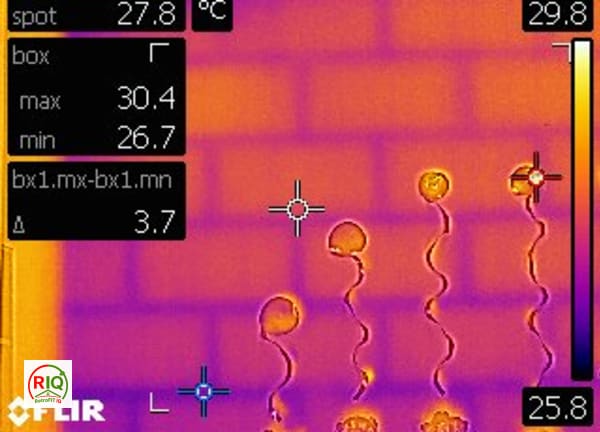
Thermal Bridging Visible Through Masonry Blockwork Wall

Sample Building Performance Investigation Report — Thermal Imaging

Thermal Bridge at Internal Corner Wall Junction
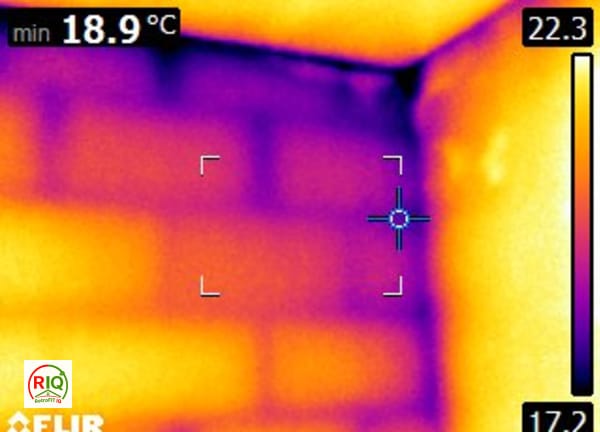
Cold wall surface vs warm ceiling

Acoustic Floor Upgrades: Mineral Wool Insulation Between Joists
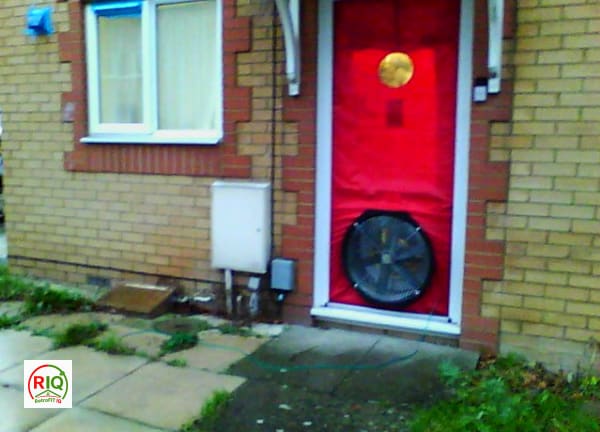
Blower Door Airtightness Test Setup
No related investigations yet.
Browse all investigationsHeat Loss Investigation across London & the surrounding areas.
Explore building performance diagnostics, damp and condensation investigations, airtightness testing and retrofit advice in your area. We cover London, Greater London, East London, Essex, Kent, Surrey, Hertfordshire and the surrounding counties.