
PHPP vs SAP / RdSAP: Which Energy Model Tells the Truth
PHPP (Passive House Planning Package) vs SAP / RdSAP.
 Reviewed by George Sora, Certified Passive House DesignerUpdated June 2026
Quick answer & key takeaways
4 min read- Bottom line: PHPP is a design tool that predicts real energy performance accurately; SAP and RdSAP are compliance and EPC tools, simplified for consistency rather than precision.
- When PHPP (Passive House Planning Package) is enough: Designing a retrofit that genuinely performs
- When SAP / RdSAP is the better choice: You need an EPC or Part L compliance
- When you need both: Use SAP/RdSAP for compliance and PHPP to design — they serve different purposes
- Biggest misconception: “A good EPC means a low-energy house.” — EPCs use simplified SAP/RdSAP methods; a good rating does not guarantee low real-world energy use.
- Retrofit IQ’s approach: We model in PHPP to predict real performance and direct spend, and treat SAP/RdSAP as the compliance tool it is — never a design target, because its simplifications hide the thermal bridges and infiltration that create the performance gap.
Quick answer
PHPP is a design tool that predicts real energy performance accurately; SAP and RdSAP are compliance and EPC tools, simplified for consistency rather than precision. For Building Regulations and an EPC you need SAP/RdSAP; to design a building that genuinely performs, you use PHPP.
At a glance
| Attribute | PHPP (Passive House Planning Package) | SAP / RdSAP |
|---|---|---|
| Primary purpose | Design-accurate energy modelling | Compliance and EPC rating |
| Thermal bridges | Modelled explicitly | Approximated / default values |
| Climate data | Site-specific | Standardised |
| Accuracy vs measured use | High (validated) | Indicative only |
| Required for | Passive House / EnerPHit, serious design | Building Regs (Part L), EPCs |
| Detail required | High | Lower (RdSAP uses defaults) |
What is PHPP (Passive House Planning Package)?
A detailed, physics-based energy model used to design low-energy buildings. It accounts for thermal bridges, real climate data, shading, ventilation and component data, and is validated against measured Passive House performance — so it predicts actual energy use closely.
What is SAP / RdSAP?
The UK government's Standard Assessment Procedure (and its reduced version, RdSAP, for existing homes). It is a compliance and EPC tool, simplified for consistency across millions of homes, and is not intended as a design-accurate prediction of energy use.
What each method measures — and what it doesn’t
PHPP (Passive House Planning Package)
- Design-accurate energy use from fabric, bridges, climate, shading and ventilation
- A prediction validated against measured Passive House performance
- A statutory compliance rating — it is a design tool
SAP / RdSAP
- A standardised compliance and EPC rating across the housing stock
- A consistent comparison, simplified with defaults
- Design-accurate performance — defaults hide bridges and infiltration
- Real energy use of a specific home
The building science
An energy model is only as honest as its inputs and its method. PHPP is built from measured building physics and validated against real Passive House buildings, so it models thermal bridges, shading, ventilation heat loss and component performance in detail. The result tracks actual energy use closely enough to design to a target with confidence.
SAP and RdSAP serve a different purpose. They exist to compare buildings consistently for compliance and EPCs across the whole housing stock, so they trade precision for standardisation — RdSAP in particular fills gaps with default assumptions when a surveyor cannot see the construction. That makes them reliable for rating and regulation but unreliable as a design prediction of how much energy a specific home will use.
The practical consequence is the well-known 'performance gap': buildings designed only to SAP often use far more energy than the assessment implied, because the simplifications hide real losses such as thermal bridging and infiltration. PHPP closes that gap by modelling those losses explicitly.
Key differences
- PHPP predicts real performance; SAP/RdSAP rate for compliance.
- PHPP models thermal bridges and site climate; SAP/RdSAP approximate them.
- You need SAP/RdSAP for EPCs and Part L; you need PHPP to design to a performance target.
- RdSAP relies on defaults for existing homes; PHPP relies on measured detail.
Common misconceptions
Myth: A good EPC means a low-energy house.
EPCs use simplified SAP/RdSAP methods; a good rating does not guarantee low real-world energy use.
Myth: PHPP and SAP should give the same answer.
They have different purposes and methods, so their outputs differ — PHPP is the design-accurate one.
Myth: Modelling is just paperwork.
Design-grade modelling changes decisions — it shows which upgrades actually move the needle before you spend money.
Real-world situations
You need an EPC or Building Regs compliance
SAP/RdSAP — it is the required method for those purposes.
You want to design a retrofit that genuinely performs
PHPP — model the fabric, thermal bridges and ventilation to predict real energy use and prioritise works.
Deciding between competing upgrade options
PHPP — compare options on predicted energy and comfort, not on a compliance score.
Which do you actually need?
When PHPP (Passive House Planning Package) is enough
- Designing a retrofit that genuinely performs
- Comparing upgrade options on predicted energy and comfort
When SAP / RdSAP is the better choice
- You need an EPC or Part L compliance
- A lender or grant requires the certificate
When you need both
- Use SAP/RdSAP for compliance and PHPP to design — they serve different purposes
What Retrofit IQ checks on site
We model in PHPP to predict real performance and direct spend, and treat SAP/RdSAP as the compliance tool it is — never a design target, because its simplifications hide the thermal bridges and infiltration that create the performance gap.
- PHPP modelling for design-accurate prediction
- Measured inputs — airtightness, fabric, bridges — fed to the model
- Thermal imaging to validate assumptions
- Clear separation of compliance modelling from design modelling
- Option comparison on predicted energy and comfort
What a Certified Passive House Designer recommends
I use the right model for the right job. When a client needs an EPC or to satisfy Part L, SAP or RdSAP is the correct, required tool. But when the goal is a home that is genuinely warm, efficient and comfortable, I model in PHPP — because it tells the truth about thermal bridges, ventilation losses and the measures that actually reduce demand.
The danger is treating a compliance score as a design target. I have seen retrofits designed to a good EPC that still felt cold and cost a fortune to heat, because the simplifications hid the real losses. PHPP is how you avoid that.
— George Sora, Certified Passive House Designer, Founder, RetrofitIQ
Reviewed using current building physics principles and Passive House methodology.
Related services
Compare another way
Closely related comparisons our clients read next.
EnerPHit vs New-Build Passive House
Passive House (classic) is the new-build standard; EnerPHit is its retrofit counterpart, with slightly relaxed targets that reflect the constraints of working with an existing building.
Read comparisonHeat Pump vs Gas Boiler: The Fabric-First View
A heat pump rewards a home with low heat loss and runs efficiently at low flow temperatures; a gas boiler can brute-force heat into a leaky home but masks fabric faults.
Read comparisonU-values vs Thermal Bridging in Heat Loss
U-values describe heat loss through the flat area of walls, roofs and windows; thermal bridges describe extra heat loss at junctions and interruptions.
Read comparisonPHPP vs EPC
PHPP is a design-accurate energy model; an EPC is a simplified rating.
Read comparisonEvidence from Real Projects (9)
Real project and investigation images from our own fieldwork, matched to this page — not stock photography.

Sample Building Performance Investigation Report — Thermal Imaging
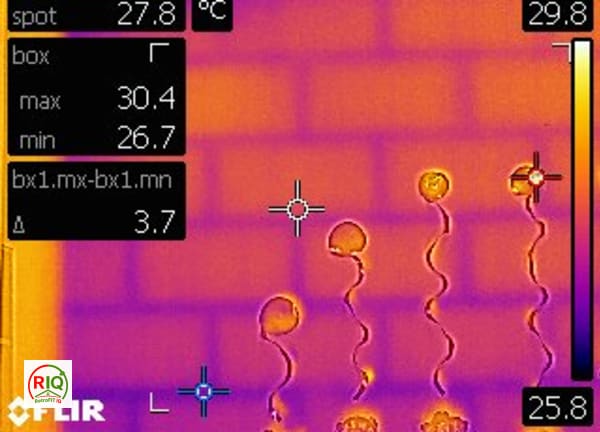
Thermal Bridging Visible Through Masonry Blockwork Wall

Thermal Bridge at Internal Corner Wall Junction
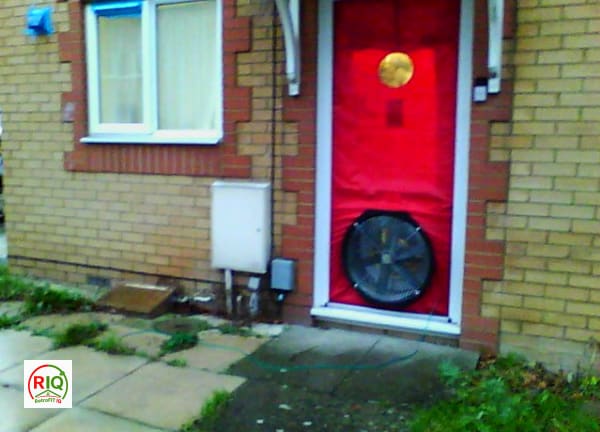
Blower Door Airtightness Test Setup

Thermal Bridge at Wall-Ceiling Junction Near Window

Acoustic Floor Upgrades: Mineral Wool Insulation Between Joists
No related investigations yet.
Browse all investigationsFrequently asked questions
Is PHPP better than SAP?+
They have different purposes. PHPP is more accurate for design; SAP/RdSAP are the required tools for compliance and EPCs.
Why doesn't my EPC match my energy bills?+
EPCs use simplified SAP/RdSAP methods with default assumptions, so they are indicative rather than a precise prediction.
Do I need PHPP for an EPC?+
No — EPCs are produced with RdSAP. PHPP is for design-accurate performance modelling.
What is the performance gap?+
The difference between modelled and actual energy use, often caused by simplifications that hide thermal bridging and infiltration.
Can PHPP be used on existing homes?+
Yes — it is the modelling tool behind EnerPHit retrofits and detailed retrofit design.
Is PHPP recognised in the UK?+
Yes — it is the international Passive House modelling standard and is widely used for serious low-energy design in the UK.
Does modelling save money?+
It can, by directing spend to the measures that actually reduce demand and avoiding ineffective ones.
Who should do the modelling?+
Someone trained in building physics — our modelling is carried out by a Certified Passive House Designer.
Need professional advice?
A comparison like this helps you understand the theory, but every property behaves differently. The only reliable way to establish the real cause in your home — rather than guessing — is professional building performance diagnostics. At RetrofitIQ we verify buildings using the appropriate combination of investigations:
- Thermal imaging
- Blower door testing
- Moisture investigation
- Building physics assessment
- Passive House methodology