
U-values vs Thermal Bridging: Where Homes Really Lose Heat
U-values vs Thermal bridging.
 Reviewed by George Sora, Certified Passive House DesignerUpdated June 2026
Quick answer & key takeaways
4 min read- Bottom line: U-values describe heat loss through the flat area of walls, roofs and windows; thermal bridges describe extra heat loss at junctions and interruptions.
- When U-values is enough: Specifying or comparing the build-up of an element
- When Thermal bridging is the better choice: Cold corners, junction mould or condensation hotspots
- When you need both: A complete heat-loss picture needs both the U-value and the bridging at junctions
- Biggest misconception: “If my walls have a good U-value, heat loss is solved.” — Thermal bridges at junctions can add a large extra loss and create cold, mould-prone spots regardless of the wall U-value.
- Retrofit IQ’s approach: We assess both the plain U-value and the junction bridging it ignores, mapping bridges with thermal imaging — because in real homes the junctions often lose more heat, and cause more condensation, than the headline U-value implies.
Quick answer
U-values describe heat loss through the flat area of walls, roofs and windows; thermal bridges describe extra heat loss at junctions and interruptions. You need both: improving U-values without addressing thermal bridges leaves significant heat loss — and condensation risk — at the very junctions a camera reveals.
At a glance
| Attribute | U-values | Thermal bridging |
|---|---|---|
| What it describes | Heat loss through an element's area | Heat loss at junctions / interruptions |
| Units | W/m²K | Psi (W/mK) and chi (W/K) |
| Where it dominates | Large plain areas | Edges, corners, lintels, balconies |
| Condensation link | Cold surfaces overall | Localised cold spots → mould risk |
| How we assess | Construction build-up / calculation | Thermal imaging + modelling (psi values) |
| Often overlooked? | No — widely understood | Yes — frequently ignored |
What is U-values?
A U-value measures how readily heat passes through a building element — a wall, roof or window — in watts per square metre per kelvin (W/m²K). Lower is better. It describes the 'plain' area of an element but not what happens at its edges and junctions.
What is Thermal bridging?
A thermal bridge is a localised path where heat escapes faster than through the surrounding fabric — at junctions, lintels, reveals, balconies and where insulation is interrupted. It is quantified by linear (psi) and point (chi) transmittance and can dominate heat loss in an otherwise well-insulated building.
What each method measures — and what it doesn’t
U-values
- How readily heat passes through the plain area of an element (W/m²K)
- The thermal performance of a wall, roof or window build-up
- What happens at edges and junctions — only the plain area
- Air leakage or as-built defects
Thermal bridging
- Localised heat loss at junctions, lintels, reveals and balconies
- Linear (psi) and point (chi) transmittance that can dominate total loss
- The plain-area performance — it concerns the junctions
- Whole-element U-value
The building science
Total fabric heat loss is the sum of two parts: the area-based loss through each element (its U-value × area) plus the extra loss along every junction (its psi value × length) and at point penetrations. In a poorly detailed building, thermal bridges can add 20–30% on top of the plain-area losses — a figure that surprises people who have focused only on U-values.
Thermal bridges also create the coldest internal surfaces, which is where condensation and mould appear first. A wall can have an excellent U-value yet still grow mould in the corner because the junction is a thermal bridge sitting below dewpoint. This is why a heat-loss investigation looks at both the areas and the junctions.
Passive House design treats thermal-bridge-free detailing as a core principle, modelling psi values at every junction so the insulation line stays continuous. Thermal imaging is the diagnostic counterpart: it makes the bridges visible so they can be quantified and designed out.
Key differences
- U-values are about areas; thermal bridges are about junctions.
- Good U-values do not guarantee low heat loss if junctions are bridged.
- Thermal bridges create the coldest spots and the highest local condensation risk.
- U-values are calculated from the build-up; psi values need modelling, informed by thermal imaging.
Common misconceptions
Myth: If my walls have a good U-value, heat loss is solved.
Thermal bridges at junctions can add a large extra loss and create cold, mould-prone spots regardless of the wall U-value.
Myth: Thermal bridges are trivial.
They can account for a substantial share of fabric heat loss and are the leading cause of localised condensation.
Myth: You can't do anything about thermal bridges in a retrofit.
Many can be reduced with continuous insulation, careful detailing at reveals and junctions, and EWI in particular.
Real-world situations
Well-insulated home still feels cold in corners
Thermal imaging to find the bridges, then detailing or insulation continuity to address them.
Planning a fabric upgrade and want maximum impact
Assess both U-values and psi values; continuous insulation (e.g. EWI) tackles both at once.
Mould forming at a specific junction despite good insulation
That junction is a thermal bridge — warm the surface by improving insulation continuity there.
Which do you actually need?
When U-values is enough
- Specifying or comparing the build-up of an element
- Feeding fabric performance into a heat-loss model
When Thermal bridging is the better choice
- Cold corners, junction mould or condensation hotspots
- Detailing a retrofit where junctions matter
When you need both
- A complete heat-loss picture needs both the U-value and the bridging at junctions
What Retrofit IQ checks on site
We assess both the plain U-value and the junction bridging it ignores, mapping bridges with thermal imaging — because in real homes the junctions often lose more heat, and cause more condensation, than the headline U-value implies.
- U-value calculation from the surveyed build-up
- Thermal imaging to locate and map thermal bridges
- psi-value modelling of key junctions
- Surface-temperature and dewpoint analysis at bridges
- A loss breakdown showing where bridging exceeds the plain U-value
What a Certified Passive House Designer recommends
I treat U-values and thermal bridges as two halves of the same heat-loss picture. Chasing ever-lower U-values while ignoring junctions is a classic error — you spend money on the easy bit and leave the cold corners, which are also where mould starts, untouched.
In practice I use thermal imaging to expose the bridges, then design for insulation continuity so the whole line stays warm. That is the Passive House mindset: it is not just how good your walls are, but how well everything joins together.
— George Sora, Certified Passive House Designer, Founder, RetrofitIQ
Reviewed using current building physics principles and Passive House methodology.
Related services
Related comparisons
Related investigations
Compare another way
Closely related comparisons our clients read next.
Internal vs External Wall Insulation
EWI is generally the better building-physics solution because it keeps the wall warm and the insulation continuous, reducing thermal bridges and condensation risk.
Read comparisonThermal Imaging vs Blower Door Testing
They answer different questions.
Read comparisonPHPP vs SAP / RdSAP Energy Modelling
PHPP is a design tool that predicts real energy performance accurately; SAP and RdSAP are compliance and EPC tools, simplified for consistency rather than precision.
Read comparisonLoft Insulation vs Wall Insulation
Loft insulation is usually the cheapest, easiest and highest-return measure, so it is normally first; wall insulation tackles a larger heat-loss area and gives big comfort gains but costs more and needs careful detailing.
Read comparisonEvidence from Real Projects (28)
Real project and investigation images from our own fieldwork, matched to this page — not stock photography.
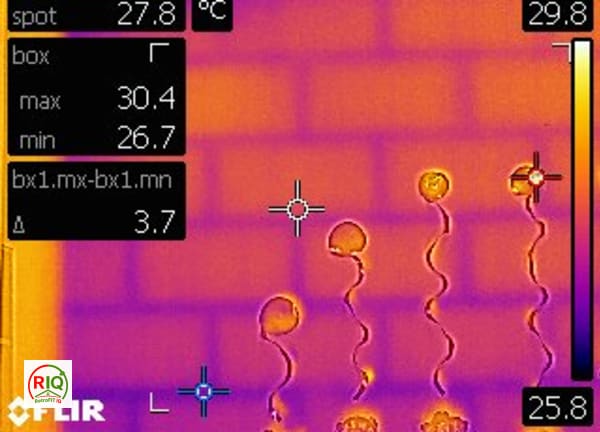
Thermal Bridging Visible Through Masonry Blockwork Wall

Sample Building Performance Investigation Report — Thermal Imaging

Thermal Bridge at Internal Corner Wall Junction

Thermal Bridge at Wall-Ceiling Junction Near Window
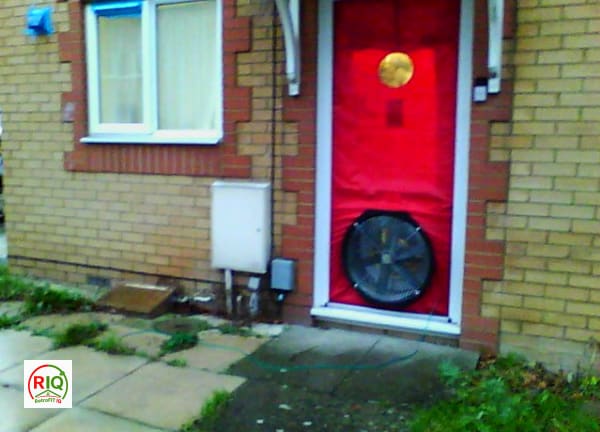
Blower Door Airtightness Test Setup

Internal door head and reveal next to a framed picture on a warmer external wall
No related investigations yet.
Browse all investigationsFrequently asked questions
What is a U-value in simple terms?+
It is how much heat passes through a wall, roof or window per square metre. A lower U-value means less heat loss through that element.
What is a thermal bridge?+
A junction or interruption where heat escapes faster than through the surrounding fabric — for example a lintel, reveal or balcony.
Why do thermal bridges matter so much?+
They add significant heat loss and create the coldest internal surfaces, which is where condensation and mould start.
Can thermal imaging show thermal bridges?+
Yes — that is one of its main uses. The camera makes cold junctions visible so they can be quantified and addressed.
Do good windows fix heat loss?+
They help, but if the reveals and junctions around them are bridged, you still lose heat and risk condensation there.
How are thermal bridges quantified?+
By linear (psi) and point (chi) transmittance values, modelled at each junction.
Can I remove thermal bridges in a retrofit?+
Many can be greatly reduced through continuous insulation and careful detailing, particularly with external wall insulation.
Does this affect heat pump sizing?+
Yes — including thermal bridges gives a truer heat loss, so the heat pump is sized correctly rather than oversized.
Need professional advice?
A comparison like this helps you understand the theory, but every property behaves differently. The only reliable way to establish the real cause in your home — rather than guessing — is professional building performance diagnostics. At RetrofitIQ we verify buildings using the appropriate combination of investigations:
- Thermal imaging
- Blower door testing
- Moisture investigation
- Building physics assessment
- Passive House methodology