
Loft Insulation vs Wall Insulation: Where to Spend First
Loft insulation vs Wall insulation.
 Reviewed by George Sora, Certified Passive House DesignerUpdated June 2026
Quick answer & key takeaways
4 min read- Bottom line: Loft insulation is usually the cheapest, easiest and highest-return measure, so it is normally first; wall insulation tackles a larger heat-loss area and gives big comfort gains but costs more and needs careful detailing.
- When Loft insulation is enough: The loft is uninsulated or poorly insulated
- When Wall insulation is the better choice: The loft is already done
- When you need both: You are planning a deep retrofit
- Biggest misconception: “Insulate the walls first because they're biggest.” — Often the loft is the cheaper, higher-return quick win. Measured heat loss should set the order, not area alone.
- Retrofit IQ’s approach: We rank measures by measured heat loss rather than habit: the loft is usually the first win, but where walls dominate the loss we say so — and we detail the eaves and junctions so insulating one element does not create a cold bridge at another.
Quick answer
Loft insulation is usually the cheapest, easiest and highest-return measure, so it is normally first; wall insulation tackles a larger heat-loss area and gives big comfort gains but costs more and needs careful detailing. The right order depends on what is already in place and where the measured heat loss actually is — which is why a heat-loss assessment, rather than a rule of thumb, should set the priorities. Often the loft is the quick win and walls the bigger project.
At a glance
| Attribute | Loft insulation | Wall insulation |
|---|---|---|
| Typical cost | Low | Higher (especially EWI) |
| Ease | Often simple | More involved |
| Heat-loss area | Smaller but high upward loss | Often the largest area |
| Return on cost | Usually highest | Strong, but more capital |
| Moisture/detailing risk | Lower (eaves, hatch matter) | Higher — needs design |
| Usual priority | First | After the loft, as a bigger project |
What is Loft insulation?
Insulating at ceiling or roof level, where heat readily rises and escapes. It is usually the cheapest, simplest and highest-return measure, though detailing at the eaves and hatch matters for both heat and moisture.
What is Wall insulation?
Insulating external walls (internally or externally), which often represent the largest heat-loss area of a house. It delivers major comfort gains but is more costly and demands careful moisture and thermal-bridge detailing.
What each method measures — and what it doesn’t
Loft insulation
- Reduces upward heat loss through the roof/ceiling
- Delivers high return for modest cost
- Quick, often non-disruptive improvement
- Heat loss through the walls
- Cold-wall condensation problems
Wall insulation
- Reduces loss through the largest fabric area
- Major comfort and surface-temperature gains
- Addresses cold walls that cause condensation
- A low-cost quick win — it is a larger investment
The building science
Heat loss is proportional to area and U-value, and to the temperature difference across each element. Lofts lose heat readily because warm air rises and the roof faces the largest temperature difference, so insulating at ceiling level is highly effective per pound — which is why it is usually the first measure. Good detailing at the eaves (to maintain ventilation and avoid cold spots) and at the loft hatch protects both the thermal gain and moisture safety.
Walls, however, are frequently the largest single heat-loss area of a house, so once the loft is dealt with they often represent the biggest remaining prize. Insulating them raises internal surface temperatures markedly, which improves comfort and removes the cold surfaces that drive condensation — a benefit beyond the energy saving. The cost is higher and the detailing more demanding, particularly the moisture strategy and thermal bridges.
Prioritising between them is not a fixed rule but a question of what exists and where the loss is. A home with no loft insulation and solid uninsulated walls will usually get the loft done first for the quick, cheap win, then plan walls as a larger project. A home with a good loft already may find walls the obvious next step. A measured heat-loss assessment shows where the watts are actually going.
Crucially, the measures interact. Insulating walls changes where the next-coldest surface is, and improving one element without considering the others can shift condensation risk. So while loft-first is a sensible default, the sequence belongs within a whole-house plan that accounts for moisture, ventilation and thermal bridges rather than treating each element in isolation.
Key differences
- Loft insulation is cheaper and usually higher-return; walls are a bigger area and project.
- Walls give major comfort and condensation benefits at higher cost.
- Priority depends on existing measures and measured heat loss.
- Measures interact — sequence within a whole-house plan.
Common misconceptions
Myth: Insulate the walls first because they're biggest.
Often the loft is the cheaper, higher-return quick win. Measured heat loss should set the order, not area alone.
Myth: Loft insulation alone makes a house warm.
It helps a lot, but cold walls can still cause discomfort and condensation. Walls are usually the next step.
Myth: You can insulate elements in any order safely.
Measures interact and can shift condensation risk; a whole-house plan keeps the sequence safe.
Real-world situations
No loft insulation and a tight budget
Loft first — the cheapest, highest-return measure, with eaves and hatch detailed properly.
Loft already well insulated, rooms still cold
Wall insulation as the next major step, with moisture and thermal-bridge detailing.
Cold walls with condensation and mould
Wall insulation to raise surface temperatures, modelled for condensation risk, alongside ventilation.
Planning a full retrofit
A heat-loss assessment to set the sequence within a whole-house plan.
Which do you actually need?
When Loft insulation is enough
- The loft is uninsulated or poorly insulated
- Budget is limited and you want the best return
- You want a quick, low-disruption win
When Wall insulation is the better choice
- The loft is already done
- Walls are the dominant heat-loss area
- Cold walls cause discomfort or condensation
When you need both
- You are planning a deep retrofit
- You want a coordinated, moisture-safe sequence
What Retrofit IQ checks on site
We rank measures by measured heat loss rather than habit: the loft is usually the first win, but where walls dominate the loss we say so — and we detail the eaves and junctions so insulating one element does not create a cold bridge at another.
- Heat-loss assessment to identify the dominant losses
- Review of existing loft and wall insulation
- Thermal imaging to find gaps, bridges and cold surfaces
- Condensation-risk modelling for wall build-ups
- Eaves, hatch and junction detailing for the loft
- A prioritised, whole-house sequence of measures
What a Certified Passive House Designer recommends
Loft-first is a sound default because it is cheap and high-return, but I never treat it as a law. The right order comes from measuring where the heat is actually going and what is already in place. Sometimes the walls are so dominant that they justify priority; usually the loft is the sensible quick win first.
What matters most is sequencing the measures within a whole-house plan. Insulate one element without thinking about the others and you can move the condensation problem rather than solve it. Measure, plan, then improve in the right order — that is how the money does the most good.
— George Sora, Certified Passive House Designer, Founder, RetrofitIQ
Reviewed using current building physics principles and Passive House methodology.
Related services
Related comparisons
Related investigations
Compare another way
Closely related comparisons our clients read next.
U-values vs Thermal Bridging in Heat Loss
U-values describe heat loss through the flat area of walls, roofs and windows; thermal bridges describe extra heat loss at junctions and interruptions.
Read comparisonFloor Insulation vs Wall Insulation
Floor insulation tackles cold floors and the draughts that come up through suspended timber floors; wall insulation tackles a larger heat-loss area and cold-wall comfort.
Read comparisonInternal vs External Wall Insulation
EWI is generally the better building-physics solution because it keeps the wall warm and the insulation continuous, reducing thermal bridges and condensation risk.
Read comparisonPIR vs Mineral Wool Insulation
PIR gives more thermal resistance per millimetre, so it suits space-constrained upgrades; mineral wool is vapour-open, fire-resistant and acoustically absorbent, but needs more thickness for the same U-value.
Read comparisonEvidence from Real Projects (27)
Real project and investigation images from our own fieldwork, matched to this page — not stock photography.

Acoustic Floor Upgrades: Mineral Wool Insulation Between Joists

Sample Building Performance Investigation Report — Thermal Imaging
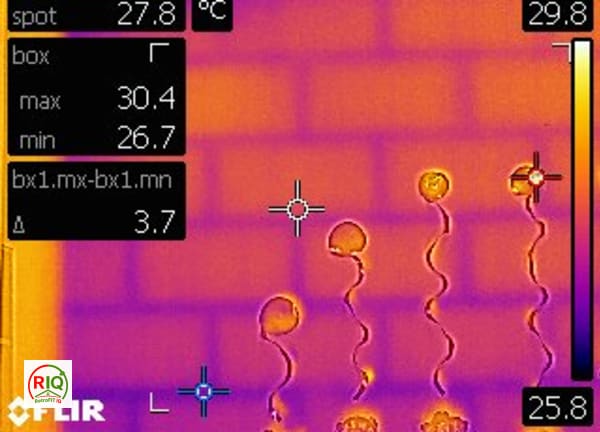
Thermal Bridging Visible Through Masonry Blockwork Wall

Thermal Bridge at Internal Corner Wall Junction

Thermal Bridge at Wall-Ceiling Junction Near Window

Brick-slip panels being installed onto the metal rail system over the mineral wool insulat
No related investigations yet.
Browse all investigationsFrequently asked questions
Should I insulate my loft or walls first?+
Usually the loft first, as it is the cheapest, simplest and highest-return measure. But the right order depends on what is already insulated and where the measured heat loss is.
Why is loft insulation such good value?+
Heat rises and the roof faces a large temperature difference, so insulating at ceiling level is very effective per pound spent.
Are walls really the biggest heat-loss area?+
Often yes — external walls frequently represent the largest fabric area, so once the loft is done they are usually the biggest remaining prize.
Will loft insulation alone make my house warm?+
It helps significantly, but cold walls can still cause discomfort and condensation, so walls are commonly the next step.
Does wall insulation help with damp?+
Yes — it raises internal surface temperatures, removing the cold surfaces that cause condensation, provided it is detailed and modelled correctly.
Can I insulate elements in any order?+
It is safest within a whole-house plan, because measures interact and can shift condensation risk if done in isolation.
What detailing matters for loft insulation?+
Maintaining eaves ventilation, avoiding cold spots and insulating the loft hatch — to protect both the thermal gain and moisture safety.
How do I know the right priority for my home?+
A measured heat-loss assessment shows where the watts are going, so the sequence is based on evidence, not assumptions.
Who plans the sequence?+
A Certified Passive House Designer, so the measures are prioritised and coordinated to be effective and moisture-safe.
Need professional advice?
A comparison like this helps you understand the theory, but every property behaves differently. The only reliable way to establish the real cause in your home — rather than guessing — is professional building performance diagnostics. At RetrofitIQ we verify buildings using the appropriate combination of investigations:
- Thermal imaging
- Blower door testing
- Moisture investigation
- Building physics assessment
- Passive House methodology