PIR vs Mineral Wool: Thermal Performance, Moisture and Fire
PIR insulation board vs Mineral wool.
 Reviewed by George Sora, Certified Passive House DesignerUpdated June 2026
Quick answer & key takeaways
4 min read- Bottom line: PIR gives more thermal resistance per millimetre, so it suits space-constrained upgrades; mineral wool is vapour-open, fire-resistant and acoustically absorbent, but needs more thickness for the same U-value.
- When PIR is enough: Depth is severely limited
- When Mineral wool is the better choice: The wall needs to breathe (solid-wall retrofit)
- When you need both: Different elements of a project have different needs
- Biggest misconception: “PIR is always the best insulation because it's thinnest.” — Thinness is one factor. Vapour behaviour, fire and acoustics often favour mineral wool, especially in breathable walls.
- Retrofit IQ’s approach: We choose insulation from the wall's moisture behaviour, not just its U-value: PIR is space-efficient but vapour-closed, mineral wool breathes — and we model the build-up for condensation risk before committing, because the wrong choice can trap moisture.
Quick answer
PIR gives more thermal resistance per millimetre, so it suits space-constrained upgrades; mineral wool is vapour-open, fire-resistant and acoustically absorbent, but needs more thickness for the same U-value. The right choice depends on the wall's moisture strategy, the space available, and fire and acoustic requirements — not on thermal performance alone. In vapour-open or breathable build-ups, especially solid-wall retrofit, mineral wool is often the safer choice despite needing more depth.
At a glance
| Attribute | PIR insulation board | Mineral wool |
|---|---|---|
| Thermal per mm | Higher (thinner) | Lower (thicker for same U) |
| Vapour permeability | Low (vapour-closed) | High (breathable) |
| Fire performance | Combustible — needs detailing | Excellent (non-combustible) |
| Acoustic absorption | Poor | Good |
| Rigidity | Rigid board | Flexible/semi-rigid |
| Best for | Tight spaces, vapour-controlled build-ups | Breathable/solid walls, fire, acoustics |
What is PIR insulation board?
A rigid, closed-cell foam board with high thermal resistance per millimetre and low vapour permeability. It is space-efficient but rigid, combustible (with appropriate detailing), and vapour-closed, which affects how walls manage moisture.
What is Mineral wool?
A fibrous, vapour-open insulation (glass or stone wool) that breathes, absorbs sound and offers excellent fire resistance, but needs greater thickness for the same thermal resistance as PIR.
What each method measures — and what it doesn’t
PIR
- High thermal resistance in minimal thickness
- Suitability for space-constrained, vapour-controlled build-ups
- Vapour-open behaviour for breathable construction
- Acoustic or fire benefit
Mineral wool
- Vapour-open performance for breathable walls
- Fire resistance and acoustic absorption
- Forgiving fit around irregular structure
- Maximum thermal performance per millimetre
The building science
Thermal resistance per millimetre is where PIR wins: its closed-cell foam achieves a low U-value in thin board, which is valuable when depth is tight. But thermal performance is only one axis. PIR is vapour-closed, so it acts as a vapour control layer wherever it sits — useful in some build-ups, problematic in others, because it changes where moisture can accumulate within the construction.
Mineral wool takes more thickness for the same U-value, but it is vapour-open, so it lets walls breathe and dry. In solid-wall and other breathable constructions, that permeability is often the safer behaviour: moisture can move through and out rather than being trapped against a vapour-closed board. This is why a building physics assessment, not a thermal table, should drive the choice in moisture-sensitive walls.
Fire and acoustics complete the picture. Mineral wool is non-combustible and an excellent sound absorber; PIR is combustible and requires careful detailing, and it does little acoustically. So a build-up that must perform for fire or noise frequently favours mineral wool, even where PIR would be thinner.
The honest answer is that neither is universally better. PIR is the right tool where space is scarce and the vapour strategy suits a closed board; mineral wool is the right tool for breathable walls, fire-critical situations and acoustic needs. The decision belongs to the specific wall — its construction, moisture behaviour and constraints — assessed through building physics.
Key differences
- PIR is thinner for the same U-value; mineral wool is breathable.
- PIR is vapour-closed; mineral wool is vapour-open.
- Mineral wool resists fire and absorbs sound; PIR does neither well.
- The moisture strategy of the wall should drive the choice.
Common misconceptions
Myth: PIR is always the best insulation because it's thinnest.
Thinness is one factor. Vapour behaviour, fire and acoustics often favour mineral wool, especially in breathable walls.
Myth: Mineral wool is inferior because it's thicker.
It needs more depth for the same U-value, but its breathability, fire resistance and acoustic absorption are real advantages.
Myth: You can swap one for the other freely.
Their vapour behaviour differs fundamentally, which changes the wall's moisture risk. The build-up must be designed for the material.
Real-world situations
Solid-wall internal insulation on a period property
Often a vapour-open, breathable system (mineral wool or woodfibre) with condensation-risk modelling, rather than a vapour-closed PIR board.
Very limited depth and a vapour-controlled build-up
PIR can be appropriate where the moisture strategy suits it and space is critical.
Fire-critical or acoustically sensitive wall
Mineral wool for non-combustibility and sound absorption.
Unsure which is safe for your wall
A building physics assessment with condensation-risk modelling to choose the right material and build-up.
Which do you actually need?
When PIR is enough
- Depth is severely limited
- The vapour strategy suits a closed board
- Maximum thermal per millimetre is the priority
When Mineral wool is the better choice
- The wall needs to breathe (solid-wall retrofit)
- Fire resistance or acoustics matter
- You want a more forgiving, moisture-safe build-up
When you need both
- Different elements of a project have different needs
- Each material is used where its physics fits
What Retrofit IQ checks on site
We choose insulation from the wall's moisture behaviour, not just its U-value: PIR is space-efficient but vapour-closed, mineral wool breathes — and we model the build-up for condensation risk before committing, because the wrong choice can trap moisture.
- Assessment of the wall construction and its moisture behaviour
- Condensation-risk modelling of the proposed build-up
- U-value calculation against the available depth
- Consideration of fire and acoustic requirements
- Selection of vapour-open or vapour-controlled materials accordingly
- Detailing to keep the construction moisture-safe
What a Certified Passive House Designer recommends
Choosing insulation on thermal performance per millimetre alone is how moisture problems get built into walls. PIR is excellent where space is tight and the vapour strategy suits a closed board, but in a breathable solid wall it can trap moisture against the masonry. There, a vapour-open material like mineral wool is usually the safer engineering choice.
I let the wall decide. Model the moisture behaviour, consider fire and acoustics, check the depth, and the right material becomes clear. The thinnest board is not automatically the best one — durability and moisture safety matter more than saving a few millimetres.
— George Sora, Certified Passive House Designer, Founder, RetrofitIQ
Reviewed using current building physics principles and Passive House methodology.
Related services
Related comparisons
Related investigations
Compare another way
Closely related comparisons our clients read next.
Internal vs External Wall Insulation
EWI is generally the better building-physics solution because it keeps the wall warm and the insulation continuous, reducing thermal bridges and condensation risk.
Read comparisonLoft Insulation vs Wall Insulation
Loft insulation is usually the cheapest, easiest and highest-return measure, so it is normally first; wall insulation tackles a larger heat-loss area and gives big comfort gains but costs more and needs careful detailing.
Read comparisonFloor Insulation vs Wall Insulation
Floor insulation tackles cold floors and the draughts that come up through suspended timber floors; wall insulation tackles a larger heat-loss area and cold-wall comfort.
Read comparisonAcoustic Mineral Wool vs PIR Insulation
Mineral wool absorbs sound; PIR is a rigid thermal board that reflects it.
Read comparisonEvidence from Real Projects (28)
Real project and investigation images from our own fieldwork, matched to this page — not stock photography.

Acoustic Floor Upgrades: Mineral Wool Insulation Between Joists
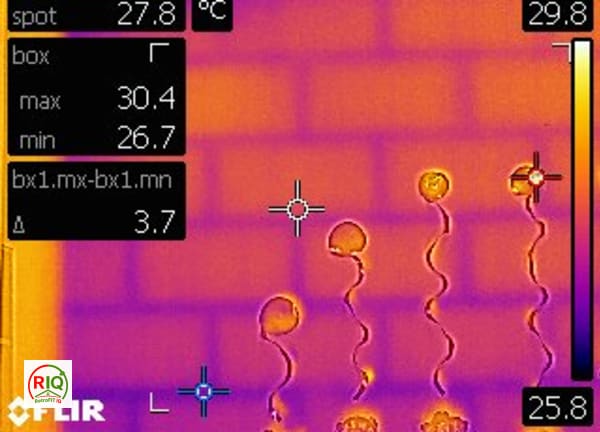
Thermal Bridging Visible Through Masonry Blockwork Wall

Thermal Bridge at Internal Corner Wall Junction

Sample Building Performance Investigation Report — Thermal Imaging
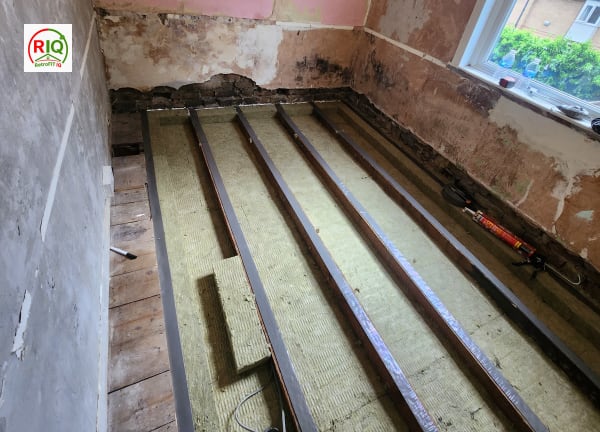
N17 project · pink bedroom

Brick-slip panels being installed onto the metal rail system over the mineral wool insulat
No related investigations yet.
Browse all investigationsFrequently asked questions
Is PIR or mineral wool better?+
Neither universally. PIR insulates more per millimetre; mineral wool is breathable, fire-resistant and acoustically absorbent. The right choice depends on the wall's moisture strategy, space, fire and acoustic needs.
Why is mineral wool thicker?+
It has a lower thermal resistance per millimetre than PIR, so it needs more depth for the same U-value — offset by breathability, fire and acoustic benefits.
Can I use PIR on a solid wall internally?+
Sometimes, but its vapour-closed nature can trap moisture against the masonry. A vapour-open system is often safer; condensation-risk modelling should decide.
Which is better for fire?+
Mineral wool — it is non-combustible. PIR is combustible and requires careful detailing.
Does mineral wool help with sound?+
Yes — it absorbs sound well, unlike rigid PIR, so it doubles as acoustic infill in many build-ups.
Is PIR waterproof?+
It is largely vapour-closed and water-resistant, which is precisely why its placement in a wall's moisture strategy matters.
What about woodfibre or other natural insulations?+
Vapour-open natural insulations are excellent for breathable retrofit; we consider them alongside mineral wool where appropriate.
How do I know which is safe for my wall?+
A building physics assessment with condensation-risk modelling determines the safe material and build-up for your specific construction.
Who specifies the insulation?+
A Certified Passive House Designer, so thermal, moisture, fire and acoustic factors are all weighed for your wall.
Need professional advice?
A comparison like this helps you understand the theory, but every property behaves differently. The only reliable way to establish the real cause in your home — rather than guessing — is professional building performance diagnostics. At RetrofitIQ we verify buildings using the appropriate combination of investigations:
- Thermal imaging
- Blower door testing
- Moisture investigation
- Building physics assessment
- Passive House methodology