Retrofit measures interact, so doing them in the wrong order wastes money and can lock in poor outcomes. The 'fabric first' principle is simple: improve the building fabric (insulation, airtightness, glazing, thermal-bridge detailing) to drive down the heat demand before you size and install the heating system. Reduce the load first, then meet the (now much smaller) load efficiently.
Why fabric first saves money — twice
Fabric first cuts cost in two ways. First, capital cost: a low-demand house needs a smaller heat source — a smaller (cheaper) heat pump, fewer or smaller emitters, sometimes no radiator circuit at all in a Passive House. Size the plant for an un-insulated house and you buy bigger, more expensive equipment than you'll need. Second, running cost: the reduced demand means lower bills for the life of the building, and a heat pump sized for a low-demand house runs at its efficient operating point rather than being oversized and cycling.
The right sequence
| Step | Works | Why this order |
|---|---|---|
| 1. Assess & model | Survey, energy & moisture model, whole-house plan | Understand the building before changing it |
| 2. Fabric | Insulation, airtightness, glazing, thermal-bridge details | Drives down the heat demand |
| 3. Ventilation | Extract / PIV / MVHR matched to the new airtightness | Replaces lost accidental ventilation; prevents mould |
| 4. Heat source | Heat pump / heating sized to the reduced load | Small, efficient, cheaper — sized to real demand |
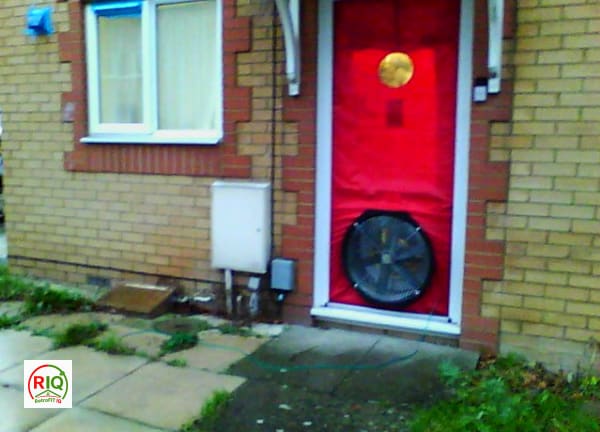
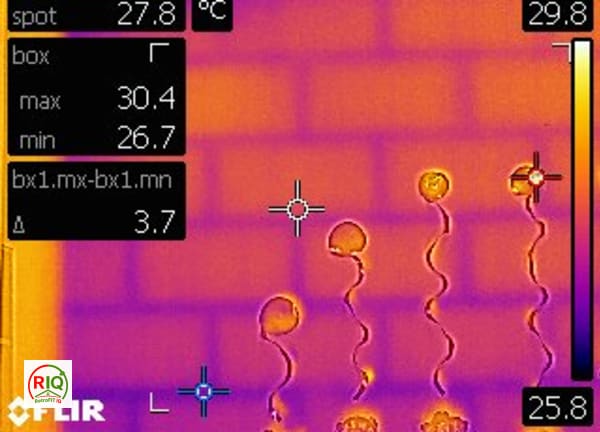
| 5. Verify | Blower door, thermal imaging, commissioning | Confirm the design was achieved |
The non-negotiable couplings: ventilation must go in with (not after) the airtightness, and the heat source must come after the fabric. Everything else can flex to suit budget and disruption — but those two sequencing rules prevent the two commonest retrofit failures (post-retrofit mould, and oversized plant).
Phasing without lock-in
Most homeowners can't do everything at once, and phased retrofit is perfectly sound — provided it's designed as one journey from the start (the whole-house plan / Medium-Term Improvement Plan, see the PAS 2035 article). The aim is to ensure each phase is compatible with the end state and never leaves the building worse off in between. Practical phasing rules:
- Design the end state first, then work backward to sensible phases.
- Do 'no-regret' and disruptive-access measures early — e.g. insulation and airtightness while a room is already being renovated, or services routed to suit the future plan.
- Never increase airtightness in a phase without providing the matching ventilation in the same phase.
- Defer sizing/replacing the heat source until the fabric phases that affect demand are done (or at least firmly committed and designed).
- Avoid measures that block future work — e.g. an insulation detail that prevents a later ventilation route, or finishes that bury an un-tested air barrier.