
The symptoms
- Cold upstairs rooms despite 'having loft insulation'
- Snow melting off the roof faster than neighbours' (heat escaping)
- Draughts from the loft hatch and around ceiling fittings
- Condensation or damp in the loft itself
The building physics: insulation needs continuity and airtightness
Loft insulation only works if two conditions are met: it is continuous (no gaps, no compression), and the ceiling below it is airtight. Insulation slows conductive heat loss, but it does nothing to stop warm air leaking up through gaps in the ceiling — around the loft hatch, downlights, pipes and cables. A 270mm-deep blanket of insulation with a leaky hatch and unsealed ceiling penetrations performs far worse than its depth suggests, because warm air bypasses it entirely.
In practice, loft insulation is often compressed by boarding for storage, slumped or missing at the eaves where access is tight, and interrupted around water tanks and recessed lights. Each gap is a cold patch on the ceiling below. And warm, moist air leaking up into the cold loft can condense on the underside of the roof, causing the damp timbers and mould people sometimes find up there.
The likely causes
- Gaps, compression and slumping leaving cold patches
- Missing insulation at the eaves where access is tight
- An uninsulated, unsealed loft hatch acting as a heat and air leak
- Air leakage up through ceiling penetrations causing loft condensation
The loft hatch — a small detail with a big effect
An uninsulated, unsealed loft hatch is one of the biggest single weak points in many homes: a direct, draughty hole between the heated house and the cold loft, right at the top of the building where the stack effect pushes warm air out hardest. Insulating and draught-sealing the hatch is cheap, quick, and often delivers a noticeable improvement on its own.
Common mistakes homeowners make
- Boarding over insulation for storage and compressing it
- Adding more insulation without sealing the ceiling air barrier
- Ignoring the loft hatch — a major, easily-fixed weak point
- Sealing the loft so tightly it can no longer ventilate, causing condensation
How RetrofitIQ investigates a loft
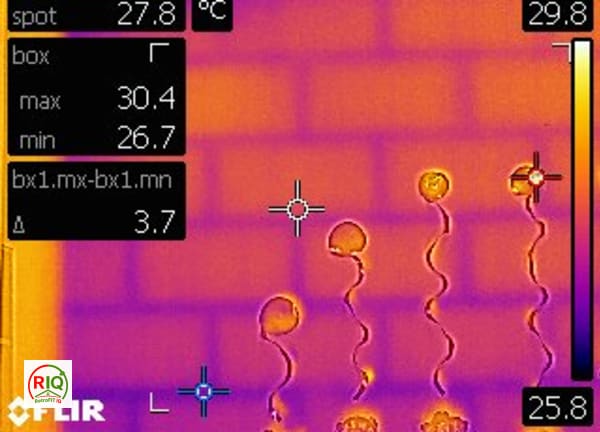
- Thermal imaging from inside the rooms below to find cold patches and gaps
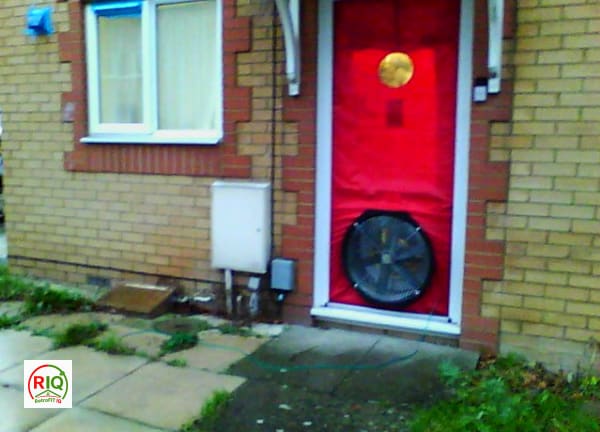
- Blower door testing with smoke to locate air leakage through the ceiling and hatch
- A loft inspection of insulation depth, coverage, eaves and ventilation
- A specification to top up, seal and ventilate correctly — including the hatch
- Verification that the upstairs is warmer and the loft stays dry