
The symptoms
- Damp or black-spotted roof timbers and rafters
- Mould or droplets on the underside of roofing felt
- Wet loft insulation and water marks on the ceiling below
- Worse in cold weather and after a loft was 'upgraded'
The building physics: a cold roof needs to stay ventilated
In a traditional 'cold roof', the loft is deliberately kept cold, with the insulation at ceiling level and the roof space ventilated to outside. When warm, humid air from the heated home below leaks up through gaps in the ceiling — around the hatch, downlights, pipes and cables — it carries moisture into that cold loft. There it meets the cold underside of the roof, falls below its dew point, and condenses on the timbers and felt.
The loft's ventilation (at the eaves and sometimes the ridge) is what normally carries that moisture away. Anything that reduces it — insulation pushed into the eaves, blocked vents, or a roof sealed up during re-covering — traps the moisture and makes the condensation worse. This is why loft condensation often appears or worsens after a well-meaning 'upgrade'.
The likely causes
- Air leakage carrying moisture up from the heated home
- Blocked or inadequate loft ventilation at the eaves and ridge
- Insulation pushed into the eaves cutting off airflow
- Bathroom or kitchen extract ducts discharging into the loft instead of outside
The extract-fan mistake
One of the most common and damaging errors is a bathroom or kitchen extract fan ducted to discharge into the loft rather than to outside. It dumps warm, very humid air straight into the cold roof space, where it condenses heavily. Extract ducts must always terminate outside, through a tile vent or wall vent — never into the loft.
Common mistakes homeowners make
- Venting bathroom or kitchen fans into the loft rather than to outside
- Blocking eaves ventilation with insulation
- Adding more insulation without sealing the ceiling air leaks below
How RetrofitIQ investigates loft condensation
- Inspection of timbers, felt, insulation and ventilation paths
- Blower door testing with smoke to find where moist air leaks up from the house
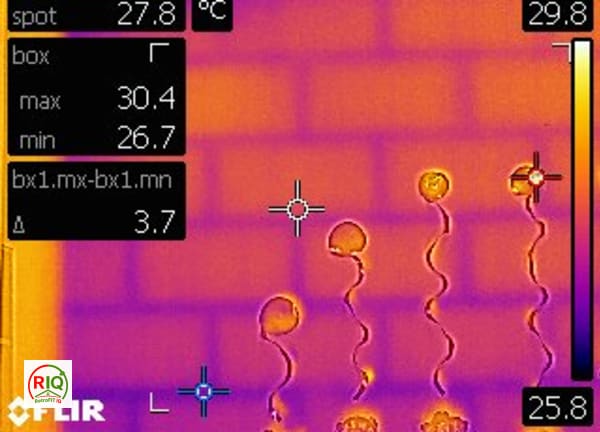
- Thermal imaging and moisture readings to map the affected areas
- Checking that extract ducts terminate outside, not in the loft
- A remedy: seal the ceiling air barrier, restore ventilation, redirect extracts