
Heat Pump vs Gas Boiler: Why Fabric Comes First
Air source heat pump vs Gas boiler.
 Reviewed by George Sora, Certified Passive House DesignerUpdated May 2026
Quick answer & key takeaways
4 min read- Bottom line: A heat pump rewards a home with low heat loss and runs efficiently at low flow temperatures; a gas boiler can brute-force heat into a leaky home but masks fabric faults.
- When Air source heat pump is enough: The fabric is, or will be, low-loss with sized emitters
- When Gas boiler is the better choice: A like-for-like emergency replacement where no fabric work is possible
- When you need both: Fabric-first then a correctly sized heat pump is the efficient destination; a boiler is at best a bridge
- Biggest misconception: “Heat pumps don't work in older UK homes.” — They work well once heat loss is addressed and emitters are sized correctly. The fabric, not the technology, is usually the limiting factor.
- Retrofit IQ’s approach: We reduce and quantify the fabric heat loss first, then size a heat pump to the lowered, measured load — because a heat pump's efficiency follows from low flow temperatures and sized emitters, not from forcing heat into a leaky house as a boiler can.
Quick answer
A heat pump rewards a home with low heat loss and runs efficiently at low flow temperatures; a gas boiler can brute-force heat into a leaky home but masks fabric faults. The fabric-first principle is to reduce heat loss before or alongside fitting a heat pump, so it can be sized correctly and run efficiently.
At a glance
| Attribute | Air source heat pump | Gas boiler |
|---|---|---|
| How it makes heat | Moves heat (COP ~3–4) | Burns gas (~90% efficient) |
| Flow temperature | Low (35–50°C) | High (60–80°C) |
| Rewards good fabric? | Strongly | No — masks poor fabric |
| Emitter sizing | Often larger radiators / UFH | Smaller radiators suffice |
| Carbon | Lower, falling with the grid | Higher |
| Best in | Low-heat-loss homes | Any, but inefficiently in leaky homes |
What is Air source heat pump?
A heat pump moves heat from the outside air into the home, delivering several units of heat per unit of electricity (a coefficient of performance, COP, typically 3–4). It runs at lower flow temperatures, so it performs best in a home with low heat loss and adequately sized emitters.
What is Gas boiler?
A gas boiler burns fuel to produce high-temperature heat on demand. It can force heat into a leaky, high-loss home with small radiators, which masks fabric problems — but at rising running cost and carbon, and with no efficiency reward for improving the fabric.
What each method measures — and what it doesn’t
Air source heat pump
- Several units of heat per unit of electricity (COP ~3–4) at low flow temperatures
- Efficient low-carbon heat in a home with low heat loss and sized emitters
- Efficiency without adequate fabric and emitters — it rewards low heat loss
Gas boiler
- High-temperature heat on demand, forcing heat into a high-loss home
- Heating that masks fabric problems, at rising cost and carbon
- Any efficiency reward for improving the fabric
- Low-carbon operation
The building science
A heat pump's efficiency depends on the temperature it has to deliver: the lower the flow temperature, the higher the COP. A home with low heat loss can be kept warm at a low flow temperature through correctly sized emitters, so the heat pump runs efficiently and cheaply. A high-loss home demands high flow temperatures, which drags efficiency down.
This is why fabric comes first. Insulation, airtightness and thermal-bridge reduction lower the heat demand, which both shrinks the heat pump you need and lets it run in its efficient range. Fit a heat pump to a leaky, poorly insulated house without addressing the fabric and you get high bills and disappointment — the technology is blamed for a fabric problem.
A gas boiler hides all of this. Its high flow temperature can push heat through small radiators into a leaky home, so the symptoms of poor fabric never surface — until you try to decarbonise. The fabric-first sequence (measure heat loss, improve the fabric, then size the system) is what makes the switch successful.
Key differences
- A heat pump rewards low heat loss; a boiler masks high heat loss.
- Heat pumps run at low flow temperatures and need adequately sized emitters.
- Fabric improvements cut heat pump size and running cost; they barely change a boiler's behaviour.
- Accurate heat-loss assessment is essential before sizing a heat pump.
Common misconceptions
Myth: Heat pumps don't work in older UK homes.
They work well once heat loss is addressed and emitters are sized correctly. The fabric, not the technology, is usually the limiting factor.
Myth: Just swap the boiler for a heat pump like for like.
Without checking heat loss and emitter sizing, a like-for-like swap often underperforms. Assess first.
Myth: You must reach Passive House before a heat pump.
No — but a sensible fabric-first improvement and an accurate heat-loss survey make the heat pump efficient and correctly sized.
Real-world situations
Considering a heat pump for a Victorian house
Start with a measured heat-loss survey and airtightness test; improve fabric where cost-effective, then size the heat pump.
Boiler at end of life, want to decarbonise
Assess heat loss and emitters now; plan fabric upgrades so the heat pump can run at low flow temperatures.
Heat pump quoted but worried about bills
Get an independent heat-loss assessment to check sizing and flow temperature assumptions before committing.
Which do you actually need?
When Air source heat pump is enough
- The fabric is, or will be, low-loss with sized emitters
- You want low-carbon heat and the lowest running cost
When Gas boiler is the better choice
- A like-for-like emergency replacement where no fabric work is possible
- A short-term bridge only
When you need both
- Fabric-first then a correctly sized heat pump is the efficient destination; a boiler is at best a bridge
What Retrofit IQ checks on site
We reduce and quantify the fabric heat loss first, then size a heat pump to the lowered, measured load — because a heat pump's efficiency follows from low flow temperatures and sized emitters, not from forcing heat into a leaky house as a boiler can.
- Room-by-room heat-loss calculation, not a rule of thumb
- Thermal imaging and blower door to quantify the load
- Emitter audit and achievable flow temperature
- Fabric measures modelled for their effect on load and efficiency
- A sequenced plan so the heat pump runs cool and efficient
What a Certified Passive House Designer recommends
My consistent advice is fabric first, then the heat pump. A heat pump is not a like-for-like boiler replacement; it is a low-temperature system that rewards a home which loses little heat. Measure the heat loss properly, reduce it where it is cost-effective, size the emitters, and the heat pump will run efficiently and cheaply.
The failures I am asked to investigate almost always trace back to skipping that sequence — a heat pump sized from assumptions onto unimproved fabric. An accurate heat-loss assessment by someone who understands building physics is the cheapest insurance you can buy before a heat pump.
— George Sora, Certified Passive House Designer, Founder, RetrofitIQ
Reviewed using current building physics principles and Passive House methodology.
Related services
Compare another way
Closely related comparisons our clients read next.
U-values vs Thermal Bridging in Heat Loss
U-values describe heat loss through the flat area of walls, roofs and windows; thermal bridges describe extra heat loss at junctions and interruptions.
Read comparisonInternal vs External Wall Insulation
EWI is generally the better building-physics solution because it keeps the wall warm and the insulation continuous, reducing thermal bridges and condensation risk.
Read comparisonPHPP vs SAP / RdSAP Energy Modelling
PHPP is a design tool that predicts real energy performance accurately; SAP and RdSAP are compliance and EPC tools, simplified for consistency rather than precision.
Read comparisonHeat Pump Readiness: Fabric-First vs System-First
Fabric-first reduces heat loss before the heat pump is sized, so the pump is smaller, runs cooler and costs less to run; system-first installs the pump to suit the house as it stands.
Read comparisonEvidence from Real Projects (21)
Real project and investigation images from our own fieldwork, matched to this page — not stock photography.
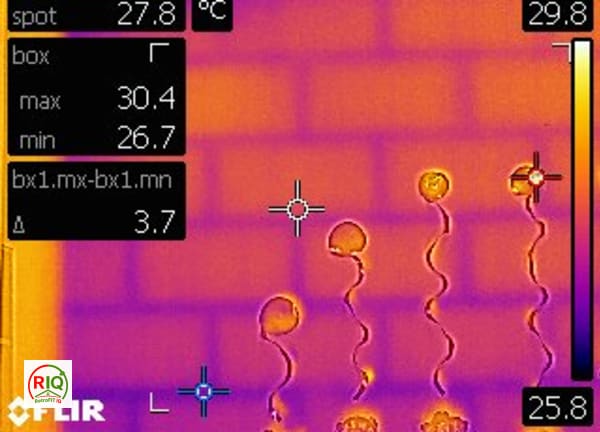
Thermal Bridging Visible Through Masonry Blockwork Wall

Sample Building Performance Investigation Report — Thermal Imaging

Thermal Bridge at Internal Corner Wall Junction
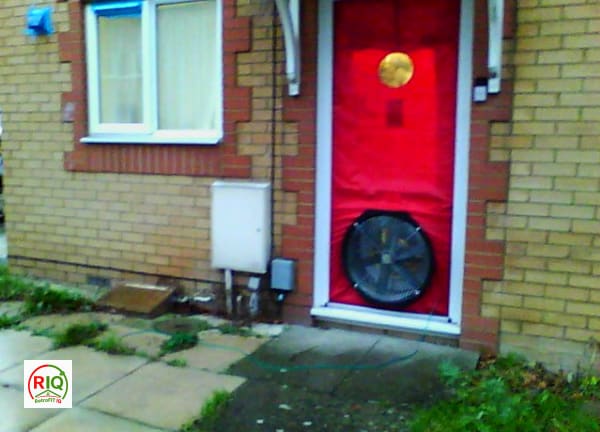
Blower Door Airtightness Test Setup

Thermal Bridge at Wall-Ceiling Junction Near Window

Internal door head and reveal next to a framed picture on a warmer external wall
No related investigations yet.
Browse all investigationsFrequently asked questions
Do I need to insulate before getting a heat pump?+
Ideally yes, where cost-effective. Lower heat loss lets the heat pump be smaller and run efficiently at low flow temperatures.
Why do heat pumps need bigger radiators?+
Because they run at lower flow temperatures, emitters must be larger to deliver the same heat. Sizing is part of the design.
Are heat pumps efficient in cold weather?+
Modern units work in cold conditions; efficiency falls as it gets colder, which is why low heat loss matters.
Is a like-for-like boiler swap to a heat pump fine?+
Often not — without checking heat loss and emitters it can underperform. An assessment first prevents that.
How accurate is a heat-loss survey?+
A measured survey, including airtightness and thermal bridges, is far more accurate than rule-of-thumb sizing and avoids oversizing.
Will a heat pump save money?+
In a low-heat-loss home with good design, running costs can be competitive; in a leaky home without fabric work, savings are limited.
What is a COP?+
Coefficient of performance — units of heat delivered per unit of electricity. A COP of 3.5 means 3.5 kWh of heat per 1 kWh of electricity.
Can you tell me if my home is heat-pump ready?+
Yes — our heat pump readiness assessment measures heat loss, fabric and emitter suitability so the system is designed correctly.
Need professional advice?
A comparison like this helps you understand the theory, but every property behaves differently. The only reliable way to establish the real cause in your home — rather than guessing — is professional building performance diagnostics. At RetrofitIQ we verify buildings using the appropriate combination of investigations:
- Thermal imaging
- Blower door testing
- Moisture investigation
- Building physics assessment
- Passive House methodology