
Why is one room colder than the others?
A single room that never warms up is rarely random. It almost always has more heat-losing surface, a local defect, or a heating imbalance — and each of those leaves a signature you can measure.
 Reviewed by George Sora, Certified Passive House DesignerUpdated June 2026
Quick answer & key takeaways
6 min read- One cold room usually means it loses more heat than the others, or receives less, for a specific reason.
- Exposed corner and end-of-terrace rooms have more external wall area, so they lose more heat.
- Local thermal bridges, missing insulation patches and air leakage create cold spots in one room.
- Heating imbalance — an undersized or unbalanced radiator — can leave one room starved of heat.
- Biggest misconception: the radiator is too small. Sometimes true, but often the room is losing more than it receives.
- Retrofit IQ's approach: thermal imaging plus surface readings pinpoint whether it's fabric, leakage or heating.
What this usually means
Every room reaches a balance between the heat coming in (from emitters and from adjacent warm rooms) and the heat going out (through its external surfaces, glazing and air leakage). A consistently cold room has tipped that balance — it loses more, gains less, or both.
The pattern tells you which. A room cold all over, with cold walls, usually has a fabric or exposure problem. A room with a cold patch or draught has a local defect. A room that warms slowly and never quite catches up often has a heating-distribution issue. Measuring removes the guesswork.
Common causes
More exposed external surface
Corner rooms, end-of-terrace rooms and rooms above an unheated space (a passage or garage) have more area losing heat, so they run colder for the same heating input.
A localised thermal bridge
A junction, lintel, structural column or balcony that bypasses the insulation creates a cold strip or corner — often where mould then appears.
Missing or slumped insulation
A patch of missing loft or wall insulation over one room lets heat escape there specifically, which a thermal camera reveals instantly.
Concentrated air leakage
A particular room may sit at the top of the stack effect or have more penetrations, so it draws in more cold air than the rest of the house.
Heating imbalance
An undersized radiator, a system that isn't balanced, or poor flow to a far point on the circuit can leave one room under-heated.
Signs and symptoms
One room consistently cooler
The same room sits noticeably colder than the rest at the same thermostat setting, day after day.
Cold walls or a cold corner
You can feel a cold surface or strip by hand, often on an external wall or at a junction.
A radiator that underperforms
The emitter heats slowly, never gets fully hot, or warms long after the others.
A localised draught or cold patch
Cold air near a window, external door or floor edge specific to that room.
Condensation or mould first appears here
The room's cold surfaces drop below the dew point soonest, so damp shows there before anywhere else.
What most people check first
- Whether the radiator heats up fully and quickly compared with others.
- If the room is a corner, end-of-terrace, or above an unheated space.
- Draughts around windows, external doors and floor edges.
- Whether the loft insulation continues fully over that room.
What most people miss
- That the radiator can be the right size but the room simply loses more heat than it receives.
- Thermal bridges, which are invisible without a camera but cause persistent cold corners.
- Air leakage concentrated in that room due to its position in the building.
- That fixing the fabric often matters more than upsizing the radiator.
The building physics
A room's heat loss is the sum of each surface's area times its U-value times the temperature difference, plus its ventilation and infiltration loss. A corner room can easily have twice the external wall area of an internal one, so even with identical construction it loses far more heat — and needs more input to reach the same temperature.
Thermal bridges add a localised penalty: at a junction or lintel the heat-loss path is concentrated, dropping the internal surface temperature there. That cold spot both wastes heat and, by sitting closer to the dew point, becomes the place where condensation and mould start.
Heating distribution is the third variable. If a radiator is undersized for that room's real loss, or the system isn't balanced so flow favours nearer rooms, the cold room can never catch up. The only way to separate a fabric problem from a heating problem is to measure both.
How to fix it — the right way
Fixing one cold room means finding whether it is losing more heat, receiving less, or both — then correcting the specific cause.
- 01
Compare the radiator's heat-up with others
If it heats slowly or partially, balancing the system or checking flow may be all that is needed.
- 02
Thermal-image the room
Reveal missing insulation, thermal bridges and air paths specific to that room, separating a fabric defect from a heating issue.
- 03
Insulate the exposed elements
Treat the extra external wall area, the floor over a garage or passage, or the roof above the room as the survey directs.
- 04
Seal the specific leakage path
Close the draughts and penetrations drawing cold air into that room, confirmed by smoke tracing.
- 05
Re-check the emitter is correctly sized
Compare the room's calculated loss with its radiator output, and upsize only if it is genuinely undersized.
How to prevent it coming back
- Keep insulation continuous over the colder room, including any extension, garage or passage below.
- Balance the heating system so flow reaches the far points of the circuit.
- Maintain seals at that room's windows and floor junctions.
- Leave a small gap behind furniture on cold external walls.
How Retrofit IQ investigates this
We treat one cold room as a diagnostic puzzle with a definite answer, and we instrument it rather than assume the radiator is at fault.
Do not spend money fixing symptoms before you understand the cause — investigate first, then build with confidence.
Do I need a professional investigation?
If a room stays cold after the radiators are balanced, thermal imaging and surface readings will show whether the cause is fabric, leakage or heating — so you fix the right one rather than upsizing a radiator that was never the problem.
It is worth investigating before insulating or re-plumbing, so the work targets the measured cause and is moisture-safe.
Where to go next
Relevant services
Related comparisons
From the Academy
Related case studies
Evidence from Real Projects (23)
Real project and investigation images from our own fieldwork, matched to this page — not stock photography.
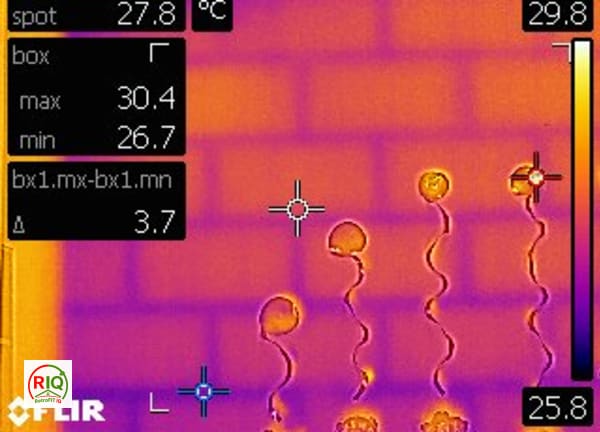
Thermal Bridging Visible Through Masonry Blockwork Wall

Thermal Bridge at Internal Corner Wall Junction

Sample Building Performance Investigation Report — Thermal Imaging

Thermal Bridge at Wall-Ceiling Junction Near Window
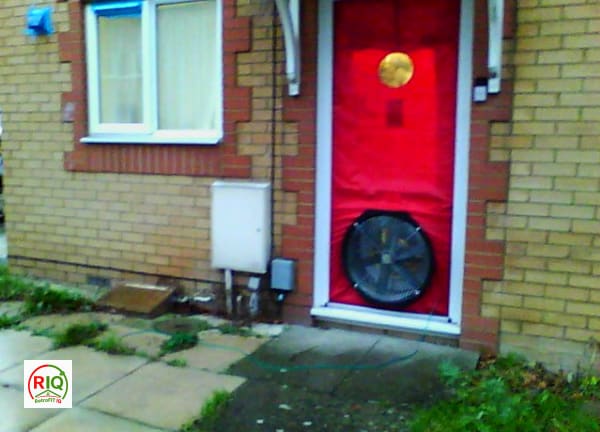
Blower Door Airtightness Test Setup

Acoustic Floor Upgrades: Mineral Wool Insulation Between Joists
No related investigations yet.
Browse all investigationsFrequently asked questions
Why is my corner room so cold?+
Corner and end-of-terrace rooms have more external wall area, so they lose more heat. Thermal bridges at the corners often make it worse.
Is my radiator too small?+
Sometimes — but often the room loses more heat than it receives. A heat-loss calculation tells you whether the emitter is genuinely undersized.
Why is the room above my garage always cold?+
It sits over an unheated, often uninsulated space, so it loses heat downwards. Insulating the floor over the garage usually helps.
Could a cold room be a sign of missing insulation?+
Yes. A patch of missing or slumped insulation over one room is common and shows up clearly on a thermal camera.
Will balancing my radiators fix one cold room?+
It can, if the cause is uneven flow. But if the room loses more heat than it receives, balancing alone won't be enough.
Why does the cold room also get mould?+
Cold surfaces sit closer to the dew point, so condensation and mould form there first — the cold and the mould share a cause.
How do you find the exact cause?+
Thermal imaging, surface readings and an air-leakage check together show whether it's fabric, leakage or heating, so the fix is targeted.
Stop guessing — find the real cause
Do not spend money fixing symptoms before you understand the cause. Every home behaves differently, and the only reliable way to know what is happening in yours is professional building performance diagnostics. At RetrofitIQ we verify buildings using the right combination of investigations:
- Thermal imaging
- Blower door testing
- Moisture & dew point readings
- Ventilation review
- Building physics assessment
- Passive House methodology