
The symptoms
- Black mould in the top corners where two external walls meet, or wall meets ceiling
- Worse on north-facing walls and behind furniture
- Returns within weeks of being cleaned off
- Often accompanied by window condensation
The building physics: the geometric thermal bridge
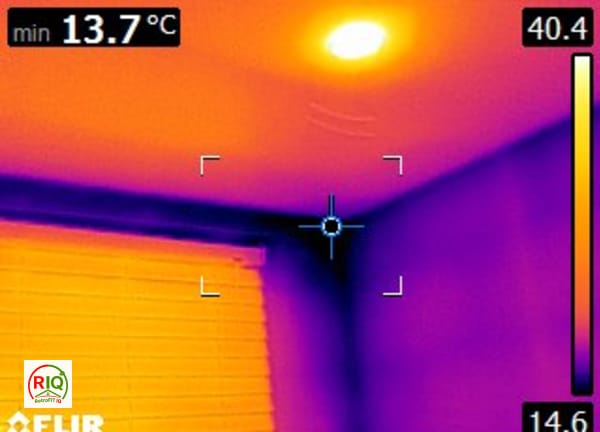
Corners are geometric thermal bridges. Where two external walls meet, the external surface area collecting cold is larger than the internal surface area being warmed, so heat escapes faster there and the inside surface runs colder than the flat wall. The same happens where an external wall meets the ceiling. Add a north-facing aspect that never gets sun, and the corner becomes the single coldest surface in the room.
When that cold corner falls below the dew point of the room air, moisture condenses there first, and mould — which only needs a cold, damp surface and a little time — colonises it. This is why the mould is sharply localised to the corner rather than spread across the wall, and why bleaching it never works for long: the corner is still cold and damp.
The likely causes
- Geometric thermal bridging at corners and wall-to-ceiling junctions
- Cold external/north-facing walls with no or failed insulation
- High indoor humidity and poor ventilation feeding the condensation
- Furniture against external walls blocking air movement and trapping cold, damp air
Why it returns no matter how often you clean it
Cleaning removes the visible mould but changes nothing about the conditions that created it. As soon as the cold corner falls below the dew point again — usually the next cold, humid night — condensation returns and the mould regrows from spores that are always present in the air. Lasting control means raising the corner's surface temperature above the dew point and lowering indoor humidity, not repeated cleaning.
Common mistakes homeowners make
- Repeatedly cleaning and repainting the same corner
- Using 'anti-condensation' paint as a standalone fix
- Keeping furniture hard against a cold external wall
How RetrofitIQ investigates corner mould
- Thermal imaging to confirm the corner is the coldest surface and quantify the bridge
- Surface-temperature and humidity logging to calculate the dew-point margin
- A ventilation check to assess the home's ability to control humidity
- A remedy combining surface-temperature improvement (insulation/thermal-bridge correction) and ventilation
- Optional verification that the corner now stays above dew point