
Why is my extension cold and hard to heat?
Extensions are often colder and harder to heat than the original house because they expose more surface to the outside per square metre, usually contain a lot of glazing and roof area, and frequently have thermal bridges where the new structure meets the old. Add heating that was sized for the original home rather than the extension, and the room struggles to stay warm. The causes are specific and measurable — and fixable once identified.
 Reviewed by George Sora, Certified Passive House DesignerUpdated June 2026
Quick answer & key takeaways
7 min read- Extensions expose more external surface per square metre, so they lose heat faster.
- Large glazing and roof areas in extensions add significant heat loss.
- Thermal bridges at the join between new and old structure are common.
- Heating is often not extended or resized to match the new space.
- Biggest misconception: a new extension must be warm because it is new. Detailing decides it.
- Retrofit IQ's approach: measure the losses and the heating provision, not assume.
What this usually means
A single-storey extension typically has a high ratio of external surface to floor area: walls on up to three sides, a large roof and often big glazed doors or rooflights, all exposed to the outside. Heat loss scales with exposed surface, so the same floor area loses more heat in an extension than in a room buried within the original house. Even when built to current standards, that geometry makes an extension inherently harder to keep warm unless it is well insulated and detailed.
Glazing and junctions are the usual weak points. Extensions are popular precisely because of their glass — bifold doors, large windows, rooflights — and glazing loses more heat per square metre than insulated wall, so a glass-heavy extension has a high loss. Meanwhile the junction where the new build meets the existing house, and details around large openings, are prone to thermal bridges and air leakage if not carefully designed, creating cold spots, draughts and sometimes condensation along the join.
Heating provision is the third factor and the most often overlooked. Many extensions are added without recalculating the heating: a radiator or two may be added, or the existing system simply extended, without checking whether it can meet the extension's heat loss. The result is a room the heating cannot keep up with, especially in cold weather. Diagnosing a cold extension therefore means measuring its actual heat loss — fabric, glazing, junctions and air leakage — and checking the heating against it, rather than assuming a new room must be warm.
Common causes
High exposed-surface ratio
Walls, roof and glazing on multiple sides expose more surface per square metre, increasing heat loss.
Large glazed areas
Bifolds, big windows and rooflights lose more heat per square metre than insulated wall.
Thermal bridges at the new-to-old junction
The join between extension and house, and large openings, often have cold bridges if not detailed well.
Air leakage at junctions and openings
Gaps where new meets old, and around big doors, let cold air in and warm air out.
Heating not sized to the extension
Heating extended without recalculation may be unable to meet the extension's heat loss.
Signs and symptoms
Extension colder than the rest of the house
A new room noticeably colder than the original house points to higher loss and/or undersized heating.
Cold near the glazing and the join
Cold felt at large glazing or along the junction indicates glazing loss and thermal bridges.
Slow to warm and quick to cool
An extension that struggles to heat and cools fast is losing heat faster than it is supplied.
Draughts at the new-to-old junction
Felt draughts along the join reveal air leakage at the junction.
Condensation or cold spots at junctions
Condensation or cold patches along the join confirm thermal bridges there.
What most people check first
- How much glazing and roof the extension has relative to its floor area.
- Whether the junction with the existing house feels cold or draughty.
- Whether the heating was recalculated and resized for the extension.
- Whether the room is slow to warm and quick to cool.
What most people miss
- That an extension's geometry exposes more surface, so it loses more heat.
- That glazing and the new-to-old junction are the usual weak points.
- That heating is often not sized to the extension's actual loss.
- That measuring the loss and heating beats assuming a new room is warm.
The building physics
Heat loss is proportional to exposed surface area and the U-value of each element, so an extension's form drives its performance. A single-storey extension exposes walls, roof and glazing on multiple faces for a given floor area, giving a high surface-to-volume ratio and therefore a high heat loss compared with an internal room. Large glazed elements compound this because glazing U-values, even when good, exceed those of insulated walls, so a glass-led extension carries a substantial fabric loss before junctions are even considered.
Junctions between new and existing construction are classic thermal-bridge and air-leakage locations. Where the extension meets the original wall, floor and roof, and around large door and rooflight openings, continuity of insulation and the air barrier is hard to achieve and easily missed. The consequences are local cold surfaces (felt as cold spots and seen on thermal imaging), draughts under pressure differences, and condensation or mould where the cold junction meets humid indoor air — all concentrated along the join.
Finally, comfort requires the heat input to match the heat loss. An extension's loss must be calculated and the heating sized to it; simply extending the existing circuit or adding a token radiator often leaves the room under-heated on cold days. Diagnosing a cold extension therefore combines a heat-loss calculation, thermal imaging to find bridges, a blower door test to quantify junction leakage, and a check of the heating provision — turning 'why is my extension cold?' into a measured list of fabric, junction and heating actions.
How to warm a cold extension
Measure the extension's heat loss and heating provision, then improve the fabric and junctions and match the heating to the load.
- 01
Measure the loss and heating
Calculate the extension's heat loss and check whether the heating provision can meet it.
- 02
Find the thermal bridges and leakage
Use thermal imaging and a blower door test to locate cold junctions and air leakage at the join and openings.
- 03
Improve insulation and junctions
Upgrade insulation where feasible and treat the new-to-old junctions and opening reveals to remove cold bridges.
- 04
Seal the air leakage
Seal gaps at the junction and around large doors and rooflights to stop draughts.
- 05
Match the heating to the load
Resize or add heating so it can meet the extension's calculated heat loss, especially in cold weather.
- 06
Verify comfort
Confirm the extension warms properly and holds heat after the work.
How to prevent it coming back
- Design extensions with insulation and air-barrier continuity at the junctions.
- Balance glazing area against heat loss and comfort.
- Calculate and size the heating to the extension, not the original house.
- Detail large openings to avoid thermal bridges and leakage.
How Retrofit IQ investigates this
We measure the extension's heat loss, junctions and heating so the cold is fixed at its causes.
Do not spend money fixing symptoms before you understand the cause — investigate first, then build with confidence.
Do I need a professional investigation?
If an extension is cold or hard to heat, it is worth measuring its heat loss, junctions and heating provision — so the fabric and detailing are improved and the heating matched to the load, rather than living with a room the system cannot keep warm.
Where to go next
Relevant services
Related comparisons
From the Academy
Related problems you may also have
Evidence from Real Projects (25)
Real project and investigation images from our own fieldwork, matched to this page — not stock photography.
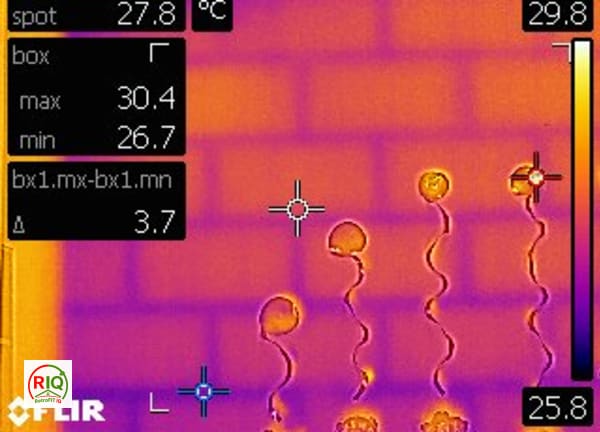
Thermal Bridging Visible Through Masonry Blockwork Wall

Sample Building Performance Investigation Report — Thermal Imaging
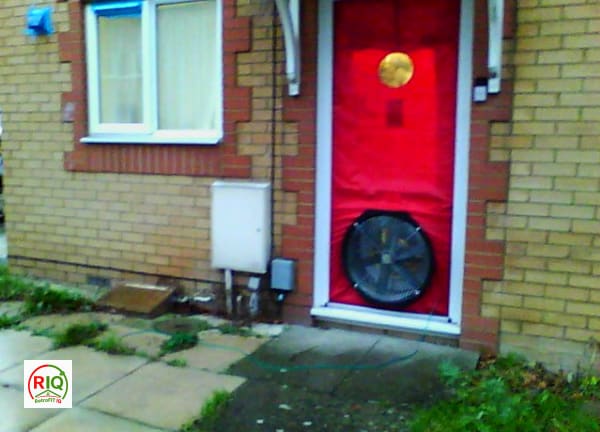
Blower Door Airtightness Test Setup

Thermal Bridge at Internal Corner Wall Junction

Thermal Bridge at Wall-Ceiling Junction Near Window
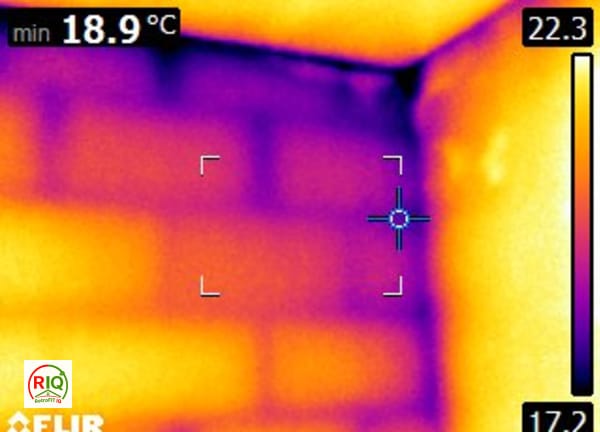
Cold wall surface vs warm ceiling
No related investigations yet.
Browse all investigationsFrequently asked questions
Why is my extension cold and hard to heat?+
Because it exposes more external surface per square metre, usually has a lot of glazing and roof, often has thermal bridges at the join with the house, and frequently has heating that was not sized to it. Each is measurable and fixable.
Why is my extension colder than the rest of the house?+
Its geometry loses more heat — walls, roof and glazing on several sides — and the junction with the original house can be a cold bridge. If the heating was not resized, the room cannot keep up.
Do big glazed doors make an extension cold?+
Glazing loses more heat per square metre than insulated wall, so large bifolds and rooflights raise the heat loss. Good glazing helps, but the area still needs to be balanced against comfort and heating.
What causes cold spots where the extension meets the house?+
Thermal bridges and air leakage at the new-to-old junction, where insulation and the air barrier are hard to keep continuous. Thermal imaging finds them and detailing fixes them.
Why won't my heating warm the extension?+
Often because the heating was extended or added without recalculating for the extension's heat loss, so it cannot meet the load on cold days. Sizing the heating to the measured loss resolves it.
Can a cold extension be fixed?+
Yes. Measuring the heat loss, treating the thermal bridges and air leakage at the junctions, improving insulation where feasible and matching the heating to the load make it comfortable.
How do you diagnose a cold extension?+
We calculate the heat loss, use thermal imaging to find bridges and a blower door test for leakage, review the junctions, and check the heating provision against the load.
Stop guessing — find the real cause
Do not spend money fixing symptoms before you understand the cause. Every home behaves differently, and the only reliable way to know what is happening in yours is professional building performance diagnostics. At RetrofitIQ we verify buildings using the right combination of investigations:
- Thermal imaging
- Blower door testing
- Moisture & dew point readings
- Ventilation review
- Building physics assessment
- Passive House methodology