
Where does most heat escape from a house?
Heat escapes from a house through every part of its envelope — the walls, roof, windows, doors and floor — and through air leakage, which is often the largest and most overlooked route. The proportions differ from house to house depending on its size, construction and condition, which is exactly why measuring where your home loses heat is far more reliable than assuming, and why it ensures any money is spent on the biggest losses first.
 Reviewed by George Sora, Certified Passive House DesignerUpdated June 2026
Quick answer & key takeaways
6 min read- Heat escapes by conduction through the fabric and by air leakage through gaps.
- Walls, roof, windows and floors each lose heat; the mix varies by house.
- Air leakage is frequently a larger loss than people expect.
- The biggest loss in your home may not be the one you assume.
- Biggest misconception: windows are always the main culprit. Often walls or air leakage lose more.
- Retrofit IQ's approach: measure the losses so spend targets the biggest ones first.
What this usually means
A house loses heat in two distinct ways. The first is conduction: heat passing through the solid fabric — the walls, roof, windows, doors and floor — at a rate set by each element's insulation and its area. The second is air leakage: warm air physically escaping through gaps and being replaced by cold air drawn in, which carries heat straight out. Both happen continuously in winter, and a complete picture needs both, because tackling one while ignoring the other leaves a large loss in place.
The proportions are not fixed. A bungalow loses a lot through its large roof; a mid-terrace loses more through its big front and back walls and less through party walls; a home with single glazing loses heavily through the windows; a draughty period house may lose a striking share through air leakage alone. Because the mix depends on the specific house, general rules of thumb are unreliable for deciding what to do — the same measure that transforms one home barely touches another.
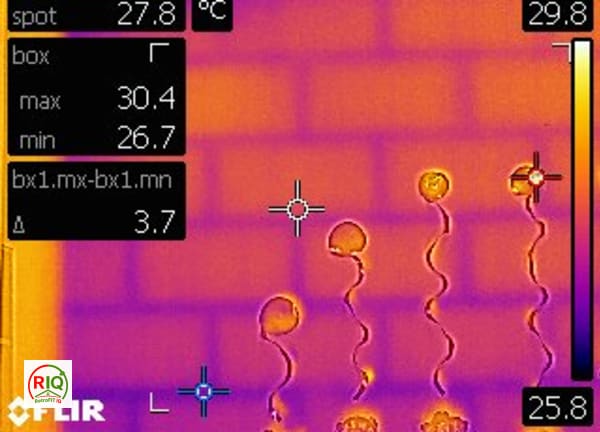
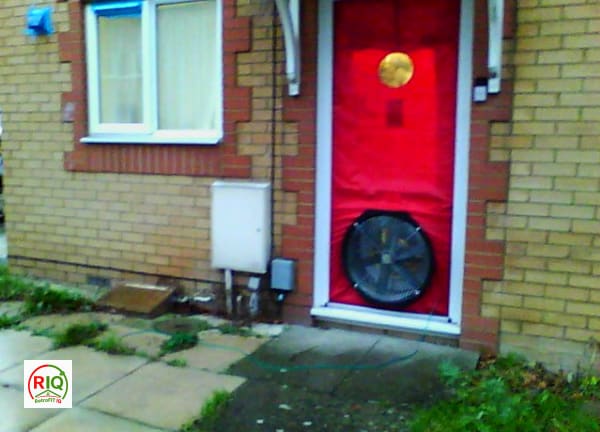
This is why measuring matters. Establishing where your home actually loses heat — by calculating the fabric losses, mapping them with thermal imaging, and quantifying air leakage with a blower door test — turns guesswork into a ranked list. You then spend on the biggest losses first, which is the most cost-effective order. Frequently the answer surprises people: walls or air leakage outrank the windows that were assumed to be the problem.
Common causes
Uninsulated or under-insulated walls
Walls are a large area, so even moderate U-values make them a major total loss in many homes.
Roof and loft heat loss
Heat rises, and thin or gappy loft insulation lets a disproportionate share escape upward.
Air leakage
Gaps throughout the envelope let warm air escape and cold air in — often a bigger loss than expected.
Windows and doors
Glazing and doors lose heat per square metre, though usually over a smaller area than the walls.
Ground floor losses
Uninsulated floors lose heat to the ground or ventilated void, and feel cold underfoot.
Signs and symptoms
High heating bills
Persistently high bills indicate substantial heat loss somewhere in the envelope.
Rooms that cool quickly
Warmth that does not last reflects heat escaping faster than it is replaced.
Cold walls, ceilings or floors
Cold surfaces point to the elements losing the most heat.
Noticeable draughts
Felt draughts reveal air leakage, often a larger loss than assumed.
A warm loft in winter
A warm loft shows heat escaping upward through the ceiling and roof.
What most people check first
- Whether the walls, roof or floor are insulated, and to what extent.
- Whether the home feels draughty (a sign of significant air leakage).
- Which surfaces feel coldest, indicating where heat is escaping.
- Whether assumptions about the windows have actually been tested.
What most people miss
- That air leakage is often a larger loss than the windows.
- That the biggest loss varies by house, so rules of thumb mislead.
- That conduction and air leakage both need addressing.
- That measuring ranks the losses so spend is ordered correctly.
The building physics
Fabric heat loss through each element is its area multiplied by its U-value (how readily it conducts heat) and the temperature difference across it. This is why a large, moderately insulated wall can lose more in total than a small, poorly insulated window: area matters as much as U-value. Summing the elements gives the conductive loss, and it immediately shows that the visually obvious culprit is not always the largest — a point measurement makes concrete for a specific house.
Air leakage adds a separate, often substantial loss. Every air change driven by gaps in the envelope carries warm air out and pulls cold air in, and under cold, windy conditions this ventilation loss can rival or exceed the conductive loss through any single element. Because it is distributed through many small gaps, it is invisible to the eye and easy to underestimate — which is why a blower door test, measuring the leakage directly, so often reveals it as a leading cause.
Ranking the losses requires measuring both mechanisms together. Calculating the element U-values and areas gives the fabric picture; thermal imaging shows where insulation is missing, thin or bridged; and a blower door test quantifies and locates the air leakage. Combining them produces an ordered list of where the heat — and the money — actually goes, so a fabric-first plan can address the biggest losses first. This is far more reliable than national averages, because it reflects the real condition of the specific home.
How to find and cut your biggest heat losses
Measure where the heat actually goes, then address the biggest losses first. Treat conduction and air leakage together for the best result.
- 01
Calculate the fabric losses
Establish the area and insulation of the walls, roof, windows, doors and floor to rank conductive losses.
- 02
Map them with thermal imaging
Reveal where insulation is missing, thin or bridged across the envelope.
- 03
Measure air leakage
Use a blower door test to quantify and locate the often-underestimated leakage loss.
- 04
Rank the losses
Combine the results into an ordered list so the biggest losses are clear.
- 05
Address them fabric-first
Insulate and air-seal the largest losses first, then size ventilation and heating to the improved fabric.
- 06
Verify the improvement
Re-measure to confirm the losses have fallen and the home holds heat better.
How to prevent it coming back
- Maintain insulation continuity across walls, roof and floor.
- Keep the envelope air-sealed while preserving deliberate ventilation.
- Address the largest losses before minor ones.
- Re-check after any work that disturbs insulation or sealing.
How Retrofit IQ investigates this
We measure both conductive loss and air leakage to rank where your home loses heat.
Do not spend money fixing symptoms before you understand the cause — investigate first, then build with confidence.
Do I need a professional investigation?
Before spending on insulation, windows or other measures, it is worth measuring where your home actually loses heat — so the money targets the biggest losses first, in the right order, rather than the loss you happened to assume was largest.
Where to go next
Relevant services
Related comparisons
From the Academy
Evidence from Real Projects (22)
Real project and investigation images from our own fieldwork, matched to this page — not stock photography.
Thermal Bridging Visible Through Masonry Blockwork Wall

Thermal Bridge at Internal Corner Wall Junction

Sample Building Performance Investigation Report — Thermal Imaging
Blower Door Airtightness Test Setup

Thermal Bridge at Wall-Ceiling Junction Near Window

Acoustic Floor Upgrades: Mineral Wool Insulation Between Joists
No related investigations yet.
Browse all investigationsFrequently asked questions
Where does most heat escape from a house?+
Through the walls, roof, windows, doors and floor by conduction, and through air leakage — which is often larger than expected. The biggest single route varies by house, which is why measuring beats assuming.
Do windows lose the most heat?+
Not usually. Windows lose heat per square metre, but they are a smaller area than the walls in most homes, so walls or air leakage often lose more in total. Measuring confirms it for your home.
How much heat is lost through air leakage?+
It varies, but in draughty homes air leakage can be a leading loss — sometimes rivalling or exceeding any single fabric element. A blower door test measures it directly.
Does heat really escape through the roof most?+
Heat rises, so a poorly insulated roof loses a disproportionate share — but whether it is the biggest loss depends on the house. A bungalow's large roof matters more than a tall terrace's.
What should I insulate first?+
The biggest losses first, identified by measurement — often the walls, roof or air leakage. Spending fabric-first in the right order is the most cost-effective approach.
Why measure instead of using averages?+
Because the mix of losses depends on your specific house and its condition. National averages can send money to the wrong place; measuring ranks your actual losses.
How do you find where my house loses heat?+
We calculate the fabric losses, map them with thermal imaging and measure air leakage with a blower door test, then rank them into a fabric-first plan.
Stop guessing — find the real cause
Do not spend money fixing symptoms before you understand the cause. Every home behaves differently, and the only reliable way to know what is happening in yours is professional building performance diagnostics. At RetrofitIQ we verify buildings using the right combination of investigations:
- Thermal imaging
- Blower door testing
- Moisture & dew point readings
- Ventilation review
- Building physics assessment
- Passive House methodology