
Is an EPC enough to plan a retrofit, or do I need a proper survey?
An EPC is a useful headline rating for comparing homes, but it is a standardised estimate based on assumptions, not a measurement of how your specific house behaves. To plan a retrofit that actually works, you need to know your real heat losses, air leakage and moisture risks — which an EPC does not measure. Relying on an EPC alone to choose measures can send money to the wrong place; a proper survey provides the building-specific evidence that good decisions need.
 Reviewed by George Sora, Certified Passive House DesignerUpdated June 2026
Quick answer & key takeaways
7 min read- An EPC is a standardised rating, not a measurement of your actual home.
- It uses assumptions and default values, so it can be inaccurate for a specific house.
- It does not measure air leakage, thermal bridges or moisture risk.
- Retrofit decisions need measured heat loss and moisture data, not just a rating.
- Biggest misconception: an EPC tells you what to do to your home. It is a comparison tool.
- Retrofit IQ's approach: survey the actual losses and moisture before recommending measures.
What this usually means
An Energy Performance Certificate is produced with a standardised method designed to compare dwellings on a consistent basis. To do that it relies on assumptions and default values where information is missing — assumed construction, assumed insulation, standard occupancy — and it deliberately ignores the particular quirks of your home. That makes it reasonable for ranking properties and for policy, but it means the rating and its recommendations may not reflect how your house actually loses heat.
Crucially, an EPC does not measure several of the things that decide a retrofit. It does not measure air leakage, which is often a leading heat loss; it does not find thermal bridges or missing insulation; and it says nothing about moisture and ventilation risk, which determine whether a measure will cause damp or mould. Its recommendations are generic, drawn from the standardised model, rather than from evidence about your specific building.
For real retrofit decisions, that gap matters. Choosing measures, and their order, requires knowing where your home actually loses heat and where moisture risks lie — information that comes from surveying the building, not from a rating. A proper assessment measures the heat loss, locates it with thermal imaging, quantifies air leakage with a blower door test and considers moisture and ventilation, producing a building-specific plan. The EPC has its place for comparison; the survey is what you plan a retrofit from.
Common causes
EPC built on assumptions
Default and assumed values fill gaps, so the rating may not match your home's real construction and condition.
Standardised, not measured
The method compares homes consistently rather than measuring how yours actually behaves.
No air-leakage data
EPCs do not measure air leakage, often a major heat loss, so it is invisible to them.
No moisture or ventilation risk
EPCs ignore the moisture and ventilation factors that decide whether a measure is safe.
Generic recommendations
EPC suggestions come from the standard model, not from evidence about your specific building.
Signs and symptoms
EPC recommendations that feel generic
Standardised suggestions that ignore your home's specifics reflect the rating's nature, not a survey.
Comfort or bills not matching the rating
A home performing differently from its EPC shows the rating's assumptions diverge from reality.
No mention of air leakage or moisture
An EPC's silence on leakage and moisture marks the limits of what it assesses.
Uncertainty about which measure first
Not knowing the right order of measures signals the need for measured data, not a rating.
Planning significant spend
Committing real money to a retrofit warrants building-specific evidence beyond an EPC.
What most people check first
- Whether the EPC is based on assumptions or any measurement of your home.
- Whether you have any data on air leakage, thermal bridges or moisture risk.
- Whether the recommendations are generic or specific to your building.
- Whether the planned spend justifies a proper survey first.
What most people miss
- That an EPC is a comparison rating, not a measurement of your home.
- That it ignores air leakage, thermal bridges and moisture risk.
- That its recommendations are generic, not building-specific.
- That retrofit decisions need measured data to avoid costly mistakes.
The building physics
The EPC methodology is a standardised energy model: it estimates a dwelling's energy use from inferred fabric and services using consistent assumptions, so two assessors should reach similar ratings for the same home. That consistency is its strength for comparison and policy, but it is achieved by ignoring building-specific reality — actual U-values, as-built insulation, air leakage and junction detailing — and by using defaults where data is absent. The output is a rating and standard recommendations, not a diagnosis.
A retrofit, by contrast, succeeds or fails on building-specific facts. The cost-effective order of measures depends on where the home actually loses heat, which requires measuring the fabric losses, mapping them with thermal imaging and quantifying air leakage — none of which the EPC does. And the safety of a measure depends on moisture and ventilation: insulating or sealing without regard to dew point and air change can cause condensation and mould, a risk the EPC does not assess. Acting on the rating alone can therefore target minor losses or trigger moisture problems.
A proper survey closes this gap. Calculating the real heat loss, locating it with thermal imaging, measuring air leakage with a blower door test, and evaluating moisture and ventilation produces an evidence-based, sequenced, moisture-safe plan specific to the home. The EPC remains valid for what it is — a standardised comparison — while the survey provides the measured basis for decisions. Using each for its proper purpose avoids both the false confidence of planning from a rating and the expense of measures that do not fit the building.
How to plan a retrofit on solid evidence
Use the EPC for what it is — a comparison rating — but base retrofit decisions on a survey of your home's actual losses and moisture risk.
- 01
Treat the EPC as a starting point
Use the rating to compare and as context, not as a decision-making survey of your home.
- 02
Measure the real heat loss
Calculate the home's heat loss and locate it with thermal imaging to see where it actually goes.
- 03
Quantify air leakage
Use a blower door test to measure leakage, which the EPC ignores and which is often a major loss.
- 04
Assess moisture and ventilation
Evaluate dew-point and ventilation risk so measures will not cause damp or mould.
- 05
Sequence the measures
Build a fabric-first, moisture-safe plan ordered by the biggest losses for your specific home.
- 06
Verify after work
Re-measure to confirm the measures delivered the expected performance.
How to prevent it coming back
- Use the EPC for comparison, not as a retrofit plan.
- Commission a survey before committing significant retrofit spend.
- Include air leakage and moisture risk in the assessment.
- Sequence measures fabric-first from measured evidence.
How Retrofit IQ investigates this
We measure your home's actual losses and moisture risk so the retrofit is planned on evidence, not a standardised rating.
Do not spend money fixing symptoms before you understand the cause — investigate first, then build with confidence.
Do I need a professional investigation?
Before planning a retrofit, it is worth surveying your home's actual heat loss, air leakage and moisture risk rather than relying on the EPC — so the measures are chosen, ordered and detailed on building-specific evidence, avoiding spend on the wrong losses or measures that cause moisture problems.
Where to go next
Relevant services
Related comparisons
From the Academy
Evidence from Real Projects (19)
Real project and investigation images from our own fieldwork, matched to this page — not stock photography.
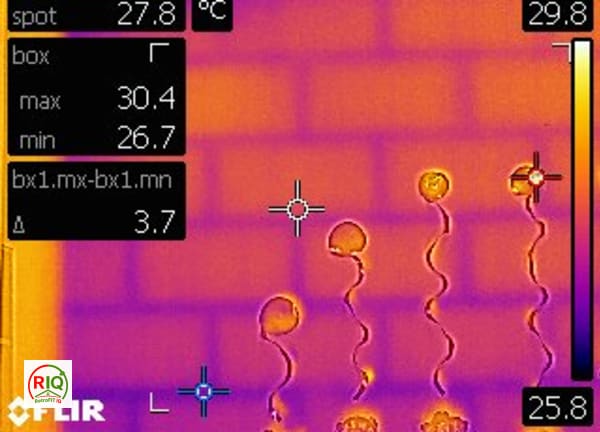
Thermal Bridging Visible Through Masonry Blockwork Wall

Thermal Bridge at Internal Corner Wall Junction

Sample Building Performance Investigation Report — Thermal Imaging
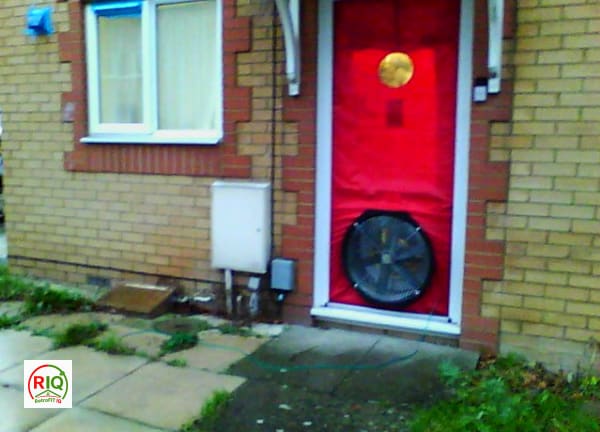
Blower Door Airtightness Test Setup

Thermal Bridge at Wall-Ceiling Junction Near Window

Bathroom
No related investigations yet.
Browse all investigationsFrequently asked questions
Is an EPC enough to plan a retrofit?+
No. An EPC is a standardised comparison rating built on assumptions, not a measurement of your home. It does not measure air leakage, thermal bridges or moisture risk, so retrofit decisions need a proper survey of your actual losses and moisture.
Is an EPC accurate for my house?+
It can be approximate at best, because it uses default and assumed values and ignores your home's specifics. It is designed to compare homes consistently, not to capture how yours actually behaves.
What does an EPC not tell me?+
It does not measure air leakage (often a major heat loss), find thermal bridges or missing insulation, or assess moisture and ventilation risk — all of which matter for choosing and sequencing retrofit measures safely.
Do I need a survey instead of an EPC?+
For retrofit decisions, yes — a survey measures your real heat loss, air leakage and moisture risk and produces a building-specific plan. The EPC still has value for comparison, but it is not a plan.
Can following EPC recommendations cause problems?+
It can, because they are generic and ignore moisture and ventilation. Insulating or sealing without regard to dew point and air change can cause condensation and mould, which a survey is designed to prevent.
Why measure if I already have an EPC?+
Because the EPC estimates from assumptions while a survey measures reality. Measuring shows where your home truly loses heat and where moisture risks lie, so money targets the right measures in the right order.
How do you plan a retrofit properly?+
We calculate the real heat loss, locate it with thermal imaging, measure air leakage with a blower door test and assess moisture and ventilation, then produce a fabric-first, moisture-safe, sequenced plan.
Stop guessing — find the real cause
Do not spend money fixing symptoms before you understand the cause. Every home behaves differently, and the only reliable way to know what is happening in yours is professional building performance diagnostics. At RetrofitIQ we verify buildings using the right combination of investigations:
- Thermal imaging
- Blower door testing
- Moisture & dew point readings
- Ventilation review
- Building physics assessment
- Passive House methodology