
Why won't my house stay warm?
If your home warms up but loses it almost as soon as the heating switches off, the issue is retention — the building cannot hold heat because it is losing it too fast through fabric and air leakage.
 Reviewed by George Sora, Certified Passive House DesignerUpdated June 2026
Quick answer & key takeaways
5 min read- Fast cooling after the heating goes off means high heat loss and poor thermal retention.
- Air leakage is a common, underestimated cause of rapid heat loss.
- Lightweight, uninsulated and draughty homes lose stored heat quickly.
- Warming quickly but cooling fast is a classic signature of a leaky, under-insulated envelope.
- Biggest misconception: the heating is too weak. It's usually that the building can't retain the heat.
- Retrofit IQ's approach: blower door + thermal imaging quantify the loss and locate the leaks.
What this usually means
How long a home holds warmth depends on how fast it loses heat once the input stops. A well-sealed, insulated home coasts for hours; a leaky, uninsulated one cools within minutes because heat pours out through the fabric and escaping air. So 'won't stay warm' is a retention problem, governed by the loss rate.
If the house also takes a long time to warm up, that points to high losses during heating too. Either way, the lever is reducing the loss rate — insulation to slow conduction and airtightness to stop the warm air simply leaking away.
Common causes
High air leakage
Warm air escaping through gaps is replaced by cold air, so the house cools fast once heating stops — often the dominant cause.
Uninsulated fabric
Walls, roof and floor with high U-values bleed heat continuously, so stored warmth dissipates quickly.
Cold thermal mass
In some homes the structure never warms through, so there is little stored heat to coast on after the heating goes off.
Single glazing and cold surfaces
Large areas of cold glass and wall radiate heat away rapidly and feel cold almost immediately.
Intermittent heating with no retention
Short heating bursts in a leaky home never build a buffer, so comfort vanishes as soon as the system stops.
Signs and symptoms
Comfort drops minutes after heating off
The warmth disappears almost as soon as the system stops, the classic signature of poor retention.
Warms reasonably but never coasts
The home reaches temperature but cannot hold it, so there is no buffer between heating periods.
Noticeable draughts and cold surfaces
Air leakage and uninsulated fabric let the stored heat escape quickly.
Cold soon after waking or returning home
By morning or after a day out, the house has lost the warmth it had.
What most people check first
- How quickly comfort drops after the heating goes off.
- Obvious draughts at floors, windows, doors and lofts.
- Insulation levels in loft and walls.
- Extent of single glazing.
What most people miss
- That air leakage, not heating power, is often why warmth vanishes so fast.
- Thermal bridges and gaps that undermine otherwise reasonable insulation.
- That airtightness and insulation must work together for retention.
- That measuring the loss reveals the cause precisely, avoiding wasted spend.
The building physics
After the heat input stops, a building cools at a rate set by its total heat-loss coefficient and how much heat is stored in its fabric. High losses and low effective storage mean fast cooling. Airtightness matters enormously here: every air change replaces warm internal air with cold outside air, so a leaky home effectively flushes away its heat repeatedly.
Insulation slows the conductive loss and raises surface temperatures, while airtightness removes the convective loss. Only when both are in place does a home retain heat and coast comfortably between heating periods — the behaviour people describe as a house that 'stays warm'.
This is why retention is a fabric-and-airtightness outcome, not a heating-power one. A bigger heat source warms a leaky house faster but does nothing to help it hold the heat.
How to fix it — the right way
A house that won't stay warm is fixed by reducing the loss rate — airtightness and insulation working together — not by adding heating power.
- 01
Measure the air leakage
A blower door test quantifies and locates the leaks that flush warm air out — usually the prime reason a home cools so fast.
- 02
Seal the leakage paths
Close the floor, loft, chimney and penetration leaks found, so warm air is no longer replaced by cold.
- 03
Insulate to slow conduction
Raise the fabric's resistance so stored heat dissipates more slowly and surfaces stay warm.
- 04
Treat bridges and upgrade the worst glazing
Remove the cold strips and large cold panes that radiate heat away rapidly.
- 05
Pair with controlled ventilation
Maintain healthy air change as the home is sealed, so it stays moisture-safe.
How to prevent it coming back
- Maintain airtightness details after any works.
- Keep insulation continuous and undisturbed.
- Re-test airtightness after building work to catch new leaks.
- Keep ventilation controlled, not via random gaps.
How Retrofit IQ investigates this
We measure the loss rate and find the leaks, so we can show exactly why the warmth disappears and what will keep it.
Do not spend money fixing symptoms before you understand the cause — investigate first, then build with confidence.
Do I need a professional investigation?
If warmth vanishes the moment the heating stops, a blower door test and thermal imaging will quantify and locate the losses — showing exactly why the heat disappears and what will keep it.
It is worth investigating before assuming the heating is undersized, as the real issue is usually retention set by the loss rate.
Where to go next
Relevant services
Related comparisons
From the Academy
Evidence from Real Projects (26)
Real project and investigation images from our own fieldwork, matched to this page — not stock photography.
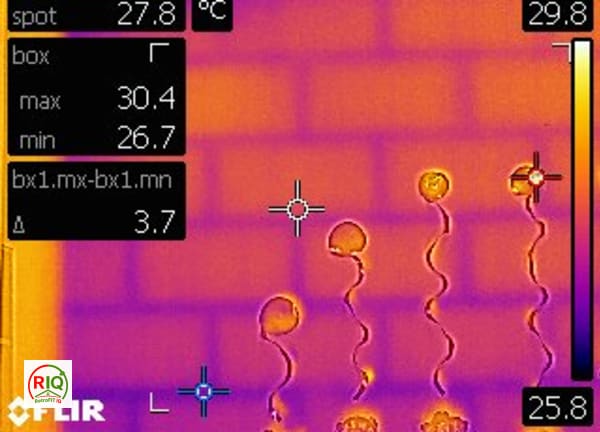
Thermal Bridging Visible Through Masonry Blockwork Wall

Sample Building Performance Investigation Report — Thermal Imaging
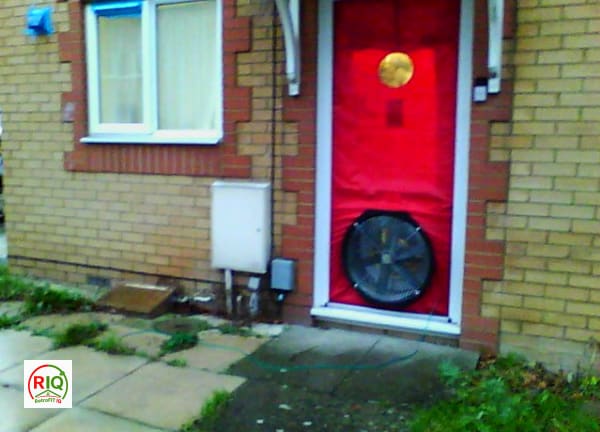
Blower Door Airtightness Test Setup

Thermal Bridge at Internal Corner Wall Junction

Thermal Bridge at Wall-Ceiling Junction Near Window

Smoke tracing during a blower door test
No related investigations yet.
Browse all investigationsFrequently asked questions
Why does my house get cold so quickly after the heating turns off?+
Because it loses heat fast — usually through air leakage and uninsulated fabric — so there's little stored warmth to coast on.
Is my heating too weak?+
Usually not. A leaky home can be warmed quickly but cannot hold the heat. The issue is retention, set by the loss rate.
What helps a house hold heat?+
Insulation to slow conduction and airtightness to stop warm air escaping, working together. One without the other underperforms.
Could draughts be the main cause?+
Often yes. Air leakage flushes warm air out and pulls cold air in, so the house cools rapidly. A blower door test measures it.
Will more insulation alone fix it?+
It helps, but if the home is leaky the warm air still escapes. Airtightness usually needs to be addressed alongside insulation.
Does retention affect my bills?+
Yes — a home that holds heat needs less frequent heating, lowering energy use as well as improving comfort.
How do you find out why it won't stay warm?+
A blower door test and thermal imaging quantify and locate the losses, showing exactly why warmth disappears and what will keep it.
Stop guessing — find the real cause
Do not spend money fixing symptoms before you understand the cause. Every home behaves differently, and the only reliable way to know what is happening in yours is professional building performance diagnostics. At RetrofitIQ we verify buildings using the right combination of investigations:
- Thermal imaging
- Blower door testing
- Moisture & dew point readings
- Ventilation review
- Building physics assessment
- Passive House methodology