
Airtightness Testing vs Ventilation Assessment: Sealing and Breathing
Airtightness testing vs Ventilation assessment.
 Reviewed by George Sora, Certified Passive House DesignerUpdated June 2026
Quick answer & key takeaways
5 min read- Bottom line: Airtightness testing measures the uncontrolled air leaking through gaps; a ventilation assessment checks the controlled fresh air the home deliberately provides.
- When Airtightness testing is enough: You want to reduce heat loss and infiltration
- When Ventilation assessment is the better choice: You are concerned about air quality or moisture
- When you need both: You are sealing or retrofitting a home
- Biggest misconception: “Making a house airtight makes it unhealthy.” — Only if ventilation is neglected. A tight home with proper controlled ventilation has better, not worse, air quality.
- Retrofit IQ’s approach: Sealing a home without checking ventilation is one of the most common ways well-intentioned work backfires into condensation and mould.
Quick answer
Airtightness testing measures the uncontrolled air leaking through gaps; a ventilation assessment checks the controlled fresh air the home deliberately provides. The principle is 'build tight, ventilate right': you seal the random leakage and then provide proper, controlled ventilation. Doing one without the other is the classic mistake — sealing a home without ventilation worsens condensation, while ventilating a leaky one wastes energy. You need both, in balance.
At a glance
| Attribute | Airtightness testing | Ventilation assessment |
|---|---|---|
| Concerned with | Uncontrolled leakage | Controlled fresh-air supply |
| Method | Blower door (ach@50) | Flow measurement, CO₂, humidity, system check |
| Goal | Reduce random infiltration | Ensure adequate, healthy ventilation |
| Health link | Indirect (moisture, draughts) | Direct (air quality, moisture removal) |
| Risk if ignored | Wasted heat, condensation | Poor air quality, mould, stuffiness |
| Best done | Together — 'build tight, ventilate right' | Together — informed by the airtightness |
What is Airtightness testing?
A blower door measurement of uncontrolled air leakage through the building envelope. The goal is to reduce random infiltration so heat is not wasted and moist air is not driven into the construction.
What is Ventilation assessment?
An evaluation of how the home provides controlled fresh air and removes moisture and pollutants — extract rates, MVHR or background ventilation, CO₂ and humidity — to ensure healthy, adequate air exchange.
What each method measures — and what it doesn’t
Airtightness testing
- The total uncontrolled air leakage at 50 Pa
- How leaky or tight the envelope is
- Where the random leaks are, with tracing
- Whether the home is adequately ventilated
- Indoor air quality or moisture removal
Ventilation assessment
- Extract and supply flow rates against requirements
- CO₂ and relative humidity as indicators of adequacy
- Whether the ventilation strategy suits the airtightness
- The uncontrolled leakage rate of the envelope
- How airtight the building is at 50 Pa
The building science
Airtightness and ventilation are two sides of one coin, and confusing them causes real harm. Uncontrolled leakage — the thing airtightness testing measures — wastes heat and, more dangerously, drives warm, moist indoor air into cold construction where it condenses. Reducing that leakage is almost always beneficial. But a building still needs to breathe: people, cooking and washing add moisture and CO₂ that must be removed, and fresh air must come in.
The principle 'build tight, ventilate right' captures the relationship. You first reduce the random, uncontrollable leakage, and then you provide controlled ventilation sized to the home and its occupancy — whether that is good extract and background ventilation, or a balanced MVHR system. The airtightness result directly informs which ventilation strategy is appropriate: a tight home needs designed mechanical ventilation, while a leaky one may rely partly on infiltration until it is improved.
The failure mode is doing half the job. Seal a home without addressing ventilation and you trap moisture, and condensation and mould follow — a pattern we see repeatedly after well-meaning draught-proofing. Ventilate generously without sealing and you simply pour heat out through the gaps. Neither test alone tells you whether the home is both efficient and healthy.
A proper assessment therefore measures both: the blower door establishes how tight the envelope is, and the ventilation assessment checks that controlled fresh air is adequate and matched to that tightness. Read together, they reveal whether the home is in the safe zone — sealed against waste and moisture, yet properly ventilated for health.
Key differences
- Airtightness testing measures unwanted leakage; ventilation assessment measures wanted air supply.
- One is about sealing; the other is about breathing.
- The airtightness result determines the right ventilation strategy.
- 'Build tight, ventilate right' requires both, in balance.
Common misconceptions
Myth: Making a house airtight makes it unhealthy.
Only if ventilation is neglected. A tight home with proper controlled ventilation has better, not worse, air quality.
Myth: If a home is leaky it doesn't need ventilation.
Infiltration is uncontrolled and unreliable. Adequate, controlled ventilation is still needed for health and moisture removal.
Myth: Ventilation and airtightness are the same trade-off.
They are complementary. You reduce uncontrolled leakage and separately provide controlled ventilation.
Real-world situations
Planning to draught-proof an older home
Test airtightness and assess ventilation together, so sealing does not trap moisture and cause condensation.
Considering MVHR
A blower door test first — MVHR only performs in an airtight home; the ventilation assessment confirms the strategy fits.
Condensation after recent sealing works
Assess ventilation urgently alongside the airtightness; the likely cause is reduced air exchange without a controlled replacement.
New or deep-retrofit project
Both — design airtightness and ventilation as one system, verified by testing and flow measurement.
Which do you actually need?
When Airtightness testing is enough
- You want to reduce heat loss and infiltration
- You are checking the envelope before sealing
- You are sizing or justifying MVHR
When Ventilation assessment is the better choice
- You are concerned about air quality or moisture
- You suspect under- or over-ventilation
- You have condensation despite a dry-looking fabric
When you need both
- You are sealing or retrofitting a home
- You want efficiency and healthy air
- You are designing a coherent tight-and-ventilated strategy
What Retrofit IQ checks on site
Sealing a home without checking ventilation is one of the most common ways well-intentioned work backfires into condensation and mould. We measure both the leakage and the controlled air supply first, then recommend a balanced strategy — so the home becomes efficient and healthy, not tight and damp.
- Blower door test to quantify uncontrolled leakage
- Smoke tracing to locate the leakage paths
- Measurement of extract and supply ventilation rates
- CO₂ and relative humidity logging as adequacy indicators
- Assessment of whether the ventilation strategy suits the airtightness
- A combined 'build tight, ventilate right' recommendation
What a Certified Passive House Designer recommends
Airtightness and ventilation must be designed as a pair. I measure the leakage with a blower door and assess the controlled ventilation in the same breath, because the airtightness figure tells me which ventilation strategy the home actually needs. Treating them separately is how draught-proofing turns into a mould problem.
The target is simple to state and easy to get wrong: reduce the random leakage, then provide proper controlled ventilation matched to the result. Get that balance right and you have a home that is warm, efficient and healthy — which is the whole point.
— George Sora, Certified Passive House Designer, Founder, RetrofitIQ
Reviewed using current building physics principles and Passive House methodology.
Related services
Related comparisons
Related investigations
Compare another way
Closely related comparisons our clients read next.
Blower Door vs Smoke Testing for Air Leakage
The blower door measures the quantity of air leakage; smoke tracing reveals its location.
Read comparisonMVHR vs PIV (Positive Input Ventilation)
MVHR is a balanced, heat-recovering system best suited to airtight, well-insulated homes; PIV is a simpler, lower-cost system that dilutes humidity by pressurising the house but recovers no heat.
Read comparisonMVHR vs Natural (Trickle) Ventilation
Natural ventilation is uncontrolled — it depends on wind, temperature and whether people open windows and vents — and it discards heat with the air.
Read comparisonIndoor Air Quality Monitoring vs Ventilation Assessment
Monitoring measures the symptom — what the air is actually doing — while a ventilation assessment diagnoses the system that produces it.
Read comparisonEvidence from Real Projects (14)
Real project and investigation images from our own fieldwork, matched to this page — not stock photography.

Sample Building Performance Investigation Report — Thermal Imaging
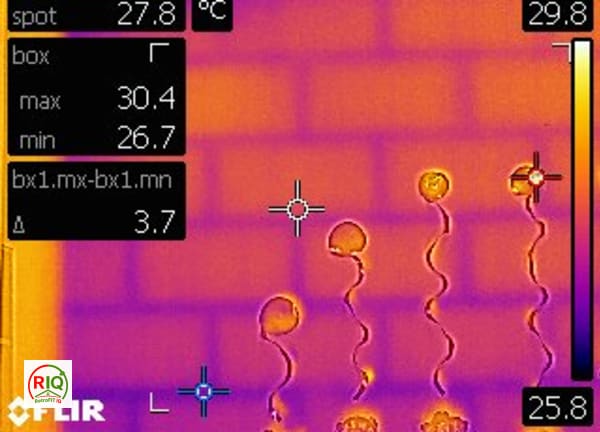
Thermal Bridging Visible Through Masonry Blockwork Wall
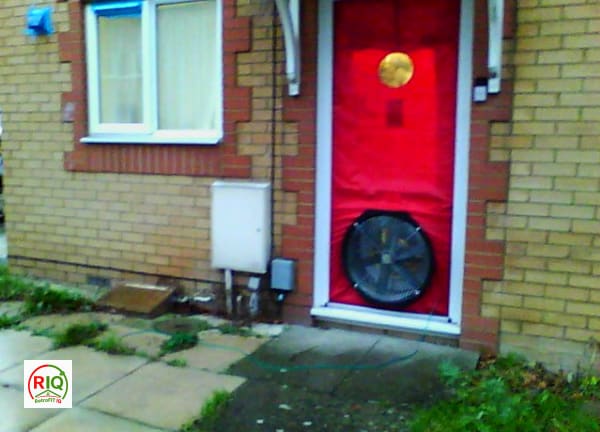
Blower Door Airtightness Test Setup

Bathroom

Thermal Bridge at Wall-Ceiling Junction Near Window

Airtightness Testing in a Stratford Victorian Terrace
No related investigations yet.
Browse all investigationsFrequently asked questions
What is the difference between airtightness and ventilation?+
Airtightness is about reducing uncontrolled air leakage through gaps; ventilation is about providing controlled fresh air. You reduce the random leakage and separately provide proper ventilation.
Does making my home airtight cause condensation?+
Only if you neglect ventilation. Sealing without controlled ventilation traps moisture; sealing plus good ventilation prevents condensation.
What does 'build tight, ventilate right' mean?+
It is the principle of reducing uncontrolled leakage while providing adequate controlled ventilation, so the home is both efficient and healthy.
Do I need MVHR if my home is airtight?+
An airtight home needs designed ventilation, and MVHR is the usual answer because it ventilates and recovers heat. The assessment confirms the right approach.
Can a leaky home skip ventilation?+
No. Infiltration is unreliable and uncontrolled; the home still needs adequate, controlled ventilation for air quality and moisture removal.
How is ventilation assessed?+
By measuring extract and supply flow rates, logging CO₂ and humidity, and checking the strategy against the airtightness and occupancy.
I sealed my home and now it's damp — why?+
Sealing reduced the air exchange that was removing moisture, without a controlled replacement. A ventilation assessment identifies the shortfall.
Should I test airtightness before fitting MVHR?+
Yes. MVHR only delivers its benefits in an airtight home, so the blower door result should inform the decision.
Is more ventilation always better?+
No — over-ventilation wastes heat. The aim is adequate, controlled ventilation matched to the home and its airtightness.
Can you do both assessments in one visit?+
Yes — we can carry out the blower door test and the ventilation assessment together and give a combined recommendation.
Will improving airtightness save energy?+
Yes — reducing uncontrolled leakage cuts ventilation heat loss, provided controlled ventilation is then provided sensibly.
Who carries out the assessment?+
A Certified Passive House Designer, so airtightness and ventilation are balanced as one coherent strategy.
Need professional advice?
A comparison like this helps you understand the theory, but every property behaves differently. The only reliable way to establish the real cause in your home — rather than guessing — is professional building performance diagnostics. At RetrofitIQ we verify buildings using the appropriate combination of investigations:
- Thermal imaging
- Blower door testing
- Moisture investigation
- Building physics assessment
- Passive House methodology