
Blower Door Test vs EPC: Measured Airtightness vs a Rating
Blower door test vs EPC (Energy Performance Certificate).
 Reviewed by George Sora, Certified Passive House DesignerUpdated June 2026
Quick answer & key takeaways
5 min read- Bottom line: A blower door test measures the real airtightness of a building; an EPC is a simplified rating that assumes a default air-leakage value rather than measuring it.
- When Blower door is enough: You need real airtightness data
- When EPC is the better choice: You legally need a certificate to sell or let
- When you need both: You need the certificate and want to genuinely improve performance
- Biggest misconception: “A good EPC means an airtight, efficient home.” — An EPC is a rating from assumptions; it does not measure airtightness. A good band can still hide significant air leakage.
- Retrofit IQ’s approach: We measure airtightness directly rather than accepting an EPC's default assumption, because a tested figure — and the leakage paths behind it — is what actually informs sealing, modelling and heat-pump sizing.
Quick answer
A blower door test measures the real airtightness of a building; an EPC is a simplified rating that assumes a default air-leakage value rather than measuring it. They are not comparable: the blower door produces hard data used in heat-loss modelling, heat pump sizing and Passive House work, while an EPC gives a broad-brush rating from assumptions. If you want to know how your home actually performs, the EPC will not tell you — the measurement will.
At a glance
| Attribute | Blower door test | EPC (Energy Performance Certificate) |
|---|---|---|
| What it does | Measures real air leakage | Rates energy efficiency from assumptions |
| Airtightness | Measured (ach@50 / q50) | Assumed default |
| Method | Calibrated fan + gauge | RdSAP data entry + software |
| Accuracy vs reality | High | Indicative only |
| Used for | Modelling, heat pump sizing, Passive House, Part L | Compliance, marketing, EPC band |
| Repeatable | Yes | Depends on assessor inputs |
| Reveals causes | Yes, with tracing | No |
What is Blower door test?
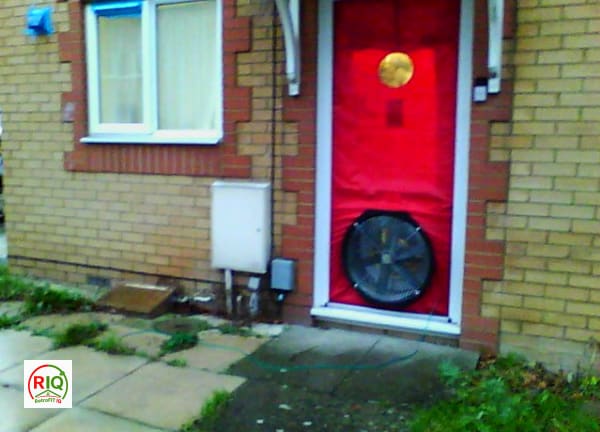
A calibrated fan pressurises or depressurises the building to a reference pressure (usually 50 Pa) and measures the actual air leakage as an air-change rate (ach@50) or permeability (q50). It is a direct, repeatable measurement of how airtight the building really is.
What is EPC (Energy Performance Certificate)?
A standardised energy rating produced with RdSAP, largely from visual data and default assumptions. It rates a home A–G for compliance and marketing purposes but does not measure airtightness, heat loss or the real causes of poor performance.
What each method measures — and what it doesn’t
Blower door
- The total air leakage of the envelope at 50 Pa
- Air permeability (q50) or air-change rate (ach@50)
- A repeatable baseline for before/after works
- With tracing, the location of leaks
- The overall energy rating or running cost band
- Insulation levels (airtightness and insulation are independent)
EPC
- An estimated efficiency band (A–G)
- Indicative running costs and CO₂ on standard assumptions
- Recommended generic improvement measures
- Actual air leakage — it is assumed, not tested
- Real heat loss or thermal bridging
- The specific causes of cold, draughts or damp
The building science
Air leakage is one of the largest and most uncertain components of a building's heat loss. Uncontrolled infiltration carries warm air out in winter and moist air into cold construction, where it can condense. A blower door standardises the pressure at 50 Pa and measures the resulting flow, so the airtightness figure is real, repeatable and directly usable in a heat-loss calculation.
An EPC takes a different route. RdSAP — the reduced Standard Assessment Procedure — is built for consistency across millions of homes, not precision for one. It fills gaps with default assumptions, including a default airtightness value, because measuring every home is impractical at that scale. The output is a rating band, useful for compliance and comparison, but it is not a measurement of how your specific home behaves.
This is why EPCs and energy bills so often disagree, and why an EPC cannot reliably size a heat pump or prioritise a retrofit. The infiltration assumption alone can be wildly off in a draughty older house, and the EPC has no mechanism to discover that — it never tested anything.
For any decision that depends on real performance — heat pump sizing, deep retrofit, Passive House or EnerPHit, or simply understanding why a home is cold — the blower door is the tool that produces trustworthy numbers. The EPC remains useful for what it is: a standardised rating, not a diagnostic.
Key differences
- The blower door measures; the EPC assumes.
- Airtightness is tested by the blower door and defaulted by the EPC.
- Blower door data feeds modelling and sizing; EPC bands do not.
- An EPC cannot tell you why a home performs poorly; a measured test can.
Common misconceptions
Myth: A good EPC means an airtight, efficient home.
An EPC is a rating from assumptions; it does not measure airtightness. A good band can still hide significant air leakage.
Myth: An EPC is accurate enough to size a heat pump.
It is not. Heat pump sizing needs measured heat loss and airtightness, not RdSAP defaults.
Myth: A blower door test gives me an energy rating.
It gives an airtightness figure, which is one input to a rating or model — not the rating itself.
Real-world situations
Planning a heat pump and want it sized correctly
A blower door test plus a measured heat-loss survey; the EPC is not accurate enough for sizing.
Selling or letting and need a certificate
An EPC is the required document; commission a blower door only if you want to understand or improve real performance.
Home feels draughty despite a decent EPC
A blower door with smoke tracing to measure and locate the leakage the EPC assumed away.
Deep retrofit or Passive House/EnerPHit
Blower door testing is essential — the EPC plays no part in verifying airtightness.
Which do you actually need?
When Blower door is enough
- You need real airtightness data
- You are sizing a heat pump or modelling heat loss
- You are pursuing Passive House, EnerPHit or Part L verification
When EPC is the better choice
- You legally need a certificate to sell or let
- You want a broad efficiency band for marketing
- You only need a standardised comparison figure
When you need both
- You need the certificate and want to genuinely improve performance
- You are retrofitting and must satisfy compliance too
What Retrofit IQ checks on site
We measure airtightness directly rather than accepting an EPC's default assumption, because a tested figure — and the leakage paths behind it — is what actually informs sealing, modelling and heat-pump sizing.
- Calibrated blower door test to ATTMA/BS EN ISO 9972 methodology
- Air-change rate (ach@50) and permeability (q50) reported clearly
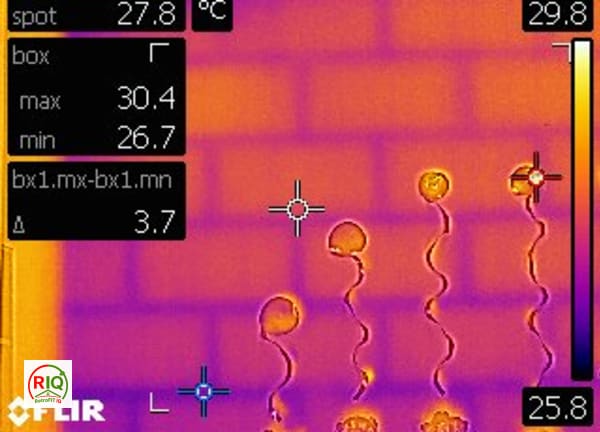
- Smoke tracing and thermal imaging to locate the leakage paths
- A baseline figure for verifying improvement after sealing works
- Interpretation of the result for heat-loss modelling and heat pump sizing
- Plain-English explanation of what the number means for your home
What a Certified Passive House Designer recommends
An EPC and a blower door test are not alternatives — they exist for different reasons. If you need a certificate to sell or let, get the EPC; if you need to know how your home actually performs, measure it. The trouble starts when an EPC is treated as a performance survey and decisions are made on assumptions it was never able to test.
For anything that matters financially — a heat pump, a deep retrofit, a Passive House standard — I want a measured airtightness figure and a real heat-loss assessment. That is the difference between designing for the building you have and hoping the building matches the spreadsheet.
— George Sora, Certified Passive House Designer, Founder, RetrofitIQ
Reviewed using current building physics principles and Passive House methodology.
Related services
Related investigations
Compare another way
Closely related comparisons our clients read next.
Blower Door Test vs SAP
A blower door test is a measurement; SAP is a compliance calculation.
Read comparisonBlower Door vs Smoke Testing for Air Leakage
The blower door measures the quantity of air leakage; smoke tracing reveals its location.
Read comparisonPHPP vs EPC
PHPP is a design-accurate energy model; an EPC is a simplified rating.
Read comparisonHeat Pump Readiness: Fabric-First vs System-First
Fabric-first reduces heat loss before the heat pump is sized, so the pump is smaller, runs cooler and costs less to run; system-first installs the pump to suit the house as it stands.
Read comparisonEvidence from Real Projects (15)
Real project and investigation images from our own fieldwork, matched to this page — not stock photography.



No related investigations yet.
Browse all investigationsFrequently asked questions
Does an EPC measure airtightness?+
No. An EPC uses RdSAP, which assumes a default airtightness value rather than testing it. Only a blower door test measures the real air leakage of your home.
Is a blower door test better than an EPC?+
They do different jobs. A blower door measures real performance; an EPC is a standardised rating for compliance and marketing. For performance decisions, the test is far more useful.
Why doesn't my EPC match my energy bills?+
Because RdSAP uses default assumptions, including for airtightness, so the rating is indicative rather than a precise prediction of your actual use.
Can I use my EPC to size a heat pump?+
Not reliably. Heat pump sizing needs measured heat loss and airtightness; an EPC's assumptions can lead to incorrect sizing.
What does ach@50 mean?+
Air changes per hour at 50 pascals — how many times the home's air volume leaks out per hour at that test pressure. Lower is more airtight.
Is a blower door test destructive?+
No. The fan seals temporarily into a doorway and leaves no marks; the test is entirely non-destructive.
Do I legally need a blower door test?+
It is required for new dwellings under Part L and for Passive House/EnerPHit certification, but not for an existing home unless you want the data.
Will the test tell me where my home leaks?+
The test measures how much leaks; combined with smoke tracing and thermal imaging it also shows exactly where.
Can a leaky home still have a good EPC?+
Yes — because the EPC assumes airtightness rather than measuring it, a draughty home can still score reasonably.
How long does a blower door test take?+
Set-up and a single-point test take roughly one to two hours for a typical home; tracing adds time.
Does wind affect the result?+
Strong, gusty wind reduces accuracy because it adds pressure to the building. We note conditions and retest if needed.
Is the EPC useless then?+
No — it is fine for its purpose as a standardised rating. It simply is not a measurement of how your specific home performs.
Do you provide a report?+
Yes — a clear report with the airtightness figures, the leakage paths found and what they mean for modelling and improvement.
Who carries out the test?+
A Certified Passive House Designer, so the result is interpreted in the context of real building performance.
Need professional advice?
A comparison like this helps you understand the theory, but every property behaves differently. The only reliable way to establish the real cause in your home — rather than guessing — is professional building performance diagnostics. At RetrofitIQ we verify buildings using the appropriate combination of investigations:
- Thermal imaging
- Blower door testing
- Moisture investigation
- Building physics assessment
- Passive House methodology