
Airtightness entered mainstream UK regulation through the energy-efficiency requirements of Part L of the Building Regulations. The framework has tightened over successive editions, but it remains a minimum-standards regime — and the gap between a regulatory pass and genuinely good performance is large.
Approved Document L — the legal requirement
In England, Part L (conservation of fuel and power) sets the airtightness requirement for new dwellings, expressed as air permeability (m³/h·m² at 50 Pa). The key points:
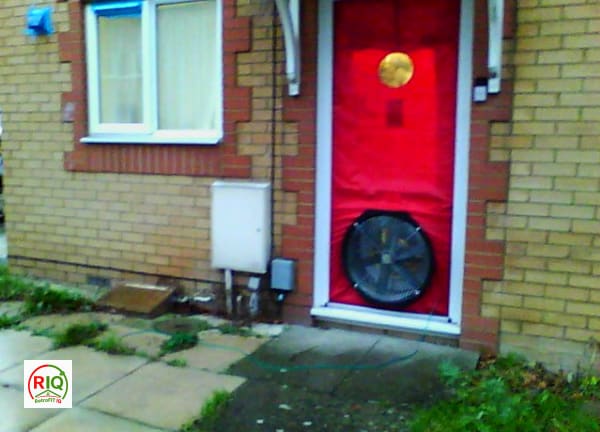
- New dwellings must demonstrate airtightness, normally by physical testing, and meet a maximum air permeability limit (historically a limiting value around 8 m³/h·m², with most designs targeting lower to meet the overall energy calculation).
- Since the 2021 edition (in force 2022), the regime tightened: more dwellings must be tested, the previous option to assume a default poor value without testing was effectively removed, and untested dwellings can no longer simply assume a penalty figure.
- The as-built airtightness result feeds into the SAP energy calculation, so a worse-than-designed test result can push the whole dwelling out of compliance.
- Testing must be carried out by a competent, registered tester (see ATTMA below), and the result is documented for Building Control.
ATTMA — who is allowed to test
The Air Tightness Testing & Measurement Association (ATTMA) is the UK competent-persons scheme for airtightness testing. Tests submitted for Building Regulations compliance must generally be carried out by an ATTMA-registered tester (or equivalent UKAS-accredited scheme), following the relevant Technical Standard:
| Standard | Applies to |
|---|---|
| ATTMA TSL1 | Dwellings (domestic) |
| ATTMA TSL2 | Non-domestic buildings |
| BS EN ISO 9972 | Underlying international test method |
Registration matters because the result is only as trustworthy as the tester's competence and equipment calibration. An unregistered or careless test — wrong preparation, mis-measured geometry, single-point shortcuts — can produce a number that looks compliant but is meaningless.
The Part F link — you cannot tighten without ventilating
Crucially, the airtightness requirement is tied to ventilation. Approved Document F (means of ventilation) sets minimum ventilation provision, and the tighter a dwelling is built, the more important compliant, designed ventilation becomes. The 2021 editions strengthened this link, recognising that increasing airtightness without adequate ventilation creates condensation, mould and indoor-air-quality risks. Regulation now expects 'build tight, ventilate right' to be applied together — not airtightness in isolation.
How Building Regs compare to Passive House
| Standard | Requirement | Verification |
|---|---|---|
| Part L (new dwelling) | ≈ 8 m³/h·m² limit; ~5 commonly designed | Mandatory test (ATTMA registered) |
| Good airtight practice | 1–3 m³/h·m² | Tested, with an air-barrier strategy |
| EnerPHit (retrofit) | ≤ 1.0 ACH₅₀ | Mandatory blower door, both directions |
| Passive House (new build) | ≤ 0.6 ACH₅₀ | Mandatory blower door, both directions |
What this means for retrofit
Most airtightness regulation targets new build; existing homes are largely unregulated for airtightness unless a notifiable change triggers it. That is both an opportunity and a risk. The opportunity: air-leakage reduction is one of the most cost-effective retrofit measures available. The risk: improving airtightness without simultaneously upgrading ventilation — exactly the mistake the regulations now guard against in new build — is alarmingly common in unregulated DIY and contractor retrofits, and it causes condensation and mould. Apply the Passive House discipline whether or not regulation forces you to.
The Future Homes Standard and where airtightness is heading
Regulation is tightening, not loosening. The 2021 Part L uplift was an interim step toward the Future Homes Standard, under which new homes are expected to produce substantially lower carbon emissions and be 'zero-carbon ready' — built so that no future retrofit work is needed to decarbonise as the electricity grid cleans up. Airtightness is central to that, because the low-temperature heating (heat pumps) and heat-recovery ventilation these homes rely on only perform in a tight envelope. The direction of travel is clear: the days of a ~8 m³/h·m² limit and untested 'default' figures are ending, and designers building merely to today's minimum are building to a standard that will soon look dated.
The performance gap — as-designed versus as-built
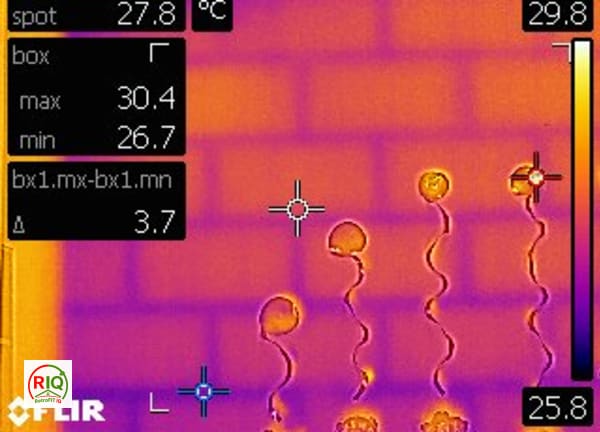
A persistent problem in UK construction is the 'performance gap': the difference between the energy performance a building was designed and calculated to achieve and what it actually delivers once built and occupied. Airtightness is one of the biggest contributors, because the SAP calculation uses the as-built air-test result, and a building that leaks more than designed quietly fails to perform. This is exactly why the regulations moved to require more testing and removed the option to assume a default value: a designed figure that is never verified is worthless. Genuine performance comes from designing a continuous air barrier, protecting it through construction, and verifying it by test — not from the number on the SAP printout.