
Blower Door Test vs SAP: Measurement vs Compliance Modelling
Blower door test vs SAP (Standard Assessment Procedure).
 Reviewed by George Sora, Certified Passive House DesignerUpdated June 2026
Quick answer & key takeaways
5 min read- Bottom line: A blower door test is a measurement; SAP is a compliance calculation.
- When Blower door is enough: You need the real airtightness figure
- When SAP is the better choice: You need a Part L compliance calculation
- When you need both: You are completing a new build properly
- Biggest misconception: “SAP measures how airtight my house is.” — SAP calculates energy; it uses an airtightness figure that is either a default or a blower door result. It does not measure anything itself.
- Retrofit IQ’s approach: We provide SAP with a measured air-permeability figure rather than a penalising default, and keep the compliance calculation distinct from the diagnostic work that actually guides sealing and fabric decisions.
Quick answer
A blower door test is a measurement; SAP is a compliance calculation. They are not rivals — SAP actually uses an airtightness figure as an input, and that figure is either a pessimistic default or a measured value from a blower door. Feed SAP a real test result and the model improves; rely on the default and the compliance margin shrinks. For accuracy you want the measurement; for Building Regulations you need the SAP calculation.
At a glance
| Attribute | Blower door test | SAP (Standard Assessment Procedure) |
|---|---|---|
| Type | Physical measurement | Compliance calculation |
| Airtightness | Measured directly | Input — default or tested |
| Required for | Part L airtightness, Passive House | Part L energy compliance, EPCs |
| Uses the other? | No | Yes — uses the blower door result |
| Accuracy of air leakage | Real | Depends on whether tested |
| Output | ach@50 / q50 | DER/TER, fabric energy efficiency, EPC band |
What is Blower door test?
A physical measurement of air leakage using a calibrated fan at a reference pressure, producing ach@50 or q50 — the real airtightness of the building, repeatable and independent of assumptions.
What is SAP (Standard Assessment Procedure)?
The UK government's compliance model for new dwellings and major works. It calculates energy, cost and CO₂ for Building Regulations and EPCs, and can take a default air-permeability value or, better, a tested one from a blower door.
What each method measures — and what it doesn’t
Blower door
- Real air leakage at the reference pressure
- A repeatable airtightness baseline
- With tracing, the leakage paths
- Whether the dwelling complies with Part L energy targets
- Total energy demand or CO₂
SAP
- Predicted energy demand and CO₂ for compliance
- Whether the dwelling passes Part L targets
- The EPC rating derived from the model
- Real air leakage, unless a blower door result is entered
- Localised defects and thermal bridges in detail
The building science
SAP is a calculation engine: it takes the geometry, fabric U-values, ventilation strategy, heating system and an airtightness figure, and computes the dwelling's energy performance for compliance. Its accuracy on air leakage depends entirely on what you feed it. If no test is done, SAP applies a conservative default permeability, which penalises the design; if a blower door test is carried out, the measured value is entered and the model reflects reality.
The blower door is the measurement that makes SAP honest about infiltration. Because air leakage strongly affects ventilation heat loss, the difference between a default and a good measured value can be the difference between passing and failing the Part L target, or between a heat pump that is correctly sized and one that is not.
This is why airtightness testing is mandatory for new dwellings: SAP needs a real number to be trusted, and the regulations want that number measured rather than assumed. The test is the empirical anchor; SAP is the framework that turns it, with everything else, into a compliance result.
For existing homes the same logic applies in reverse. RdSAP (the reduced SAP used for EPCs) usually defaults airtightness, so its output is indicative. If you want a model you can act on — for retrofit or heat pump design — a blower door test supplies the measured input that lifts the calculation from approximate to dependable.
Key differences
- The blower door measures; SAP calculates.
- SAP uses an airtightness figure — default or tested — as an input.
- A measured value improves SAP's accuracy and compliance margin.
- You need SAP for energy compliance; you need the test for real airtightness.
Common misconceptions
Myth: SAP measures how airtight my house is.
SAP calculates energy; it uses an airtightness figure that is either a default or a blower door result. It does not measure anything itself.
Myth: A SAP pass means the build is airtight.
Only if a real test value was used. With a default, the model may not reflect the as-built airtightness at all.
Myth: Testing is optional for compliance.
For new dwellings, airtightness testing is required, and using the measured value typically improves the SAP result.
Real-world situations
New build needing Part L compliance
SAP for the compliance calculation, with a blower door test to supply the measured airtightness and improve the result.
Designer wants the SAP model to reflect reality
Carry out a blower door test and enter the measured value rather than relying on the default.
Existing home retrofit design
A blower door test to provide a real airtightness input, since RdSAP would otherwise default it.
Investigating why a 'compliant' home is draughty
A blower door with tracing to measure and locate leakage the SAP default may have masked.
Which do you actually need?
When Blower door is enough
- You need the real airtightness figure
- You are improving the SAP model's accuracy
- You are verifying as-built performance
When SAP is the better choice
- You need a Part L compliance calculation
- You need an energy rating or EPC
- You are demonstrating regulatory compliance
When you need both
- You are completing a new build properly
- You want compliance and genuine performance
- You are designing a retrofit to a target
What Retrofit IQ checks on site
We provide SAP with a measured air-permeability figure rather than a penalising default, and keep the compliance calculation distinct from the diagnostic work that actually guides sealing and fabric decisions.
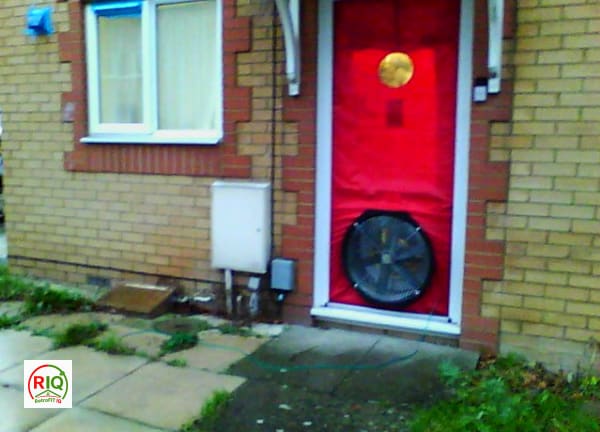
- Calibrated blower door test to recognised methodology
- Measured air-permeability value suitable for entry into SAP
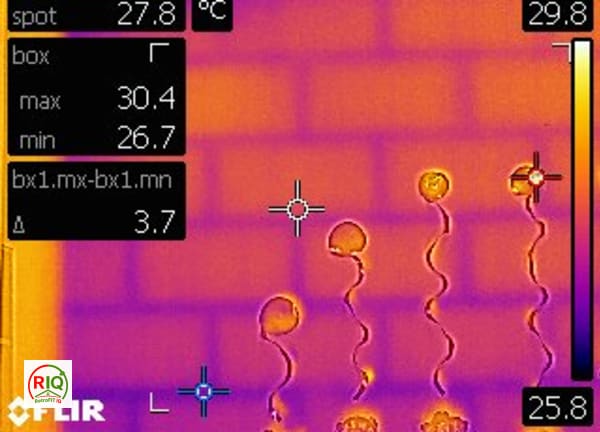
- Smoke tracing and imaging to find leakage before it costs compliance margin
- Advice on achievable airtightness targets for the design
- Re-test after remedial sealing to confirm the improvement
- Interpretation of how the result affects the energy calculation
What a Certified Passive House Designer recommends
SAP and the blower door are not competing methods; the test is one of SAP's inputs. The mistake is to lean on the default airtightness, which penalises a good build and flatters a poor one. Measure it, enter the real figure, and the calculation becomes a fair reflection of the dwelling.
On any project where airtightness matters — and for a heat pump or low-energy home it always does — I want the measured value driving the model, plus tracing to fix the leaks before they erode the compliance margin or the comfort.
— George Sora, Certified Passive House Designer, Founder, RetrofitIQ
Reviewed using current building physics principles and Passive House methodology.
Related services
Related comparisons
Related investigations
Compare another way
Closely related comparisons our clients read next.
Blower Door Test vs EPC
A blower door test measures the real airtightness of a building; an EPC is a simplified rating that assumes a default air-leakage value rather than measuring it.
Read comparisonBlower Door Test vs PHPP
A blower door test is a physical measurement; PHPP is the design model that consumes it.
Read comparisonBlower Door vs Smoke Testing for Air Leakage
The blower door measures the quantity of air leakage; smoke tracing reveals its location.
Read comparisonPHPP vs SAP / RdSAP Energy Modelling
PHPP is a design tool that predicts real energy performance accurately; SAP and RdSAP are compliance and EPC tools, simplified for consistency rather than precision.
Read comparisonEvidence from Real Projects (11)
Real project and investigation images from our own fieldwork, matched to this page — not stock photography.



No related investigations yet.
Browse all investigationsFrequently asked questions
Is SAP the same as a blower door test?+
No. SAP is a compliance calculation; a blower door test is a physical measurement of air leakage. SAP uses an airtightness figure that is either a default or a tested value.
Does SAP require a blower door test?+
For new dwellings, airtightness testing is required, and the measured value is entered into SAP. Without a test, SAP applies a conservative default.
Why use a measured value instead of the default?+
The default is deliberately pessimistic, which can fail a good design. A measured value reflects the real build and usually improves the compliance result.
What is the difference between SAP and RdSAP?+
SAP is the full procedure for new dwellings and major works; RdSAP is the reduced version for existing homes and EPCs, relying more on defaults.
Can SAP tell me where my home leaks?+
No. SAP calculates energy; locating leaks needs a blower door test with smoke tracing or thermal imaging.
Does a good SAP score mean an airtight home?+
Only if a real test value was used. With a default airtightness, the score may not reflect the as-built leakage.
Is the blower door result used for the EPC?+
For new dwellings, the tested value feeds SAP and hence the EPC. For existing homes, RdSAP usually defaults it unless you commission a test.
How airtight do I need to be for Part L?+
Targets vary with the design and route, but using a measured value and sealing well typically gives headroom against the limit.
Can you re-test after sealing?+
Yes — a follow-up test confirms the improvement and the value used in the calculation is genuine.
Is testing disruptive?+
No — the fan seals into a doorway temporarily and the test leaves no marks.
Does airtightness affect heat pump design through SAP?+
It affects the modelled heat demand, but for heat pump sizing we prefer a dedicated measured heat-loss assessment rather than SAP.
Who interprets the result?+
A Certified Passive House Designer, so the airtightness figure is understood in terms of real performance and compliance.
Need professional advice?
A comparison like this helps you understand the theory, but every property behaves differently. The only reliable way to establish the real cause in your home — rather than guessing — is professional building performance diagnostics. At RetrofitIQ we verify buildings using the appropriate combination of investigations:
- Thermal imaging
- Blower door testing
- Moisture investigation
- Building physics assessment
- Passive House methodology