
Blower Door Test vs PHPP: A Measurement and the Model It Feeds
Blower door test vs PHPP (Passive House Planning Package).
 Reviewed by George Sora, Certified Passive House DesignerUpdated June 2026
Quick answer & key takeaways
4 min read- Bottom line: A blower door test is a physical measurement; PHPP is the design model that consumes it.
- When Blower door is enough: You need to verify achieved airtightness
- When PHPP is the better choice: You are designing to a heating-demand target
- When you need both: You are pursuing Passive House or EnerPHit
- Biggest misconception: “PHPP measures airtightness.” — PHPP models energy. The airtightness value it uses must be measured with a blower door to be reliable.
- Retrofit IQ’s approach: We feed PHPP with measured data — above all a tested airtightness figure — rather than optimistic assumptions, so the modelled performance the design relies on is anchored to what the building actually achieves on site.
Quick answer
A blower door test is a physical measurement; PHPP is the design model that consumes it. PHPP needs a realistic airtightness value to predict heating demand accurately, and the blower door supplies it — first as a design target, then as a verified result. They are sequential rather than alternative: model in PHPP, build to the airtightness target, then test with the blower door to prove the building matches the model.
At a glance
| Attribute | Blower door test | PHPP (Passive House Planning Package) |
|---|---|---|
| Type | Measurement | Design-energy model |
| Airtightness | Measured (ach@50) | Input target then verified value |
| Predicts energy? | No | Yes — accurately, when fed good data |
| Used in | Verification of airtightness | Passive House/EnerPHit design and prediction |
| Sequence | On site, during/after build | At design stage, updated with results |
| Standard target | 0.6 ach@50 (PH) / 1.0 (EnerPHit) | Models against those targets |
What is Blower door test?
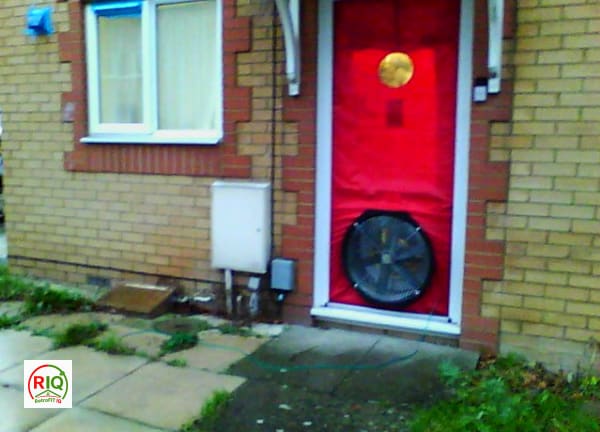
A calibrated measurement of air leakage at 50 Pa, giving ach@50. For Passive House and EnerPHit it provides the verified airtightness result the standard demands and the model relies on.
What is PHPP (Passive House Planning Package)?
A detailed, validated design-and-energy model that predicts a building's real performance from its fabric, thermal bridges, ventilation, climate and airtightness. It is the modelling tool behind Passive House and EnerPHit design.
What each method measures — and what it doesn’t
Blower door
- The verified air leakage of the completed building
- Whether the airtightness target has been met
- The leakage paths, with tracing, before the target is locked in
- Energy demand or whether the design meets the standard overall
- Thermal bridges or ventilation performance
PHPP
- Predicted annual heating demand and load
- The effect of fabric, bridges and ventilation choices
- Whether the design meets the Passive House/EnerPHit criteria
- The real, as-built airtightness — that must be tested
- Anything physical without a measured input
The building science
PHPP is a validated model: it has been checked against measured Passive House buildings, so when its inputs are accurate it predicts real energy use closely. Airtightness is one of those inputs, and it has a strong effect on the heating demand because ventilation heat loss scales with how much uncontrolled air moves through the envelope. Feed PHPP an optimistic airtightness and the prediction is optimistic; feed it a realistic one and it tells the truth.
The blower door provides that realistic value. At design stage, PHPP is run against the standard's airtightness target (0.6 ach@50 for Passive House, 1.0 for EnerPHit). During and after construction, the blower door measures the achieved airtightness, which is then entered back into PHPP to confirm the prediction and the certification.
This is a deliberate loop: model, build, test, verify. The blower door without PHPP gives a number with no energy context; PHPP without the blower door gives a prediction resting on an unverified assumption. Together they let you design to a heating-demand target and then prove the building delivers it.
For retrofit (EnerPHit) the loop is just as important. Existing buildings have unpredictable leakage, so an early blower door test informs the PHPP model realistically, and a final test confirms the sealing strategy worked. Skipping the measurement leaves the most uncertain input in the whole model unverified.
Key differences
- The blower door measures airtightness; PHPP predicts energy from it.
- PHPP sets the airtightness target; the blower door verifies it.
- Neither replaces the other — they form a design-and-verify loop.
- An accurate PHPP prediction depends on a measured airtightness value.
Common misconceptions
Myth: PHPP measures airtightness.
PHPP models energy. The airtightness value it uses must be measured with a blower door to be reliable.
Myth: A blower door test alone proves Passive House compliance.
It proves the airtightness criterion; the energy and comfort criteria are demonstrated through PHPP.
Myth: You can certify without testing.
A verified blower door result is integral to Passive House and EnerPHit certification.
Real-world situations
Designing a new Passive House
Model in PHPP to the 0.6 ach@50 target, build to it, then verify with a blower door test.
EnerPHit retrofit of an older home
Early blower door test to inform PHPP realistically, sealing strategy designed, final test to confirm 1.0 ach@50.
PHPP prediction looks too good to be true
Check the airtightness assumption against a measured value — it is the input most likely to flatter the result.
Verifying a finished low-energy build
Blower door test to confirm the achieved airtightness, fed back into PHPP for the final energy balance.
Which do you actually need?
When Blower door is enough
- You need to verify achieved airtightness
- You are demonstrating the airtightness criterion
- You want to locate leaks before final certification
When PHPP is the better choice
- You are designing to a heating-demand target
- You are modelling fabric, bridges and ventilation
- You need to predict whether the design meets the standard
When you need both
- You are pursuing Passive House or EnerPHit
- You want a prediction you can prove on site
- You are running the design-build-test-verify loop
What Retrofit IQ checks on site
We feed PHPP with measured data — above all a tested airtightness figure — rather than optimistic assumptions, so the modelled performance the design relies on is anchored to what the building actually achieves on site.
- PHPP modelling of fabric, thermal bridges, ventilation and airtightness
- Airtightness target set for the chosen standard
- Calibrated blower door testing to verify the achieved figure
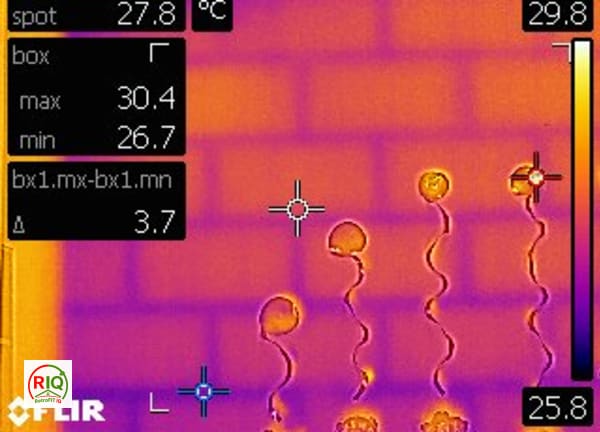
- Smoke tracing to find and fix leaks before final verification
- Measured airtightness fed back into PHPP for the final balance
- A documented model-and-verify record for certification
What a Certified Passive House Designer recommends
PHPP and the blower door are two halves of the same discipline: predict, then prove. The model is only as honest as its airtightness input, and the only honest input is a measured one. So I design to the target in PHPP and verify it on site with the blower door — and trace the leaks in between so the target is actually reachable.
The strength of this loop is that it removes wishful thinking. You commit to a heating-demand figure, build to the airtightness it requires, and then measure to confirm the building behaves as modelled. That is what makes Passive House and EnerPHit buildings perform as promised.
— George Sora, Certified Passive House Designer, Founder, RetrofitIQ
Reviewed using current building physics principles and Passive House methodology.
Related services
Related comparisons
Related investigations
Compare another way
Closely related comparisons our clients read next.
EnerPHit vs New-Build Passive House
Passive House (classic) is the new-build standard; EnerPHit is its retrofit counterpart, with slightly relaxed targets that reflect the constraints of working with an existing building.
Read comparisonBlower Door Test vs SAP
A blower door test is a measurement; SAP is a compliance calculation.
Read comparisonPHPP vs SAP / RdSAP Energy Modelling
PHPP is a design tool that predicts real energy performance accurately; SAP and RdSAP are compliance and EPC tools, simplified for consistency rather than precision.
Read comparisonBlower Door vs Smoke Testing for Air Leakage
The blower door measures the quantity of air leakage; smoke tracing reveals its location.
Read comparisonEvidence from Real Projects (14)
Real project and investigation images from our own fieldwork, matched to this page — not stock photography.



No related investigations yet.
Browse all investigationsFrequently asked questions
Is a blower door test the same as PHPP?+
No. A blower door physically measures airtightness; PHPP is a design-energy model that uses the airtightness value to predict performance.
Does PHPP need a blower door result?+
Yes — for an accurate prediction and for certification, PHPP uses a measured airtightness value, not an assumption.
What airtightness does Passive House require?+
0.6 air changes per hour at 50 Pa for classic Passive House, and 1.0 ach@50 for the EnerPHit retrofit standard.
Can PHPP predict my energy use?+
Yes, closely, when its inputs are accurate. It is validated against real Passive House buildings, which is why measured airtightness matters.
When is the blower door test done?+
A test can be done during construction to check progress and again at completion to verify the final airtightness for certification.
Why test if PHPP already modelled it?+
Because the model uses an assumed or target value until it is measured. The test proves the building actually achieved it.
Is PHPP used for retrofit?+
Yes — it is the modelling tool behind EnerPHit retrofits as well as new-build Passive House.
What if the test misses the target?+
We trace and seal the leaks, then re-test. PHPP is updated with the verified figure for the final balance.
Does airtightness really affect the energy prediction much?+
Yes — ventilation heat loss depends heavily on infiltration, so airtightness is one of the most influential inputs in the model.
Is the test non-destructive?+
Entirely — the fan seals into a doorway temporarily and leaves no marks.
Can you do both the modelling and the testing?+
Yes — we model in PHPP and carry out the blower door testing, closing the loop with one responsible party.
Who carries out the work?+
A Certified Passive House Designer, so the modelling and verification are handled to the standard's requirements.
Need professional advice?
A comparison like this helps you understand the theory, but every property behaves differently. The only reliable way to establish the real cause in your home — rather than guessing — is professional building performance diagnostics. At RetrofitIQ we verify buildings using the appropriate combination of investigations:
- Thermal imaging
- Blower door testing
- Moisture investigation
- Building physics assessment
- Passive House methodology