
PHPP is a validated building-energy model, originally a sophisticated spreadsheet, developed and maintained by the Passivhaus Institut. It is the tool a Passive House Designer uses to prove — by calculation — that a design will meet the certification targets before a single brick is laid. Its predictions are repeatedly validated against measured energy use in completed, monitored Passive Houses, and the agreement is remarkably close. That validation is what makes PHPP different from a compliance tick-box.
What PHPP calculates
From a complete description of the building, PHPP produces, among other things:
- Annual space heating demand (kWh/m²·yr) — checked against the ≤ 15 limit.
- Peak heating load (W/m²) — checked against the ≤ 10 W/m² alternative route.
- Annual cooling and dehumidification demand, where relevant.
- Primary Energy Renewable (PER) demand — checked against the class limits.
- Overheating frequency (% of hours over 25 °C) — checked against the ≤ 10% limit.
- An energy balance: exactly where heat is gained and lost, element by element.
How the energy balance works
At its core PHPP is an energy-balance model. Over the year (and month by month), it sums every heat loss and every heat gain, and the heating demand is simply what's left over — the heat the building still needs after free gains are counted:
| Heat losses | Heat gains |
|---|---|
| Transmission losses (through walls, roof, floor, windows) | Solar gains (through glazing, by orientation and shading) |
| Ventilation losses (air exchange, reduced by MVHR recovery) | Internal gains (occupants, appliances, hot water) |
| Thermal-bridge losses (ψ and χ) | (Heat recovered by the MVHR heat exchanger) |
Heating demand = total losses − useful gains. Because every term is calculated explicitly — including thermal bridges and the exact heat-recovery efficiency of the proposed MVHR unit — PHPP shows the designer precisely what to change to hit the target. Reduce a U-value here, improve airtightness there, add or remove glazing on a given façade, and PHPP re-balances instantly.
The inputs — why the result is trustworthy
PHPP's accuracy comes from how comprehensively and conservatively it is fed. Key inputs include:
- Climate data specific to the actual site (temperature, solar radiation by orientation, ground temperature).
- Every element's U-value, built up from real material conductivities and thicknesses.
- Certified window data — Ug, Uf, Uw, frame geometry, g-value, and the installation ψ-value.
- Modelled ψ-values for every significant thermal bridge.
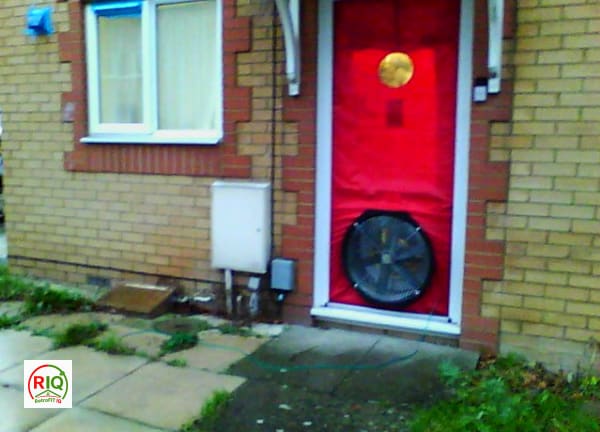
- The design airtightness (later replaced with the measured blower door result).
- Certified MVHR heat-recovery efficiency and specific fan power.
- Realistic occupancy, internal gains and shading from surrounding obstructions and the building's own geometry.
designPH and 3D modelling
designPH is a companion tool (a SketchUp plug-in) that lets the designer build the model in 3D and export the geometry, areas, orientations and shading straight into PHPP. It speeds up early-stage design and reduces transcription errors, but the energy calculation itself still happens in PHPP.
PHPP vs SAP — why the difference matters
Most UK homes are assessed with SAP (the Standard Assessment Procedure) for Building Regulations compliance and EPCs. SAP and PHPP are both energy models, but they serve different purposes and PHPP is the more rigorous predictor of real performance:
| Aspect | PHPP | SAP |
|---|---|---|
| Primary purpose | Design tool to predict real energy & comfort | Compliance & asset-rating tool |
| Thermal bridges | Each junction modelled (ψ-values) | Often default/simplified y-values |
| Airtightness | Verified by blower door, fed back in | Design assumption, rarely measured as-built |
| Overheating | Explicit dynamic check | Limited / separate appendix method |
| Validation | Repeatedly checked against measured use | Known to under-predict the performance gap |
This is the crux of the 'performance gap' — the well-documented tendency of buildings to use far more energy than their design-stage compliance calculations predicted. PHPP closes that gap because it models the building honestly and is corrected with as-built measurement. We explore the regulatory side of this in our Passive House vs Building Regulations article.
Why this matters even if you never certify
Even on a retrofit that will never be certified, the discipline of modelling the energy balance before specifying anything is invaluable. It tells you which measures actually move the needle, exposes the moisture and thermal-bridge risks of a proposed build-up, and stops money being spent on measures that look green but barely change the energy balance. Model first, specify second — that is the Passive House method, and it is the method we apply to every project.