
MVHR vs Natural Ventilation: Controlled Air or Background Trickle
MVHR (Mechanical Ventilation with Heat Recovery) vs Natural (trickle) ventilation.
 Reviewed by George Sora, Certified Passive House DesignerUpdated June 2026
Quick answer & key takeaways
4 min read- Bottom line: Natural ventilation is uncontrolled — it depends on wind, temperature and whether people open windows and vents — and it discards heat with the air.
- When MVHR is enough: The home is, or will be, airtight
- When Natural ventilation is the better choice: The fabric is traditional, vapour-open and relatively leaky
- When you need both: Mixed-mode strategies — natural ventilation in shoulder seasons, mechanical support in winter — can suit some buildings
- Biggest misconception: “Opening windows is always enough ventilation.” — It can be, when done consistently — but in winter people close them, and that is when moisture and CO₂ build up most.
- Retrofit IQ’s approach: Before recommending mechanical ventilation, we measure what the home already does — airtightness, real CO₂ and humidity over time, and surface temperatures.
Quick answer
Natural ventilation is uncontrolled — it depends on wind, temperature and whether people open windows and vents — and it discards heat with the air. MVHR provides a controlled, continuous, filtered air supply and recovers most of the ventilation heat. In a leaky, traditionally built home natural ventilation can be adequate; in an airtight, well-insulated home it cannot reliably deliver fresh air without large heat losses, which is why MVHR becomes necessary.
At a glance
| Attribute | MVHR (Mechanical Ventilation with Heat Recovery) | Natural (trickle) ventilation |
|---|---|---|
| Control of air change | Continuous, designed, predictable | Variable — weather and behaviour dependent |
| Heat recovery | Yes | No |
| Filtration | Yes | No |
| Power / ducts | Needs both | Neither |
| Performance in airtight homes | Reliable | Inadequate without heat penalty |
| Reliance on occupants | Low | High (windows, vents) |
| Best suited to | Airtight retrofit, new build | Leaky, traditional fabric |
What is MVHR (Mechanical Ventilation with Heat Recovery)?
A balanced mechanical system that delivers a continuous, designed quantity of filtered fresh air and extracts stale air, recovering most of the heat. Ventilation is controlled and predictable rather than left to weather and occupant behaviour.
What is Natural (trickle) ventilation?
Ventilation provided by background ventilators (trickle vents), openable windows and the building's own leakage, driven by wind and the stack effect. It needs no power or ducts, but the air-change rate varies with weather, occupancy and whether windows and vents are actually used.
What each method measures — and what it doesn’t
MVHR
- A designed, continuous air-change rate independent of weather
- Heat recovered from the extract stream
- Filtered supply air quality
- Requires airtightness and commissioning to deliver its designed performance
Natural ventilation
- Nothing is measured in use — provision is sized at design, then left to physics and behaviour
- Actual delivered air-change rate, which varies hour to hour
- Whether occupants open windows and leave vents open
- Heat lost with the ventilation air
The building science
Natural ventilation is driven by pressure differences from wind and the stack effect (warm air rising). These vary constantly, so the actual air-change rate swings from far too little on a still, mild day — risking condensation and poor air quality — to far too much on a cold, windy one, dumping heat. Crucially, the rate also depends on occupants using trickle vents and windows, which in practice they often do not, particularly in winter when ventilation matters most for moisture.
As a building is made airtight to save energy, the leakage that used to provide accidental background ventilation disappears. Trickle vents alone then struggle to provide adequate, evenly distributed fresh air without either under-ventilating (condensation, high CO₂) or over-ventilating through open windows (heat loss). This is the core reason the Passive House standard pairs airtightness with MVHR: you cannot have a genuinely airtight home and rely on trickle ventilation for healthy air without a heat penalty.
MVHR replaces that uncertainty with a designed, continuous flow to each room and heat recovery on the extract, decoupling fresh-air delivery from the weather and from occupant behaviour. In a traditionally built, leaky home with vapour-open fabric, well-used natural ventilation can still be perfectly adequate and is far simpler — the judgement is about airtightness, fabric type and how the building is used.
Key differences
- MVHR delivers a controlled, continuous rate; natural ventilation varies with weather and behaviour.
- MVHR recovers heat and filters air; natural ventilation does neither.
- Natural ventilation depends on occupants opening vents and windows; MVHR does not.
- In an airtight home, natural ventilation cannot reliably ventilate without a heat penalty.
- Natural ventilation needs no power, ducts or maintenance; MVHR needs all three.
Common misconceptions
Myth: Opening windows is always enough ventilation.
It can be, when done consistently — but in winter people close them, and that is when moisture and CO₂ build up most.
Myth: Trickle vents provide reliable background ventilation.
Their flow varies with wind and is often defeated by occupants closing them; in airtight homes they cannot guarantee adequate, even ventilation.
Myth: An airtight house with trickle vents is fine.
Airtightness removes the accidental leakage that used to ventilate the home, so a designed strategy — usually MVHR — is needed to keep air healthy without losing heat.
Real-world situations
Traditional solid-wall home kept relatively leaky and vapour-open
Well-managed natural ventilation can be adequate; focus on warm surfaces, sensible humidity and using the vents and windows.
Deep retrofit taken to high airtightness
MVHR — once leakage is removed, trickle ventilation cannot deliver healthy air without significant heat loss.
Recurring winter condensation despite trickle vents
Investigate surface temperatures and actual air change; the fix is usually warmer surfaces plus controlled (mechanical) ventilation, not more vents.
Which do you actually need?
When MVHR is enough
- The home is, or will be, airtight
- You want guaranteed fresh air and low running cost
- Occupants will not reliably manage windows and vents
When Natural ventilation is the better choice
- The fabric is traditional, vapour-open and relatively leaky
- Budget or building constraints rule out ducting
- Occupants actively use windows and vents
When you need both
- Mixed-mode strategies — natural ventilation in shoulder seasons, mechanical support in winter — can suit some buildings
What Retrofit IQ checks on site
Before recommending mechanical ventilation, we measure what the home already does — airtightness, real CO₂ and humidity over time, and surface temperatures. That tells us whether the issue is genuinely inadequate ventilation or cold surfaces, so we do not fit ducting to solve a problem that was really about insulation.
- Blower door test to quantify how much accidental ventilation the fabric currently provides
- CO₂ and humidity logging over time to see whether natural ventilation is actually adequate in use
- Surface-temperature mapping to separate a ventilation problem from a cold-surface (insulation) problem
- Assessment of fabric type and vapour openness before recommending airtightness and MVHR
- Review of trickle-vent provision and window use against measured air-change data
- Duct feasibility study where MVHR is a candidate
What a Certified Passive House Designer recommends
I do not treat MVHR as automatically superior to opening a window — the right answer depends on airtightness and fabric. In a leaky, vapour-open period home that is used sensibly, natural ventilation can be entirely adequate, and adding ducting would be over-engineering.
But once a building is genuinely airtight, relying on trickle vents is a recipe for condensation or wasted heat. At that point MVHR is not a luxury; it is the piece that makes airtightness safe and comfortable. The decision should follow the blower door result and a period of CO₂ and humidity logging, not a rule of thumb.
— George Sora, Certified Passive House Designer, Founder, RetrofitIQ
Reviewed using current building physics principles and Passive House methodology.
Related services
Related comparisons
Related investigations
Compare another way
Closely related comparisons our clients read next.
MVHR vs MEV (Mechanical Extract Ventilation)
MVHR is a balanced supply-and-extract system that recovers heat and filters incoming air; MEV is extract-only and relies on uncontrolled inlets to make up the air.
Read comparisonAirtightness Testing vs Ventilation Assessment
Airtightness testing measures the uncontrolled air leaking through gaps; a ventilation assessment checks the controlled fresh air the home deliberately provides.
Read comparisonMVHR vs PIV (Positive Input Ventilation)
MVHR is a balanced, heat-recovering system best suited to airtight, well-insulated homes; PIV is a simpler, lower-cost system that dilutes humidity by pressurising the house but recovers no heat.
Read comparisonContinuous vs Intermittent Extract Ventilation
Continuous extract removes moisture steadily all day and responds to humidity; intermittent fans only act in short bursts when triggered, leaving long unventilated gaps.
Read comparisonEvidence from Real Projects (13)
Real project and investigation images from our own fieldwork, matched to this page — not stock photography.

Sample Building Performance Investigation Report — Thermal Imaging
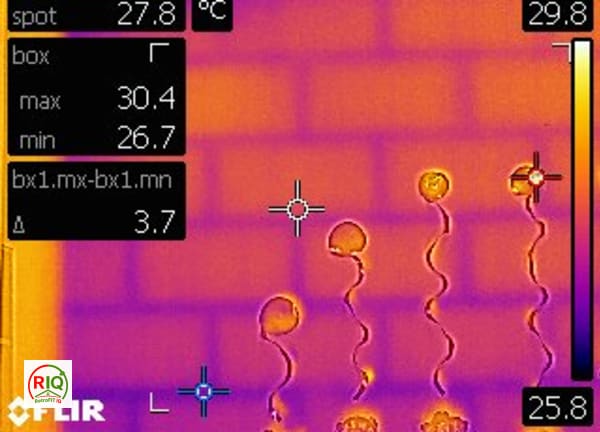
Thermal Bridging Visible Through Masonry Blockwork Wall
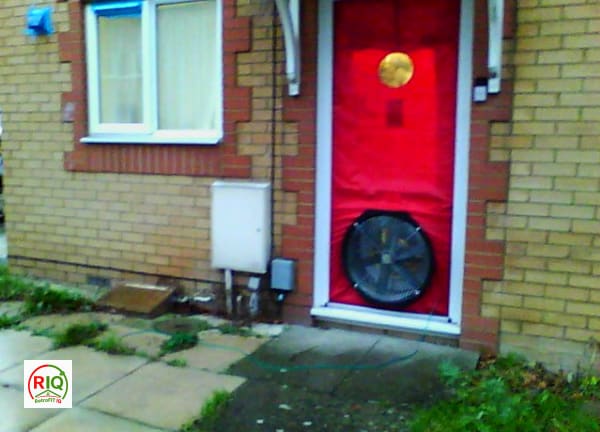
Blower Door Airtightness Test Setup

Thermal Bridge at Wall-Ceiling Junction Near Window

Thermal Bridge at Internal Corner Wall Junction

Airtightness Testing in a Stratford Victorian Terrace
No related investigations yet.
Browse all investigationsFrequently asked questions
Can I just open windows instead of fitting MVHR?+
In a leaky, traditional home used sensibly, yes. In an airtight home, window opening is inconsistent and discards heat, so a designed system like MVHR is needed for reliable, efficient ventilation.
Do trickle vents ventilate an airtight house adequately?+
Not reliably. Their flow varies with weather and they are often closed by occupants; airtight homes need a designed ventilation strategy.
Will MVHR stop me opening windows?+
No — you can still open windows. MVHR simply guarantees a baseline of fresh, heat-recovered air whether or not you do.
Is natural ventilation cheaper?+
It has no capital, power or maintenance cost, but it provides no heat recovery, so in an airtight home it costs more in lost heat than MVHR saves.
Why does my condensation get worse in winter?+
Because windows and vents are closed, air change falls and surfaces are coldest. The fix is usually warmer surfaces plus controlled ventilation.
Is mixed-mode ventilation a thing?+
Yes — some buildings use natural ventilation in mild weather and mechanical ventilation when it is cold or still. The strategy must be designed as a whole.
Does an airtight home feel stuffy?+
Only if it is under-ventilated. With MVHR running, an airtight home typically has better, more consistent air quality than a draughty one.
How do I know if my ventilation is adequate?+
By logging CO₂ and humidity over time. Persistent high readings indicate the natural ventilation is not keeping up.
Need professional advice?
A comparison like this helps you understand the theory, but every property behaves differently. The only reliable way to establish the real cause in your home — rather than guessing — is professional building performance diagnostics. At RetrofitIQ we verify buildings using the appropriate combination of investigations:
- Thermal imaging
- Blower door testing
- Moisture investigation
- Building physics assessment
- Passive House methodology