
MVHR vs PIV: Which Ventilation Strategy Is Right for Your Home
MVHR (Mechanical Ventilation with Heat Recovery) vs PIV (Positive Input Ventilation).
 Reviewed by George Sora, Certified Passive House DesignerUpdated June 2026
Quick answer & key takeaways
4 min read- Bottom line: MVHR is a balanced, heat-recovering system best suited to airtight, well-insulated homes; PIV is a simpler, lower-cost system that dilutes humidity by pressurising the house but recovers no heat.
- When MVHR (Mechanical Ventilation with Heat Recovery) is enough: The home is, or will be, airtight
- When PIV (Positive Input Ventilation) is the better choice: The home is leakier and the brief is condensation control on a budget
- When you need both: Test airtightness first — the result determines which is appropriate
- Biggest misconception: “MVHR makes a house stuffy or seals it up.” — MVHR continuously supplies fresh, filtered air — correctly commissioned, indoor air quality is better, not worse.
- Retrofit IQ’s approach: We choose ventilation from the airtightness result, not a brochure: MVHR where the envelope is tight enough to reward heat recovery, PIV where a leakier home needs cost-effective humidity control — measuring first so the strategy actually fits the building.
Quick answer
MVHR is a balanced, heat-recovering system best suited to airtight, well-insulated homes; PIV is a simpler, lower-cost system that dilutes humidity by pressurising the house but recovers no heat. The right choice depends mainly on how airtight your home is and what problem you are solving.
At a glance
| Attribute | MVHR (Mechanical Ventilation with Heat Recovery) | PIV (Positive Input Ventilation) |
|---|---|---|
| Principle | Balanced supply + extract with heat recovery | Pressurise from loft, push air out |
| Heat recovery | Yes — typically 80–90% | No |
| Best suited to | Airtight, insulated homes | Leakier homes with condensation issues |
| Ductwork | Full duct network | Minimal (single diffuser) |
| Filtration | Good, on supply air | Basic, on input air |
| Install cost | Higher | Lower |
| Running cost | Low (heat recovered) | Low fan power, but heat is lost |
What is MVHR (Mechanical Ventilation with Heat Recovery)?
A balanced, ducted system that continuously extracts stale, moist air from wet rooms and supplies fresh, filtered air to living spaces, passing the two airstreams through a heat exchanger to recover most of the outgoing heat. It suits airtight homes.
What is PIV (Positive Input Ventilation)?
A single fan, usually in the loft, that gently pressurises the house with filtered air, pushing stale air out through gaps and trickle vents. It is simpler and cheaper to install but does not recover heat and relies on the house being somewhat leaky.
What each method measures — and what it doesn’t
MVHR (Mechanical Ventilation with Heat Recovery)
- Balanced supply and extract with 80–90% heat recovery
- Filtered fresh air room by room in an airtight home
- Performance in a leaky house — infiltration short-circuits the balance
PIV (Positive Input Ventilation)
- Gentle pressurisation from the loft, diluting humidity
- Low-cost condensation control in leakier homes
- Heat recovery — none
- Suitability for airtight homes, where it does not work as intended
The building science
Ventilation exists to remove moisture, CO₂ and pollutants while bringing in fresh air. The catch is that any air you throw away in winter takes its heat with it — so in a well-insulated, airtight home, ventilation heat loss becomes a dominant part of the energy balance.
MVHR answers that by recovering 80–90% of the heat from the outgoing air before it leaves, which is why it is the standard for Passive House and EnerPHit projects. But MVHR only performs as designed if the building is airtight; in a leaky house, uncontrolled infiltration short-circuits the balanced flows and the heat-recovery benefit collapses.
PIV takes the opposite approach: it relies on the house being leaky, pressurising the interior so stale, humid air is pushed out through those gaps. It can be very effective at curing condensation in older, draughtier homes, but it provides no heat recovery and is the wrong tool for an airtight retrofit.
Key differences
- MVHR recovers heat; PIV does not.
- MVHR needs airtightness to work; PIV needs some leakiness to work.
- MVHR ventilates room by room in balance; PIV dilutes from a single point.
- MVHR suits deep retrofit and new build; PIV suits condensation control in leakier homes on a budget.
Common misconceptions
Myth: MVHR makes a house stuffy or seals it up.
MVHR continuously supplies fresh, filtered air — correctly commissioned, indoor air quality is better, not worse.
Myth: PIV is just a cheaper MVHR.
They work on opposite principles. PIV recovers no heat and is unsuitable for airtight homes.
Myth: If you have MVHR you should block all trickle vents.
In an MVHR home the system handles ventilation, but the strategy must be designed as a whole — not by ad-hoc blocking.
Real-world situations
Deep retrofit to high airtightness or new Passive House
MVHR — it is the only strategy that ventilates fully while recovering heat at that airtightness.
Older, leaky home with persistent condensation, modest budget
PIV can be a cost-effective fix, provided insulation and surface temperatures are also addressed.
Mid-level retrofit, unsure of airtightness
Test airtightness first; the result determines whether MVHR or a simpler strategy is appropriate.
Which do you actually need?
When MVHR (Mechanical Ventilation with Heat Recovery) is enough
- The home is, or will be, airtight
- You want heat recovery and filtered supply air
When PIV (Positive Input Ventilation) is the better choice
- The home is leakier and the brief is condensation control on a budget
- Ducting a full supply network is impractical
When you need both
- Test airtightness first — the result determines which is appropriate
What Retrofit IQ checks on site
We choose ventilation from the airtightness result, not a brochure: MVHR where the envelope is tight enough to reward heat recovery, PIV where a leakier home needs cost-effective humidity control — measuring first so the strategy actually fits the building.
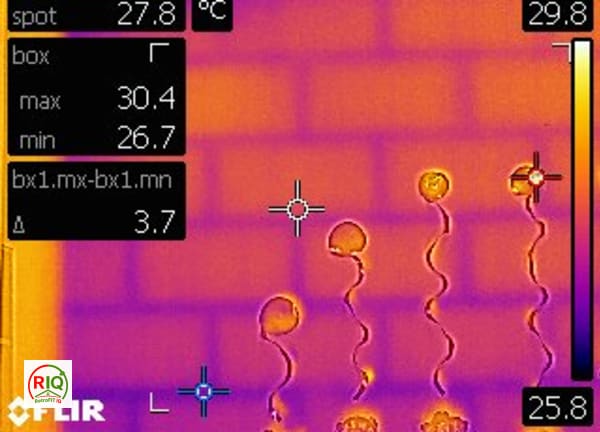
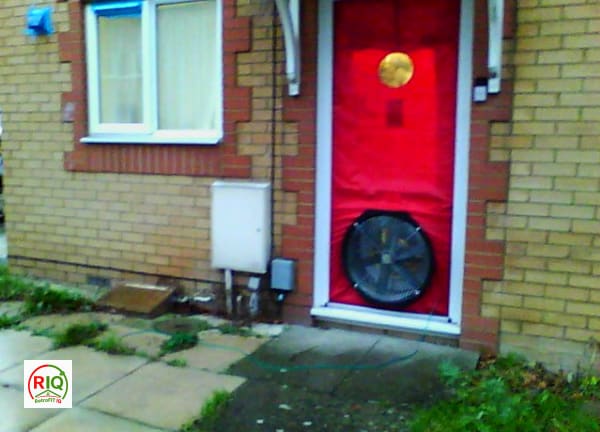
- Blower door test to decide between balanced MVHR and PIV
- Moisture and occupancy loads to size ventilation
- Duct feasibility for MVHR
- Surface-temperature analysis to pair ventilation with warmer surfaces
- Commissioning and filter-access review
What a Certified Passive House Designer recommends
I choose ventilation strategy from the airtightness result, not from a brochure. If we are taking a home to genuine airtightness, MVHR is the right answer and must be designed and commissioned properly — duct design, flow rates and filter access all matter. If the home will remain relatively leaky and the brief is condensation control on a budget, PIV can be the pragmatic choice.
The mistake to avoid is fitting MVHR to a leaky house and expecting Passive House performance: without the airtightness, you will not get the heat-recovery benefit. Measure first, then specify.
— George Sora, Certified Passive House Designer, Founder, RetrofitIQ
Reviewed using current building physics principles and Passive House methodology.
Related comparisons
Related investigations
Compare another way
Closely related comparisons our clients read next.
Condensation vs Penetrating Damp vs Rising Damp
Condensation comes from moist indoor air meeting cold surfaces; penetrating damp comes from water getting in through an external defect; rising damp comes from groundwater moving up through the wall by capillarity.
Read comparisonBlower Door vs Smoke Testing for Air Leakage
The blower door measures the quantity of air leakage; smoke tracing reveals its location.
Read comparisonEnerPHit vs New-Build Passive House
Passive House (classic) is the new-build standard; EnerPHit is its retrofit counterpart, with slightly relaxed targets that reflect the constraints of working with an existing building.
Read comparisonMVHR vs MEV (Mechanical Extract Ventilation)
MVHR is a balanced supply-and-extract system that recovers heat and filters incoming air; MEV is extract-only and relies on uncontrolled inlets to make up the air.
Read comparisonEvidence from Real Projects (14)
Real project and investigation images from our own fieldwork, matched to this page — not stock photography.



No related investigations yet.
Browse all investigationsFrequently asked questions
Is MVHR worth it in a normal house?+
MVHR delivers its benefits in airtight, insulated homes. In a leaky house the heat-recovery advantage is largely lost, so airtightness comes first.
Does PIV cure condensation?+
It often helps in leakier homes by diluting humidity, but it works best alongside warmer surfaces and better insulation.
Can I retrofit MVHR to an existing house?+
Yes, where ducting can be routed and airtightness improved. We assess feasibility as part of the design.
Does MVHR need filter changes?+
Yes — periodic filter changes keep it efficient and maintain air quality. Filter access should be designed in.
Is PIV noisy?+
Modern units are quiet, though the single diffuser introduces air at one point rather than room by room.
Which is cheaper to run?+
Both use little fan power, but MVHR also recovers heat, so it loses far less energy in winter.
How do I decide between them?+
Start with a blower door test. The airtightness figure largely determines which strategy is appropriate.
Will either help indoor air quality?+
Yes — both improve air exchange. MVHR additionally filters supply air, which helps with pollutants and pollen.
Need professional advice?
A comparison like this helps you understand the theory, but every property behaves differently. The only reliable way to establish the real cause in your home — rather than guessing — is professional building performance diagnostics. At RetrofitIQ we verify buildings using the appropriate combination of investigations:
- Thermal imaging
- Blower door testing
- Moisture investigation
- Building physics assessment
- Passive House methodology