
IAQ Monitoring vs Ventilation Assessment: Symptom or System
Indoor air quality monitoring vs Ventilation assessment.
 Reviewed by George Sora, Certified Passive House DesignerUpdated June 2026
Quick answer & key takeaways
4 min read- Bottom line: Monitoring measures the symptom — what the air is actually doing — while a ventilation assessment diagnoses the system that produces it.
- When IAQ monitoring is enough: You need to know whether there is a real problem and where
- When Ventilation assessment is the better choice: You have evidence of a problem and need the cause and the remedy
- When you need both: Almost always — monitor to find and verify, assess to diagnose and fix
- Biggest misconception: “A CO₂ monitor will fix my air quality.” — It only tells you there is a problem. Fixing it needs an assessment of the ventilation system that produced the reading.
- Retrofit IQ’s approach: We start with data, not assumptions: logging CO₂, humidity and temperature over several days shows what the air really does, including overnight.
Quick answer
Monitoring measures the symptom — what the air is actually doing — while a ventilation assessment diagnoses the system that produces it. The two work together: monitoring proves whether there is a problem and where, and the assessment explains the cause and the fix. Monitoring alone tells you the CO₂ is high but not why; an assessment without monitoring is theory without evidence.
At a glance
| Attribute | Indoor air quality monitoring | Ventilation assessment |
|---|---|---|
| What it provides | Measured data over time | Diagnosis of the ventilation system |
| Answers | What is the air doing? | Why, and what to change |
| Outputs | CO₂, RH, temp, PM logs | Flow rates, provision, recommendations |
| Locates the cause | Indicates where/when | Identifies the mechanism |
| Best use | Evidence and verification | Design and remediation |
| Stronger together? | Yes | Yes |
What is Indoor air quality monitoring?
Logging the actual conditions in the air over time — carbon dioxide, relative humidity, temperature, and sometimes particulates (PM2.5) or volatile organic compounds. It tells you what the air is doing, room by room and hour by hour, and is the evidence of whether ventilation is working.
What is Ventilation assessment?
An evaluation of how the home is designed to ventilate — extract rates, supply provision, MVHR or background ventilators, and whether they meet the building's moisture and occupancy loads — explaining why the air behaves as it does and what to change.
What each method measures — and what it doesn’t
IAQ monitoring
- Carbon dioxide as a proxy for fresh-air adequacy
- Relative humidity, temperature and dewpoint margin to cold surfaces
- Where fitted, particulates (PM2.5) and total VOCs over time
- Why the readings are as they are — it shows the symptom, not the cause
- What to change to fix it
Ventilation assessment
- Designed and measured extract/supply flow rates against requirements
- Whether ventilation provision matches the building's moisture and occupancy loads
- The real, lived air conditions over time without monitoring data to confirm them
The building science
Carbon dioxide is the most useful single indicator of whether a home is getting enough fresh air: it rises with occupancy and falls with ventilation, so a bedroom that climbs well above 1,500 ppm overnight is under-ventilated regardless of what any specification says. Relative humidity and dewpoint tell the moisture story — sustained high humidity against cold surfaces is the precursor to condensation and mould. Particulates and VOCs add the pollution dimension that matters for health.
But data alone does not fix anything. A ventilation assessment interprets the readings against the building: it checks whether extract rates meet the wet-room requirements, whether supply provision matches occupancy, whether MVHR is commissioned and balanced, and whether background ventilators are adequate and actually open. It connects the measured symptom to the designed system, so the recommendation addresses the cause rather than the reading.
This is why we treat them as one process. Monitoring before any work establishes the honest baseline and reveals exactly which rooms and times are problematic; the assessment turns that into a specific, costed action — adjust flows, add continuous extract, commission the MVHR, or improve surface temperatures. Monitoring again afterwards verifies the fix actually worked, closing the loop with evidence rather than assumption.
Key differences
- Monitoring measures the symptom; the assessment diagnoses the system.
- Monitoring tells you what and where; the assessment tells you why and what to change.
- Monitoring is evidence and verification; the assessment is design and remediation.
- Monitoring without an assessment leaves you with data and no plan; an assessment without monitoring is theory without proof.
- Used together they form a measure–diagnose–fix–verify loop.
Common misconceptions
Myth: A CO₂ monitor will fix my air quality.
It only tells you there is a problem. Fixing it needs an assessment of the ventilation system that produced the reading.
Myth: If the ventilation meets the regs, the air must be fine.
Specifications can be met on paper yet under-perform in use; monitoring is what confirms reality.
Myth: Indoor air quality is only about pollutants.
CO₂, humidity and temperature are central too — they govern comfort, condensation risk and whether ventilation is adequate.
Real-world situations
Stuffy bedrooms and morning condensation
Monitor CO₂ and humidity overnight first, then assess the ventilation provision serving those rooms and act on the cause.
MVHR fitted but air still feels poor
Monitor to confirm, then assess commissioning and flow balancing — uncommissioned MVHR rarely delivers its design rates.
Health concerns about pollution near a busy road
Monitor particulates and assess whether filtered, balanced supply (MVHR) is warranted.
Which do you actually need?
When IAQ monitoring is enough
- You need to know whether there is a real problem and where
- You want to verify a fix worked
- You are establishing a baseline before works
When Ventilation assessment is the better choice
- You have evidence of a problem and need the cause and the remedy
- You are designing or correcting a ventilation strategy
- Flows or commissioning are in doubt
When you need both
- Almost always — monitor to find and verify, assess to diagnose and fix
What Retrofit IQ checks on site
We start with data, not assumptions: logging CO₂, humidity and temperature over several days shows what the air really does, including overnight. We then assess the ventilation system against the building's loads and verify the fix by monitoring again — so recommendations rest on measured evidence, not a single snapshot.
- Multi-room CO₂, humidity and temperature logging over several days, including overnight
- Particulate and VOC spot checks where pollution or health is a concern
- Measured extract and supply flow rates against the design and regulations
- MVHR commissioning and balance verification where a system is installed
- Dewpoint margins between indoor air and the coldest surfaces
- Re-monitoring after changes to confirm the improvement is real
What a Certified Passive House Designer recommends
I never diagnose ventilation from a single visit. A few days of CO₂ and humidity logging tells me more than any walk-round, because it exposes the overnight bedroom peaks and the moisture spikes that a daytime inspection simply misses.
The monitoring finds and proves the problem; the assessment explains it against the system and points to the fix; and a second round of monitoring confirms it worked. That measure–diagnose–verify loop is the difference between solving the problem and guessing at it.
— George Sora, Certified Passive House Designer, Founder, RetrofitIQ
Reviewed using current building physics principles and Passive House methodology.
Related services
Related comparisons
Related investigations
Compare another way
Closely related comparisons our clients read next.
MVHR vs MEV (Mechanical Extract Ventilation)
MVHR is a balanced supply-and-extract system that recovers heat and filters incoming air; MEV is extract-only and relies on uncontrolled inlets to make up the air.
Read comparisonAirtightness Testing vs Ventilation Assessment
Airtightness testing measures the uncontrolled air leaking through gaps; a ventilation assessment checks the controlled fresh air the home deliberately provides.
Read comparisonDamp Survey vs Home Health Diagnostics
A damp survey investigates a specific moisture problem; Home Health Diagnostics investigates the whole building's performance, of which damp is one part.
Read comparisonMVHR vs Natural (Trickle) Ventilation
Natural ventilation is uncontrolled — it depends on wind, temperature and whether people open windows and vents — and it discards heat with the air.
Read comparisonEvidence from Real Projects (7)
Real project and investigation images from our own fieldwork, matched to this page — not stock photography.

Sample Building Performance Investigation Report — Thermal Imaging
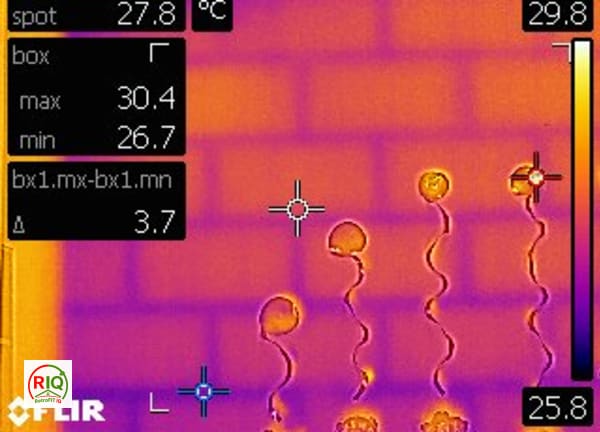
Thermal Bridging Visible Through Masonry Blockwork Wall

Thermal Bridge at Wall-Ceiling Junction Near Window
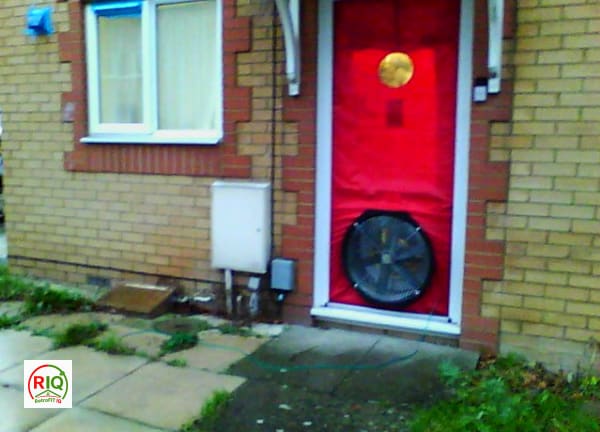
Blower Door Airtightness Test Setup

Thermal Bridge at Internal Corner Wall Junction

Airtightness Testing in a Stratford Victorian Terrace
No related investigations yet.
Browse all investigationsFrequently asked questions
Will a CO₂ monitor improve my air quality?+
Only indirectly — it shows when air is stale so you can act. The improvement comes from changing the ventilation, which an assessment specifies.
What CO₂ level is too high?+
As a guide, sustained levels above about 1,500 ppm indicate inadequate fresh air; bedrooms often exceed this overnight when under-ventilated.
How long should monitoring run?+
Several days at least, including nights and typical activities, so peaks and patterns show rather than a single snapshot.
Do I need both monitoring and an assessment?+
For a reliable result, yes. Monitoring finds and verifies; the assessment diagnoses and fixes. Each is weaker alone.
Can monitoring detect mould risk before it appears?+
Yes — sustained high humidity and small dewpoint margins to cold surfaces predict condensation and mould before it is visible.
Does meeting Building Regs guarantee good air?+
No. Regulations set minimum provision, but real performance depends on commissioning, use and the building; monitoring confirms it.
What pollutants can you measure?+
Commonly CO₂, humidity and temperature, with particulates (PM2.5) and total VOCs where health or external pollution is a concern.
Do you re-test after changes?+
Yes — re-monitoring after any change is how we confirm the fix genuinely improved the air rather than assuming it did.
Need professional advice?
A comparison like this helps you understand the theory, but every property behaves differently. The only reliable way to establish the real cause in your home — rather than guessing — is professional building performance diagnostics. At RetrofitIQ we verify buildings using the appropriate combination of investigations:
- Thermal imaging
- Blower door testing
- Moisture investigation
- Building physics assessment
- Passive House methodology