
Why does my heating need to stay on all the time?
If the only way to stay comfortable is to leave the heating running constantly, the building is losing heat as fast as the system supplies it. That's a fabric-and-airtightness problem, not a reason to accept permanent running costs.
 Reviewed by George Sora, Certified Passive House DesignerUpdated June 2026
Quick answer & key takeaways
5 min read- Heating that must run constantly means heat loss roughly matches heat input — the home can't get ahead.
- High fabric loss and air leakage prevent the building from building and holding a comfort buffer.
- Constant running drives high bills and often still leaves cold surfaces.
- Reducing heat loss lets the system reach temperature and coast, cutting runtime and cost.
- Biggest misconception: leaving it on low is always cheaper. In a leaky home it just means continuous loss.
- Retrofit IQ's approach: measure the loss, then reduce it so the heating can cycle normally.
What this usually means
A heating system keeps a home at temperature by replacing the heat it loses. If losses are very high, the system has to run continuously just to keep pace, never getting far enough ahead to switch off and coast. That constant running is a direct symptom of excessive heat loss relative to the home's heating and retention.
The fix is to lower the loss so the building can reach temperature, store some heat, and cycle off — exactly as a well-built home does. Reducing fabric loss and air leakage shortens runtime, cuts cost and improves comfort simultaneously.
Common causes
High fabric heat loss
Uninsulated walls, roofs and floors bleed heat so fast the system must run continuously to keep up.
Significant air leakage
Warm air constantly escaping and cold air drawing in means the heating is forever replacing lost warmth.
Poor retention
With little effective stored heat, the moment the system pauses the temperature falls, so it never switches off.
Undersized or low-output heating run flat-out
A system at its limit against high losses can only cope by running constantly.
Cold surfaces demanding higher settings
Cold walls keep rooms feeling cold, so occupants keep the heating on to compensate.
Signs and symptoms
Heating rarely reaches temperature and stops
The system runs near continuously because output only just matches the loss.
Temperature falls the moment it pauses
Little stored heat means comfort drops immediately when the heating cycles off.
High bills with constant runtime
Continuous running drives up energy use without ever getting ahead.
Cold surfaces despite continuous heating
Walls and floors stay cool even while the system runs, a sign of high fabric loss.
What most people check first
- Whether the heating ever reaches temperature and switches off.
- Insulation levels and obvious draughts.
- Single glazing and cold walls.
- Whether the system is sized to the home's real heat loss.
What most people miss
- That constant running is a heat-loss signature, not normal behaviour.
- Air leakage as a continuous, invisible drain on the heating.
- That reducing loss lets the system cycle and cuts cost more than tweaking controls.
- That comfort comes from warm surfaces, not just constant air heating.
The building physics
A heating system reaches a steady state when its output equals the building's heat loss at that indoor-outdoor temperature difference. If the loss is high, that balance only occurs with the system running continuously near full output, leaving no margin to overshoot, store heat and switch off. The result is the familiar pattern of heating that never seems to stop.
Lowering the heat-loss coefficient through insulation and airtightness changes the balance: the same heat input now exceeds the reduced loss, so the home reaches temperature, the thermostat is satisfied, and the system cycles off and coasts on stored heat. Runtime and cost fall together.
This is why control tweaks alone rarely solve it. The constant running is set by the physics of the loss; reduce the loss and normal cycling returns.
How to fix it — the right way
Heating that never switches off is fixed by reducing the heat loss so the system can reach temperature and cycle — control tweaks alone rarely solve it.
- 01
Compare the heat loss with the heating output
A heat-loss calculation shows why the system cannot get ahead of the losses.
- 02
Reduce the fabric loss
Insulate the loft, walls and floor to lower the rate at which heat escapes.
- 03
Seal the air leakage
Close the paths continuously draining warmth and drawing in cold air.
- 04
Improve retention and right-size emitters
Once the loss is lower, the home stores heat and the emitters can satisfy the thermostat.
- 05
Let the controls cycle normally
With the loss reduced, the system reaches temperature, switches off and coasts on stored heat.
How to prevent it coming back
- Keep fabric improvements maintained and insulation continuous.
- Re-test airtightness after works.
- Balance and optimise the heating system.
- Ventilate to stay moisture-safe as the home is sealed.
How Retrofit IQ investigates this
We measure why the heating can't get ahead, then quantify how much reducing the loss will shorten its runtime.
Do not spend money fixing symptoms before you understand the cause — investigate first, then build with confidence.
Do I need a professional investigation?
If the heating only keeps up by running constantly, a heat-loss calculation, thermal imaging and a blower door test will show why it cannot get ahead — and how much reducing the loss will shorten its runtime.
It is worth investigating before assuming the boiler or radiators are undersized, as the real issue is usually excessive loss.
Where to go next
Relevant services
Related comparisons
From the Academy
Evidence from Real Projects (23)
Real project and investigation images from our own fieldwork, matched to this page — not stock photography.
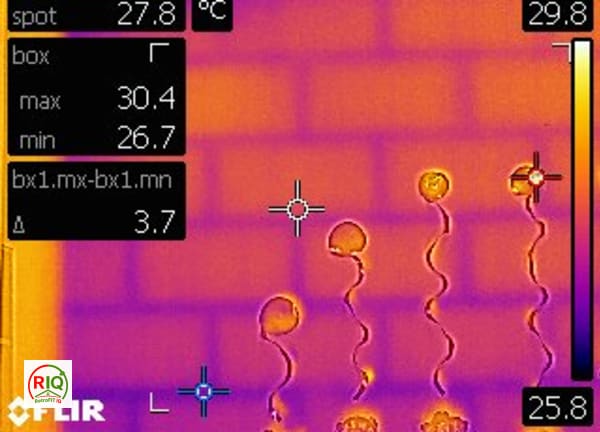
Thermal Bridging Visible Through Masonry Blockwork Wall

Thermal Bridge at Internal Corner Wall Junction

Sample Building Performance Investigation Report — Thermal Imaging
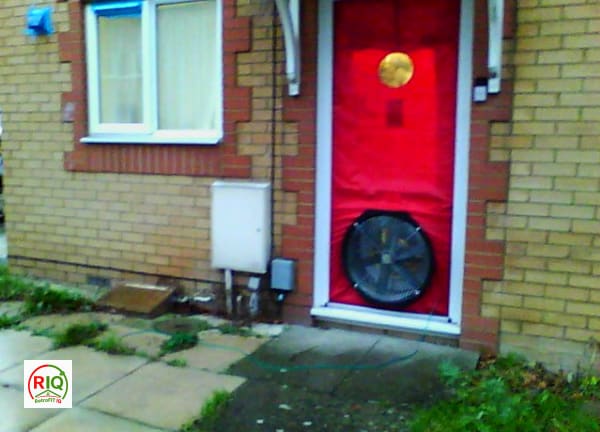
Blower Door Airtightness Test Setup

Thermal Bridge at Wall-Ceiling Junction Near Window

Acoustic Floor Upgrades: Mineral Wool Insulation Between Joists
No related investigations yet.
Browse all investigationsFrequently asked questions
Is it normal for heating to run all the time?+
No. In a well-built home the heating reaches temperature and cycles off. Constant running signals high heat loss the system can't get ahead of.
Is leaving the heating on low cheaper?+
In a leaky, uninsulated home it just means continuous heat loss. Reducing the loss so the system can cycle is what saves money.
Why does the temperature drop the moment the heating stops?+
Because the home loses heat fast and stores little, so there's no buffer to coast on. That's poor retention from high losses.
Will a bigger boiler help?+
It may warm faster but won't stop the constant running, because the building still loses heat as fast as it's supplied.
What actually reduces the runtime?+
Insulation and airtightness that lower the heat-loss rate, so the system reaches temperature and switches off as it should.
Could my system be undersized?+
Possibly — but often the real issue is excessive loss. A heat-loss calculation compares the two and identifies the cause.
How do you diagnose it?+
We calculate the heat loss, locate it with thermal imaging and measure air leakage, then plan measures so the heating can cycle normally.
Stop guessing — find the real cause
Do not spend money fixing symptoms before you understand the cause. Every home behaves differently, and the only reliable way to know what is happening in yours is professional building performance diagnostics. At RetrofitIQ we verify buildings using the right combination of investigations:
- Thermal imaging
- Blower door testing
- Moisture & dew point readings
- Ventilation review
- Building physics assessment
- Passive House methodology