
Room-by-Room Heat Loss vs Rule of Thumb for Sizing a Heat Pump
Room-by-room heat-loss calculation vs Rule of thumb (W/m² or boiler-matching).
 Reviewed by George Sora, Certified Passive House DesignerUpdated June 2026
Quick answer & key takeaways
4 min read- Bottom line: A room-by-room heat-loss calculation sizes the heat pump and emitters from the building's actual fabric and losses; a rule of thumb guesses from floor area or the old boiler.
- When Room-by-room calc is enough: Always, for any heat-pump installation
- When Rule of thumb is the better choice: Only as a rough feasibility sketch, never as the design basis
- When you need both: Use a quick estimate to scope feasibility, then a full room-by-room calculation to design and size
- Biggest misconception: “You can size a heat pump like a boiler.” — No — boilers tolerate oversizing; heat pumps need accurate sizing to run efficiently at low flow temperatures.
- Retrofit IQ’s approach: We size from a measured, room-by-room heat loss built on surveyed fabric — verified with thermal imaging and airtightness data — never from floor area or the old boiler.
Quick answer
A room-by-room heat-loss calculation sizes the heat pump and emitters from the building's actual fabric and losses; a rule of thumb guesses from floor area or the old boiler. Accurate sizing is essential for heat pumps because efficiency depends on low flow temperatures and correctly sized emitters — and oversizing causes cycling, higher cost and poor comfort. Rule-of-thumb sizing is the single most common cause of badly performing heat-pump installations.
At a glance
| Attribute | Room-by-room heat-loss calculation | Rule of thumb (W/m² or boiler-matching) |
|---|---|---|
| Basis | Actual fabric, areas, ventilation, room by room | Floor area or old boiler size |
| Accuracy | High | Low — ignores the specific building |
| Sizes emitters too? | Yes, per room | No |
| Risk of oversizing | Low | High |
| Supports low flow temp design | Yes | No |
| Effort / cost | Higher | Minimal |
| Result | Efficient, comfortable system | Cycling, higher cost, cold rooms |
What is Room-by-room heat-loss calculation?
A detailed calculation of each room's heat loss from its fabric U-values, areas, ventilation and design temperatures, summed to a whole-house design load and used to size both the heat pump and every emitter. It is the recognised, accurate basis for low-temperature system design.
What is Rule of thumb (W/m² or boiler-matching)?
Estimating the load from floor area (a watts-per-square-metre figure) or simply matching the size of the old boiler. It is quick and cheap, but it ignores the specific fabric, orientation and emitters, and routinely produces oversized, inefficient systems.
What each method measures — and what it doesn’t
Room-by-room calc
- Each room's design heat loss from U-values, areas, ventilation and design temperatures
- The flow temperature at which existing or proposed emitters meet each room's load
- A whole-house design load that sizes the pump correctly
- Requires accurate fabric data, which is why survey quality matters
Rule of thumb
- Only a crude whole-house estimate from floor area or the previous boiler output
- Individual room losses, so emitters are not sized and cold rooms result
- The effect of orientation, exposure, glazing and actual U-values
- Whether the pump will run at an efficient flow temperature
The building science
Sizing a heat pump is fundamentally different from sizing a gas boiler. A boiler has spare capacity and high flow temperatures, so an oversized one simply switches on and off and still heats the house. A heat pump is most efficient when it runs steadily at a low flow temperature, closely matched to the building's load; oversize it and it short-cycles, wears, runs inefficiently and often cannot modulate down far enough to match a mild day.
The accurate method is a room-by-room heat-loss calculation. Each room's loss is computed from its fabric U-values, exposed areas, ventilation rate and the design indoor and outdoor temperatures, then summed to the whole-house load. Crucially, the same room figures size the emitters: a radiator that was adequate at 70°C boiler flow may be far too small at 45°C heat-pump flow, so each room must be checked and emitters upsized where needed. This per-room work is what lets the system run cool and efficient.
A rule of thumb — watts per square metre, or matching the old boiler — skips all of this. It cannot know that one room faces north with large windows while another is sheltered and small, so it cannot size emitters or predict the flow temperature. The usual outcome is an oversized pump that cycles, some rooms that never warm at the design flow temperature, and disappointing running costs — then the heat pump gets the blame for a sizing failure.
Key differences
- Room-by-room calculates each room's loss; rule of thumb estimates the whole house from floor area.
- Room-by-room sizes emitters per room; rule of thumb does not size emitters at all.
- Room-by-room supports an efficient low flow temperature; rule of thumb does not.
- Rule of thumb routinely oversizes, causing cycling and higher cost; room-by-room avoids it.
- Heat-pump efficiency and comfort depend on accurate sizing in a way boilers do not.
Common misconceptions
Myth: You can size a heat pump like a boiler.
No — boilers tolerate oversizing; heat pumps need accurate sizing to run efficiently at low flow temperatures.
Myth: Bigger is safer.
Oversized heat pumps cycle, wear and run inefficiently. Correct sizing to an accurate heat loss is what protects performance.
Myth: Floor area is a good enough guide.
Two homes of the same area can have very different losses; only a room-by-room calculation captures the real building.
Real-world situations
Planning a heat-pump install
Commission a room-by-room heat-loss calculation first; size the pump and every emitter from it.
Quote received that matched the old boiler size
Treat as a red flag — ask for a room-by-room calculation, as boiler-matching usually oversizes a heat pump.
Some rooms cold after a heat-pump install
Almost always undersized emitters from rule-of-thumb sizing; recalculate room losses and upsize emitters.
Which do you actually need?
When Room-by-room calc is enough
- Always, for any heat-pump installation
- When efficiency, running cost and comfort matter
- When existing emitters must be checked at the new flow temperature
When Rule of thumb is the better choice
- Only as a rough feasibility sketch, never as the design basis
When you need both
- Use a quick estimate to scope feasibility, then a full room-by-room calculation to design and size
What Retrofit IQ checks on site
We size from a measured, room-by-room heat loss built on surveyed fabric — verified with thermal imaging and airtightness data — never from floor area or the old boiler. That is the difference between a heat pump that runs cool and cheap and one that cycles and leaves rooms cold.
- Room-by-room heat-loss calculation from surveyed fabric, areas and ventilation
- U-value verification, including thermal imaging to check insulation continuity
- Emitter audit and the flow temperature each can deliver per room
- Airtightness context, since infiltration adds to ventilation heat loss
- Design temperatures and exposure appropriate to the location
- Modelling of fabric measures to reduce the load before final sizing
What a Certified Passive House Designer recommends
Almost every disappointing heat-pump installation I am asked to investigate comes back to sizing — an oversized pump matched to the old boiler, with emitters that were never checked at the lower flow temperature. The hardware is rarely the problem; the arithmetic was.
A proper room-by-room heat-loss calculation is not optional for a heat pump. It sizes the plant, sizes every emitter, and sets the flow temperature that determines efficiency. If a quote was based on floor area or the previous boiler, I would not proceed until the calculation has been done.
— George Sora, Certified Passive House Designer, Founder, RetrofitIQ
Reviewed using current building physics principles and Passive House methodology.
Related services
Related comparisons
Related investigations
Compare another way
Closely related comparisons our clients read next.
Heat Pump Readiness: Fabric-First vs System-First
Fabric-first reduces heat loss before the heat pump is sized, so the pump is smaller, runs cooler and costs less to run; system-first installs the pump to suit the house as it stands.
Read comparisonLow-Temperature vs High-Temperature Heat Pump System
A low-temperature system runs the heat pump at 35–45°C for maximum efficiency, but needs larger emitters and a modest heat loss; a high-temperature system runs at 55–65°C to suit existing radiators, at the cost of efficiency and running cost.
Read comparisonDesign Heat Loss vs EPC Heat Demand
Design heat loss is a peak-power figure (watts) calculated from the building's real fabric to size heating systems and emitters; EPC heat demand is an annual-energy estimate (kWh/year) from RdSAP for rating and compliance.
Read comparisonThermal Imaging vs Heat Loss Survey
Thermal imaging tells you where a home loses heat; a heat loss survey tells you how much it loses and where the biggest losses are in calculated terms.
Read comparisonEvidence from Real Projects (12)
Real project and investigation images from our own fieldwork, matched to this page — not stock photography.

Sample Building Performance Investigation Report — Thermal Imaging

Thermal Bridge at Wall-Ceiling Junction Near Window

Acoustic Floor Upgrades: Mineral Wool Insulation Between Joists
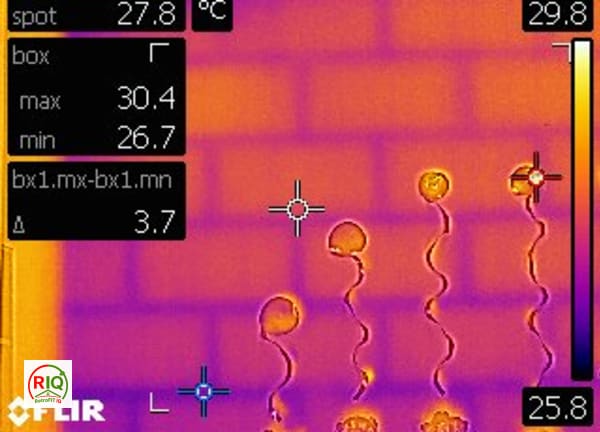
Thermal Bridging Visible Through Masonry Blockwork Wall

Thermal Bridge at Internal Corner Wall Junction
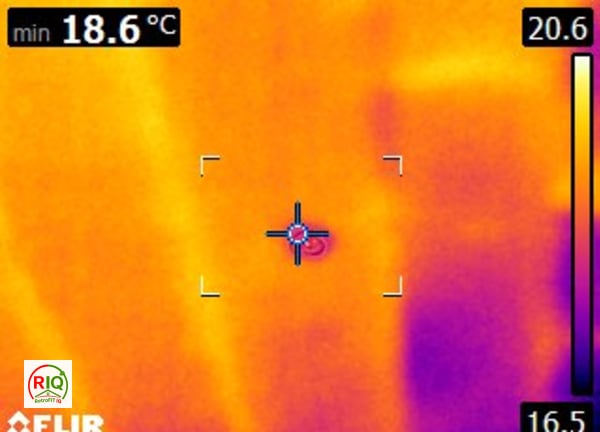
Wall / floor junction
No related investigations yet.
Browse all investigationsFrequently asked questions
Why can't I size a heat pump from floor area?+
Because two homes of the same area can lose heat very differently. Floor area ignores fabric, orientation and glazing, so it cannot size the pump or the emitters accurately.
What is a room-by-room heat-loss calculation?+
A calculation of each room's heat loss from its fabric, areas, ventilation and design temperatures, summed to a whole-house load and used to size the pump and every emitter.
What happens if a heat pump is oversized?+
It short-cycles, wears faster, runs less efficiently and often cannot modulate low enough on mild days, raising running costs.
Do I need to change my radiators?+
Some rooms may need larger emitters to deliver their heat at the lower flow temperature; the room-by-room calculation tells you which.
Is matching the old boiler size acceptable?+
No — boilers are usually oversized and run hot, so matching them typically oversizes a heat pump badly.
Some rooms are cold after my install — why?+
Usually undersized emitters from rule-of-thumb sizing. Recalculating room losses and upsizing emitters fixes it.
Does fabric improvement change the sizing?+
Yes — reducing heat loss lowers the design load, allowing a smaller pump and smaller emitters, so model fabric measures before final sizing.
Who should do the calculation?+
Someone competent in heat-loss assessment who will survey the fabric properly; the quality of the input data is as important as the method.
Need professional advice?
A comparison like this helps you understand the theory, but every property behaves differently. The only reliable way to establish the real cause in your home — rather than guessing — is professional building performance diagnostics. At RetrofitIQ we verify buildings using the appropriate combination of investigations:
- Thermal imaging
- Blower door testing
- Moisture investigation
- Building physics assessment
- Passive House methodology