
Low-Temperature vs High-Temperature Heat Pump Systems
Low-temperature system vs High-temperature system.
 Reviewed by George Sora, Certified Passive House DesignerUpdated June 2026
Quick answer & key takeaways
4 min read- Bottom line: A low-temperature system runs the heat pump at 35–45°C for maximum efficiency, but needs larger emitters and a modest heat loss; a high-temperature system runs at 55–65°C to suit existing radiators, at the cost of efficiency and running cost.
- When Low-temperature is enough: Efficiency and running cost are priorities
- When High-temperature is the better choice: Emitter changes are not feasible now
- When you need both: Phase it: high-temperature bridge now, with fabric and emitter upgrades to reach low-temperature operation later
- Biggest misconception: “A high-temperature heat pump is just as efficient.” — Efficiency falls as flow temperature rises, so high-temperature operation always costs more to run than low-temperature.
- Retrofit IQ’s approach: We work backwards from the flow temperature the building can support, calculated room by room, rather than accepting a high-temperature default.
Quick answer
A low-temperature system runs the heat pump at 35–45°C for maximum efficiency, but needs larger emitters and a modest heat loss; a high-temperature system runs at 55–65°C to suit existing radiators, at the cost of efficiency and running cost. Low-temperature design is the goal because efficiency falls as flow temperature rises. High-temperature systems are a pragmatic bridge where emitter or fabric upgrades are not yet possible, not the efficient end-state.
At a glance
| Attribute | Low-temperature system | High-temperature system |
|---|---|---|
| Flow temperature | 35–45°C | 55–65°C |
| Efficiency (SCOP) | Higher | Lower |
| Emitter size needed | Larger / underfloor | Existing radiators often suffice |
| Fabric demand | Modest heat loss required | Tolerates higher heat loss |
| Retrofit disruption | Higher (emitters/fabric) | Lower |
| Running cost | Lower | Higher |
| Best as | Efficient end-state | Pragmatic bridge |
What is Low-temperature system?
A heat pump designed to deliver heating water at around 35–45°C, paired with adequately sized emitters or underfloor heating. The low flow temperature gives the highest efficiency, but it requires a modest heat loss and larger emitter surfaces.
What is High-temperature system?
A heat pump (or configuration) delivering water at around 55–65°C so it can drive existing, smaller radiators with little change. It is less disruptive to retrofit but runs at lower efficiency and higher cost, because the compressor works against a bigger temperature lift.
What each method measures — and what it doesn’t
Low-temperature
- The low flow temperature at which emitters meet each room's load
- The high seasonal efficiency that a low lift delivers
- Does not avoid the emitter and fabric work needed to reach a low flow temperature
High-temperature
- The higher flow temperature needed to drive existing small emitters
- The heat delivered without changing the emitters
- The efficiency and running-cost penalty of the higher lift
- Whether a future fabric/emitter upgrade would let it run cooler and cheaper
The building science
A heat pump's efficiency is governed by the temperature lift between its source and the heating water it must produce. Every degree the flow temperature rises makes the compressor work harder, so a system running at 55–65°C has a markedly lower seasonal coefficient of performance than one at 35–45°C. This is why low-temperature operation is the central design objective for any efficient heat-pump system.
Delivering heat at a low flow temperature requires the emitters to give out enough heat from cooler water, which means larger radiator surfaces or underfloor heating, and it requires the room heat loss to be modest enough that those emitters can meet it. So a low-temperature system is really a fabric-and-emitter design as much as a plant choice — the pump is the easy part. Where the fabric is good and emitters are sized, the system runs cool, quiet and cheap.
High-temperature systems exist to bridge the gap where emitters cannot yet be changed or the fabric is poor: by running hotter, the heat pump drives the existing small radiators much like a boiler did. This delivers low-carbon heat with minimal disruption, but it sacrifices efficiency and raises running cost. It is best understood as a transitional configuration — acceptable as a first step, but with a plan to lower the flow temperature later through fabric and emitter upgrades, rather than the efficient destination.
Key differences
- Low-temperature runs at 35–45°C; high-temperature at 55–65°C.
- Low-temperature is more efficient; high-temperature costs more to run.
- Low-temperature needs larger emitters and modest heat loss; high-temperature suits existing radiators.
- High-temperature is less disruptive to retrofit but is a bridge, not the efficient end-state.
- The flow temperature, not the badge on the pump, is what sets the running cost.
Common misconceptions
Myth: A high-temperature heat pump is just as efficient.
Efficiency falls as flow temperature rises, so high-temperature operation always costs more to run than low-temperature.
Myth: You must rip out all radiators for a heat pump.
Many radiators work at low flow temperatures after fabric improvements; only some rooms need upsizing, identified by a heat-loss calculation.
Myth: Underfloor heating is essential for a heat pump.
It is ideal for low flow temperatures but not essential — correctly sized radiators can deliver low-temperature heat too.
Real-world situations
Whole-house retrofit with budget for emitters
Design a low-temperature system — larger emitters or underfloor heating with a reduced fabric load for the best efficiency.
Early decarbonisation, existing radiators, limited disruption
A high-temperature system as a bridge, with a documented plan to lower flow temperature via fabric and emitter upgrades later.
New extension or major room refurbishment
Install underfloor heating or generously sized emitters there to enable low-temperature operation across the system.
Which do you actually need?
When Low-temperature is enough
- Efficiency and running cost are priorities
- Emitters can be upsized or underfloor heating fitted
- The fabric is, or will be, reasonably good
When High-temperature is the better choice
- Emitter changes are not feasible now
- Speed and minimal disruption matter most
- The system is a first step in a phased plan
When you need both
- Phase it: high-temperature bridge now, with fabric and emitter upgrades to reach low-temperature operation later
What Retrofit IQ checks on site
We work backwards from the flow temperature the building can support, calculated room by room, rather than accepting a high-temperature default. By auditing emitters and modelling fabric improvements, we show exactly what is needed to run cool and cheap — and stage it sensibly where a bridge is unavoidable.
- Room-by-room heat-loss calculation to set the achievable flow temperature
- Emitter audit identifying which radiators meet their room load at low flow temperatures
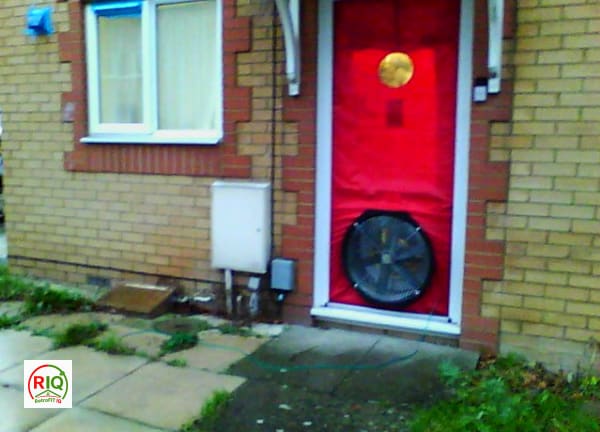
- Fabric and airtightness assessment to reduce the load and enable cooler operation
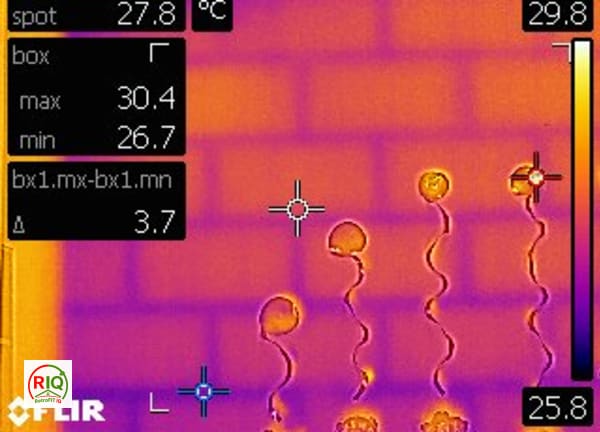
- Thermal imaging to confirm insulation continuity affecting room losses
- Modelling of efficiency and running cost at different flow temperatures
- A phasing plan where a high-temperature bridge is the starting point
What a Certified Passive House Designer recommends
Low-temperature operation is the whole point of designing a heat-pump system well, because the flow temperature drives the running cost. I aim for 35–45°C, which means getting the fabric loss down and the emitters up to size — the pump itself is the simplest part of the equation.
A high-temperature configuration is a reasonable bridge when emitters cannot be touched yet, but I treat it as a staging post, not the destination. I want a written plan to lower the flow temperature later, so the household is not left permanently paying the efficiency penalty.
— George Sora, Certified Passive House Designer, Founder, RetrofitIQ
Reviewed using current building physics principles and Passive House methodology.
Related services
Related comparisons
Related investigations
Compare another way
Closely related comparisons our clients read next.
Heat Pump Readiness: Fabric-First vs System-First
Fabric-first reduces heat loss before the heat pump is sized, so the pump is smaller, runs cooler and costs less to run; system-first installs the pump to suit the house as it stands.
Read comparisonUnderfloor Heating vs Radiators with a Heat Pump
Underfloor heating is the ideal heat-pump emitter because its large surface delivers heat at very low flow temperatures, maximising efficiency; correctly sized radiators also work well and are far simpler to retrofit.
Read comparisonHeat Pump Sizing: Room-by-Room vs Rule of Thumb
A room-by-room heat-loss calculation sizes the heat pump and emitters from the building's actual fabric and losses; a rule of thumb guesses from floor area or the old boiler.
Read comparisonAir Source vs Ground Source Heat Pump
An ASHP takes heat from the outside air and is cheaper and simpler to install; a GSHP takes heat from the more stable ground and is more efficient but far more costly because of the ground loops or boreholes.
Read comparisonEvidence from Real Projects (8)
Real project and investigation images from our own fieldwork, matched to this page — not stock photography.

Sample Building Performance Investigation Report — Thermal Imaging

Thermal Bridge at Wall-Ceiling Junction Near Window
Thermal Bridging Visible Through Masonry Blockwork Wall

Thermal Bridge at Internal Corner Wall Junction

Acoustic Floor Upgrades: Mineral Wool Insulation Between Joists
Blower Door Airtightness Test Setup
No related investigations yet.
Browse all investigationsFrequently asked questions
What flow temperature should a heat pump run at?+
For efficiency, 35–45°C. Higher flow temperatures drive existing radiators more easily but reduce efficiency and raise running cost.
Will my radiators work with a heat pump?+
Many will at low flow temperatures, especially after fabric improvements; some rooms need larger emitters, which a heat-loss calculation identifies.
Are high-temperature heat pumps a bad idea?+
Not as a bridge where emitters cannot change yet, but they run less efficiently, so they should come with a plan to lower the flow temperature later.
Do I need underfloor heating?+
No — it is ideal for low flow temperatures but correctly sized radiators can also deliver low-temperature heat.
How much does flow temperature affect running cost?+
Substantially — efficiency drops as flow temperature rises, so a system at 55°C costs noticeably more to run than one at 40°C.
Can I lower my flow temperature later?+
Yes — by improving the fabric and upsizing emitters, a high-temperature system can be re-tuned to run cooler and cheaper.
Does fabric work let me use smaller emitters?+
Reducing heat loss lowers each room's load, which can allow lower flow temperatures with existing emitters, or smaller emitters for the same comfort.
How do I know what flow temperature my home can achieve?+
From a room-by-room heat-loss calculation and an emitter audit, which together set the achievable flow temperature.
Need professional advice?
A comparison like this helps you understand the theory, but every property behaves differently. The only reliable way to establish the real cause in your home — rather than guessing — is professional building performance diagnostics. At RetrofitIQ we verify buildings using the appropriate combination of investigations:
- Thermal imaging
- Blower door testing
- Moisture investigation
- Building physics assessment
- Passive House methodology