
Underfloor Heating vs Radiators for a Heat Pump
Underfloor heating (UFH) vs Radiators (correctly sized).
 Reviewed by George Sora, Certified Passive House DesignerUpdated June 2026
Quick answer & key takeaways
4 min read- Bottom line: Underfloor heating is the ideal heat-pump emitter because its large surface delivers heat at very low flow temperatures, maximising efficiency; correctly sized radiators also work well and are far simpler to retrofit.
- When Underfloor heating is enough: Floors are open (new build, refurbishment)
- When Radiators is the better choice: Existing floors are staying
- When you need both: A mixed system — underfloor heating downstairs, upsized radiators upstairs — suits many homes
- Biggest misconception: “Heat pumps need underfloor heating.” — They run best at low flow temperatures, which underfloor heating suits, but correctly sized radiators also work well.
- Retrofit IQ’s approach: We size emitters from a room-by-room heat loss against a target flow temperature, then advise whether underfloor heating, upsized radiators or a mix delivers it most practically.
Quick answer
Underfloor heating is the ideal heat-pump emitter because its large surface delivers heat at very low flow temperatures, maximising efficiency; correctly sized radiators also work well and are far simpler to retrofit. The choice is rarely either/or: underfloor heating suits ground floors, new builds and major refurbishments, while upsized radiators suit most retrofits. What matters is that whichever emitter is used, it must deliver each room's heat at a low flow temperature.
At a glance
| Attribute | Underfloor heating (UFH) | Radiators (correctly sized) |
|---|---|---|
| Emitter surface | Very large (whole floor) | Limited (wall area) |
| Flow temperature suited | Very low (30–40°C) | Low if upsized (40–45°C) |
| Retrofit ease | Disruptive (floor build-up) | Simpler |
| Cost in retrofit | Higher | Lower |
| Comfort / even heat | Excellent | Good |
| Response time | Slower (thermal mass) | Faster |
| Best suited to | Ground floors, new build, refurb | Most retrofits, upper floors |
What is Underfloor heating (UFH)?
A large, low-temperature emitter built into or onto the floor, ideal for heat pumps because its big surface area delivers comfortable heat at low flow temperatures. It suits new builds and major refurbishments but adds floor build-up and cost in retrofit.
What is Radiators (correctly sized)?
Wall-mounted emitters that, when sized generously for low flow temperatures, can run efficiently with a heat pump. They are simpler and cheaper to retrofit than underfloor heating, but larger radiators are needed than a boiler would require.
What each method measures — and what it doesn’t
Underfloor heating
- Heat delivered from a large floor surface at very low flow temperatures
- Even, comfortable surface temperatures across the room
- Does not avoid the floor build-up, disruption and cost of retrofitting it
Radiators
- Heat delivered from sized wall emitters at low flow temperatures
- Faster response to changes in demand
- Whether the existing radiators are large enough — many are not at low flow temperatures
The building science
The job of an emitter is to transfer the room's required heat into the space, and the rate at which it can do so depends on its surface area and the temperature difference between it and the room. A heat pump runs efficiently only at low flow temperatures, which means a small temperature difference, so the emitter must have a large surface area to compensate. This single fact explains why emitter sizing is central to heat-pump design.
Underfloor heating is, in effect, the largest possible emitter — the whole floor — so it delivers ample heat at very low flow temperatures (often 30–40°C) with gentle, even comfort. That makes it the ideal heat-pump emitter where it can be installed: new builds, major refurbishments and ground floors taken up anyway. Its drawbacks in retrofit are the floor build-up height, disruption and cost, and a slower response because of its thermal mass.
Radiators have a much smaller surface, so to run at low flow temperatures they must be sized generously — often larger than a boiler system used. Correctly upsized, they run a heat pump efficiently, respond quickly and are far simpler and cheaper to retrofit, especially on upper floors. The common failure is keeping the old, boiler-sized radiators and then running the system hot to compensate, which sacrifices efficiency. In practice many homes use a sensible mix: underfloor heating downstairs where floors are accessible, upsized radiators upstairs.
Key differences
- Underfloor heating has a very large surface; radiators a limited one.
- Underfloor heating runs at the lowest flow temperatures; radiators need upsizing to run cool.
- Radiators are simpler and cheaper to retrofit; underfloor heating is disruptive in existing floors.
- Underfloor heating gives even comfort but responds slowly; radiators respond faster.
- Either works with a heat pump if sized to deliver each room's heat at a low flow temperature.
Common misconceptions
Myth: Heat pumps need underfloor heating.
They run best at low flow temperatures, which underfloor heating suits, but correctly sized radiators also work well.
Myth: Existing radiators are fine for a heat pump.
Often they are undersized for low flow temperatures; some rooms need larger radiators, identified by a heat-loss calculation.
Myth: Underfloor heating is always more efficient.
It enables lower flow temperatures, but a well-designed radiator system at a low flow temperature can be comparably efficient.
Real-world situations
New build or floor being replaced anyway
Underfloor heating — the floor is open, so install the ideal low-temperature emitter.
Typical retrofit keeping existing floors
Upsized radiators sized per room for low flow temperatures; far less disruptive than retrofitting underfloor heating.
Two-storey retrofit
Often a mix — underfloor heating downstairs if accessible, correctly sized radiators upstairs.
Which do you actually need?
When Underfloor heating is enough
- Floors are open (new build, refurbishment)
- You want the lowest flow temperatures and even comfort
- Slower response is acceptable
When Radiators is the better choice
- Existing floors are staying
- You want simpler, cheaper retrofit
- Faster response and minimal disruption matter
When you need both
- A mixed system — underfloor heating downstairs, upsized radiators upstairs — suits many homes
What Retrofit IQ checks on site
We size emitters from a room-by-room heat loss against a target flow temperature, then advise whether underfloor heating, upsized radiators or a mix delivers it most practically. That avoids the common mistake of keeping undersized radiators and running the heat pump hot to compensate.
- Room-by-room heat-loss calculation to size each emitter for low flow temperatures
- Audit of existing radiators against the flow temperature target
- Floor build-up and disruption assessment where underfloor heating is considered
- Fabric and airtightness review to reduce loads and enable cooler operation
- Thermal imaging to confirm insulation continuity affecting room losses
- A practical emitter strategy (often mixed) for the whole house
What a Certified Passive House Designer recommends
Underfloor heating is the textbook heat-pump emitter because the whole floor does the work at a very low flow temperature, but I do not insist on it. In most retrofits, correctly upsized radiators deliver low-temperature heat efficiently with far less disruption, and a mixed system — underfloor downstairs, radiators upstairs — is often the sensible answer.
The mistake I see repeatedly is keeping the old, boiler-sized radiators and then running the heat pump hot to make them work. That throws away efficiency. Whatever the emitter, it has to deliver each room's heat at the design low flow temperature, and that comes from a proper room-by-room calculation.
— George Sora, Certified Passive House Designer, Founder, RetrofitIQ
Reviewed using current building physics principles and Passive House methodology.
Related services
Related comparisons
Related investigations
Compare another way
Closely related comparisons our clients read next.
Heat Pump Readiness: Fabric-First vs System-First
Fabric-first reduces heat loss before the heat pump is sized, so the pump is smaller, runs cooler and costs less to run; system-first installs the pump to suit the house as it stands.
Read comparisonLow-Temperature vs High-Temperature Heat Pump System
A low-temperature system runs the heat pump at 35–45°C for maximum efficiency, but needs larger emitters and a modest heat loss; a high-temperature system runs at 55–65°C to suit existing radiators, at the cost of efficiency and running cost.
Read comparisonHeat Pump Sizing: Room-by-Room vs Rule of Thumb
A room-by-room heat-loss calculation sizes the heat pump and emitters from the building's actual fabric and losses; a rule of thumb guesses from floor area or the old boiler.
Read comparisonAir Source vs Ground Source Heat Pump
An ASHP takes heat from the outside air and is cheaper and simpler to install; a GSHP takes heat from the more stable ground and is more efficient but far more costly because of the ground loops or boreholes.
Read comparisonEvidence from Real Projects (8)
Real project and investigation images from our own fieldwork, matched to this page — not stock photography.

Sample Building Performance Investigation Report — Thermal Imaging

Thermal Bridge at Wall-Ceiling Junction Near Window
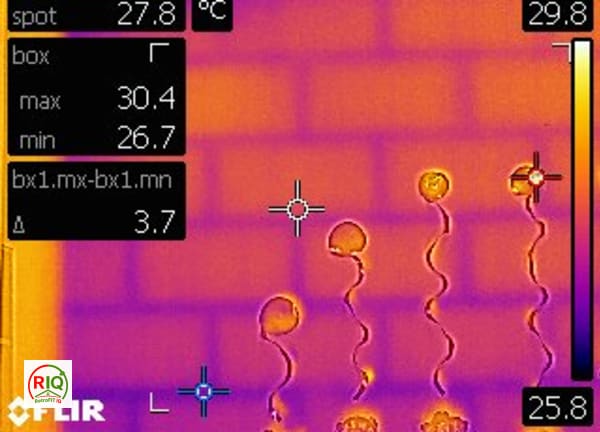
Thermal Bridging Visible Through Masonry Blockwork Wall

Thermal Bridge at Internal Corner Wall Junction

Acoustic Floor Upgrades: Mineral Wool Insulation Between Joists
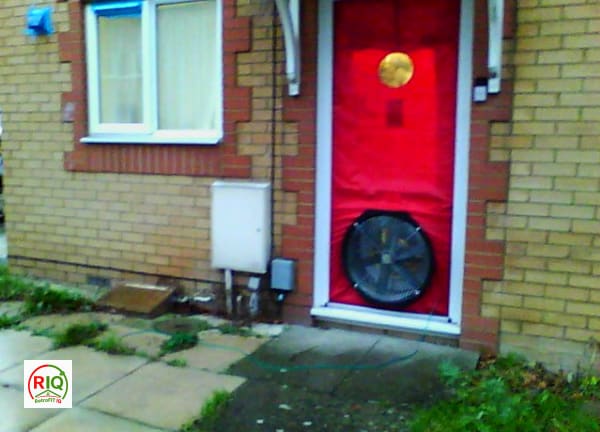
Blower Door Airtightness Test Setup
No related investigations yet.
Browse all investigationsFrequently asked questions
Do heat pumps need underfloor heating?+
No. They run best at low flow temperatures, which underfloor heating suits, but correctly sized radiators also work efficiently.
Will my existing radiators work with a heat pump?+
Some will at low flow temperatures, especially after fabric improvements; others need upsizing, which a heat-loss calculation identifies.
Is underfloor heating worth retrofitting?+
It is ideal where floors are open, but the build-up and disruption can be significant in existing homes; upsized radiators are often more practical.
Why does underfloor heating respond slowly?+
Its thermal mass takes time to warm and cool, which suits steady low-temperature operation but reacts slowly to sudden changes.
Can I mix underfloor heating and radiators?+
Yes — many homes use underfloor heating downstairs and radiators upstairs, with controls to suit each.
How big do heat-pump radiators need to be?+
Larger than for a boiler, because they deliver heat from cooler water; the room-by-room calculation sizes each one.
Is underfloor heating always more efficient?+
It enables lower flow temperatures, but a well-designed radiator system at a low flow temperature can be comparably efficient.
What if some rooms stay cold?+
Usually the emitter is undersized for the flow temperature; recalculate the room loss and upsize the emitter.
Need professional advice?
A comparison like this helps you understand the theory, but every property behaves differently. The only reliable way to establish the real cause in your home — rather than guessing — is professional building performance diagnostics. At RetrofitIQ we verify buildings using the appropriate combination of investigations:
- Thermal imaging
- Blower door testing
- Moisture investigation
- Building physics assessment
- Passive House methodology