
Air Source vs Ground Source Heat Pump: Which Suits Your Home
Air source heat pump (ASHP) vs Ground source heat pump (GSHP).
 Reviewed by George Sora, Certified Passive House DesignerUpdated June 2026
Quick answer & key takeaways
5 min read- Bottom line: An ASHP takes heat from the outside air and is cheaper and simpler to install; a GSHP takes heat from the more stable ground and is more efficient but far more costly because of the ground loops or boreholes.
- When ASHP is enough: Capital budget is limited
- When GSHP is the better choice: There is suitable land or borehole access
- When you need both: Either can work once the fabric and emitters are right — the decision is mostly cost, site and demand
- Biggest misconception: “Ground source is always better than air source.” — It is more efficient but far more expensive; for most homes the cost rarely justifies the efficiency gain.
- Retrofit IQ’s approach: We do not pick a heat-pump source from a brochure.
Quick answer
An ASHP takes heat from the outside air and is cheaper and simpler to install; a GSHP takes heat from the more stable ground and is more efficient but far more costly because of the ground loops or boreholes. For most UK homes an ASHP is the pragmatic choice; a GSHP can pay back where there is suitable land or a long-term, high-demand case and the higher capital is justified. In both cases the fabric and emitter design matter more to real performance than the source itself.
At a glance
| Attribute | Air source heat pump (ASHP) | Ground source heat pump (GSHP) |
|---|---|---|
| Heat source | Outside air | Ground (loops or boreholes) |
| Seasonal efficiency (SCOP) | Good, dips in cold spells | Higher and steadier |
| Install cost | Lower | Much higher (ground works) |
| Space / site needs | External unit space | Land for trenches or drilling access |
| Coldest-day performance | Lower (air coldest) | Stable (ground steady) |
| Noise | Fan noise to manage | Quiet (no external fan) |
| Best suited to | Most homes | High-demand, land available, long horizon |
What is Air source heat pump (ASHP)?
Extracts heat from the outside air with an external unit. It is cheaper and simpler to install, suits most homes, and performs well across the UK climate, though its efficiency dips on the coldest days when the air is at its coldest and demand is highest.
What is Ground source heat pump (GSHP)?
Extracts heat from the ground via buried horizontal loops or vertical boreholes, where the temperature is more stable year-round. It can achieve higher and steadier seasonal efficiency, but the ground works make it considerably more expensive and require space or drilling.
What each method measures — and what it doesn’t
ASHP
- Heat extracted from outdoor air at varying temperatures
- Seasonal efficiency that tracks the outdoor climate
- Cannot avoid the efficiency dip on the coldest days when demand peaks
GSHP
- Heat extracted from a near-constant ground temperature
- Steadier seasonal efficiency, strongest in cold weather
- Does not by itself justify its capital cost without sufficient demand or suitable ground
- Ground-loop sizing must match the heat extraction, or the ground can cool over a season
The building science
Both technologies use the same vapour-compression cycle to move heat from a low-temperature source to the higher-temperature heating water, and both are limited by the temperature lift involved. The key difference is the source temperature: outdoor air swings from mild to well below freezing, while the ground a couple of metres down stays close to the annual mean, around 8–12°C in the UK. Because efficiency falls as the lift rises, the GSHP's warmer, steadier source gives it an efficiency advantage that is greatest exactly when it matters most — the coldest days.
That physics, however, sits behind the same fabric-and-emitter logic that governs any heat pump. Whether the source is air or ground, the system runs efficiently only if the flow temperature is low, which in turn depends on a modest heat loss and adequately sized emitters. A poorly insulated house with small radiators will run a GSHP at high flow temperatures and lose much of its theoretical advantage; a well-detailed, low-loss house lets even an ASHP run cool and efficiently.
The decisive practical factor is usually cost and site. A GSHP's ground loops or boreholes add substantial capital and need either land for horizontal trenches or drilling access for boreholes, plus the ground array must be sized so it does not cool over the heating season. An ASHP needs only an external unit position, with noise and defrost to manage. For most homes the ASHP's far lower cost outweighs the GSHP's efficiency edge; the GSHP comes into its own with high, sustained demand, available land and a long ownership horizon.
Key differences
- ASHP draws from variable outdoor air; GSHP from the steady ground.
- GSHP is more efficient, especially in cold weather; ASHP is cheaper and simpler.
- GSHP needs land or boreholes and much higher capital; ASHP needs only an external unit position.
- ASHP has fan noise and defrost cycles; GSHP is quiet with no external fan.
- For both, fabric and emitter sizing matter more to real efficiency than the source.
Common misconceptions
Myth: Ground source is always better than air source.
It is more efficient but far more expensive; for most homes the cost rarely justifies the efficiency gain.
Myth: Air source heat pumps don't work in cold weather.
They do work below freezing; efficiency dips but modern units deliver heat reliably across the UK climate.
Myth: The heat-pump type decides the running cost.
Fabric heat loss and flow temperature dominate running cost; the source is secondary.
Real-world situations
Typical home, no large garden, normal budget
ASHP — lower cost, suits the site, and performs well once fabric and emitters are right.
Large rural property with land and high heat demand
GSHP can be worthwhile — the higher capital is offset by efficiency over a long horizon.
Noise-sensitive site or no acceptable external unit position
GSHP avoids external fan noise, if ground works are feasible; otherwise careful ASHP siting and attenuation.
Which do you actually need?
When ASHP is enough
- Capital budget is limited
- There is no land for ground loops
- The home has, or will have, a modest heat loss
When GSHP is the better choice
- There is suitable land or borehole access
- Heat demand is high and sustained
- Long ownership horizon justifies the capital and you want the highest efficiency
When you need both
- Either can work once the fabric and emitters are right — the decision is mostly cost, site and demand
What Retrofit IQ checks on site
We do not pick a heat-pump source from a brochure. We calculate the room-by-room heat loss, assess the emitters and flow temperature, and review the site, then compare ASHP and GSHP on whole-life cost and realistic efficiency — so the choice reflects the building and the ground, not a sales preference.
- Room-by-room heat-loss calculation to size either system correctly
- Assessment of emitters and achievable flow temperature, which governs efficiency for both
- Site review for external unit position and noise (ASHP) or land/borehole feasibility (GSHP)
- Fabric and airtightness assessment to reduce the load before sizing
- Whole-life cost comparison including capital, running cost and likely SCOP
- Electrical capacity and plant-space check for the chosen system
What a Certified Passive House Designer recommends
For most homes I specify an air source heat pump, because the ground source efficiency advantage rarely repays its capital and site demands. What actually determines the running cost is the fabric heat loss and the flow temperature, and those are decided by insulation, airtightness and emitter sizing — not by whether the source is air or ground.
Ground source earns its place on larger, high-demand properties with suitable land and a long horizon, or on noise-sensitive sites. In every case I size from a measured heat loss and design for a low flow temperature first; the source is the last decision, not the first.
— George Sora, Certified Passive House Designer, Founder, RetrofitIQ
Reviewed using current building physics principles and Passive House methodology.
Related services
Related comparisons
Related investigations
Compare another way
Closely related comparisons our clients read next.
Heat Pump Readiness: Fabric-First vs System-First
Fabric-first reduces heat loss before the heat pump is sized, so the pump is smaller, runs cooler and costs less to run; system-first installs the pump to suit the house as it stands.
Read comparisonLow-Temperature vs High-Temperature Heat Pump System
A low-temperature system runs the heat pump at 35–45°C for maximum efficiency, but needs larger emitters and a modest heat loss; a high-temperature system runs at 55–65°C to suit existing radiators, at the cost of efficiency and running cost.
Read comparisonHeat Pump vs Gas Boiler: The Fabric-First View
A heat pump rewards a home with low heat loss and runs efficiently at low flow temperatures; a gas boiler can brute-force heat into a leaky home but masks fabric faults.
Read comparisonUnderfloor Heating vs Radiators with a Heat Pump
Underfloor heating is the ideal heat-pump emitter because its large surface delivers heat at very low flow temperatures, maximising efficiency; correctly sized radiators also work well and are far simpler to retrofit.
Read comparisonEvidence from Real Projects (8)
Real project and investigation images from our own fieldwork, matched to this page — not stock photography.

Sample Building Performance Investigation Report — Thermal Imaging
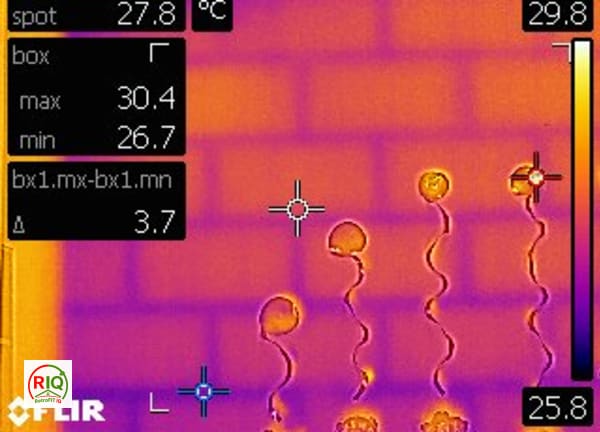
Thermal Bridging Visible Through Masonry Blockwork Wall
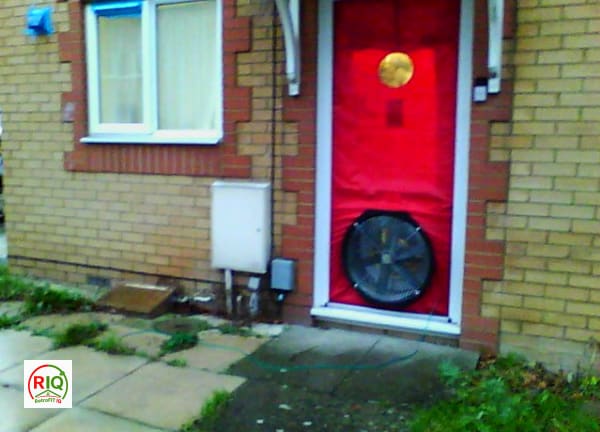
Blower Door Airtightness Test Setup

Thermal Bridge at Internal Corner Wall Junction

Thermal Bridge at Wall-Ceiling Junction Near Window

Acoustic Floor Upgrades: Mineral Wool Insulation Between Joists
No related investigations yet.
Browse all investigationsFrequently asked questions
Is ground source more efficient than air source?+
Yes, because the ground is warmer and steadier than winter air, but the efficiency gain often does not justify the much higher capital cost for a typical home.
Do air source heat pumps work in winter?+
Yes. Efficiency falls on the coldest days, but modern units deliver heat reliably across the UK climate.
How much more does ground source cost?+
Considerably more, mainly because of the ground loops or boreholes and the associated groundworks or drilling.
Which is quieter?+
Ground source, as it has no external fan. Air source units have manageable fan and defrost noise that needs sensible siting.
Does the heat-pump type change my running cost much?+
Less than people expect. Fabric heat loss and flow temperature dominate running cost; the source is a secondary factor.
How much land does ground source need?+
Horizontal loops need a sizeable area of garden; boreholes need less land but require drilling access and add cost.
Can I switch from air to ground source later?+
It is rarely practical — the ground works are the expensive part — so the source should be decided upfront on a proper assessment.
What matters most for either to perform?+
An accurate heat loss, a low flow temperature and adequately sized emitters. Get those right and either source performs well.
Need professional advice?
A comparison like this helps you understand the theory, but every property behaves differently. The only reliable way to establish the real cause in your home — rather than guessing — is professional building performance diagnostics. At RetrofitIQ we verify buildings using the appropriate combination of investigations:
- Thermal imaging
- Blower door testing
- Moisture investigation
- Building physics assessment
- Passive House methodology