
Why is my house always cold?
If your home feels cold however long the heating runs, the problem is rarely the boiler — it is the building losing heat faster than you can replace it. The way to fix that affordably is to measure where the heat is going, not to guess.
 Reviewed by George Sora, Certified Passive House DesignerUpdated June 2026
Quick answer & key takeaways
7 min read- A persistently cold house is almost always a fabric problem (heat loss + cold surfaces), not a heating problem.
- Comfort is radiant as well as air-based: cold walls make a room feel cold even when the air is warm.
- The biggest losses are usually uninsulated walls, cold floors and uncontrolled air leakage — in that rough order.
- Turning the thermostat up pushes more heat through a leaky building; it raises bills without fixing the cause.
- Biggest misconception: a bigger boiler will fix it. The boiler isn't the issue — the rate of heat loss is.
- Retrofit IQ's approach: measure heat loss with thermal imaging and a blower door test before spending on fabric works.
What this usually means
A home that stays cold is losing heat faster than the heating system can supply it, and the surfaces around you are sitting well below a comfortable temperature. Both of those are physical, measurable things — not a matter of opinion or a faulty thermostat.
Two mechanisms combine. The first is the rate of heat loss: conduction through walls, roof, floor and windows, plus warm air escaping through gaps (air leakage). The second is radiant discomfort: you continually lose body heat to cold surfaces, so a room with 21°C air and 14°C walls still feels chilly. Solve only the air temperature and you treat half the problem at twice the cost.
Common causes
Uninsulated or poorly insulated walls
Solid brick walls have a U-value of roughly 2.0–2.2 W/m²K — four to five times leakier than an insulated wall. In many older homes the walls are the single largest loss.
Cold suspended timber floors
A timber ground floor over a ventilated void loses heat downwards and lets cold air track up through gaps at the perimeter, chilling the whole room.
Uncontrolled air leakage
Gaps at floor perimeters, loft hatches, chimneys, downlights and service penetrations let warm air escape and cold air draw in. In a draughty home this can rival the loss through the walls.
Cold internal surfaces (radiant chill)
Cold walls, single glazing and thermal bridges pull heat from your body by radiation, so the room feels colder than the air temperature suggests.
Heating undersized for the real heat loss
If emitters or the heat source were never sized to the building's actual loss, rooms never recover — but this is a symptom of high heat loss, not the root problem.
Signs and symptoms
Rooms never reach a comfortable temperature
However long the heating runs, the home settles below where you set the thermostat — the clearest sign that loss outpaces input.
Cold walls, floors and glass
Surfaces feel cold to the touch even when the air is warm, which is why the room still feels chilly.
Warmth disappears quickly
Comfort drops within minutes of the heating switching off, indicating poor retention and high losses.
Draughts at low level
Cold air felt at skirtings, floor edges and around windows points to uncontrolled air leakage.
Condensation and mould on cold spots
The coldest walls and corners drop below the dew point, so damp and mould often accompany the cold.
What most people check first
- The boiler and thermostat settings — usually working fine, which is the clue the problem is the fabric.
- Whether the loft has insulation and to what depth.
- Visible draughts around windows, doors and skirtings.
- Radiator size and whether they actually get hot.
What most people miss
- That cold surfaces, not cold air, are driving much of the discomfort — so they over-invest in heating and under-invest in fabric.
- Air leakage, which is invisible to the eye and only quantified by a blower door test.
- Thermal bridges at junctions and reveals that create localised cold spots and condensation risk.
- That the order of works matters — sealing and insulating in the wrong sequence can shift damp risk elsewhere.
The building physics
Heat always flows from warm to cold, and the rate depends on the temperature difference and how resistant the fabric is. A whole-house heat loss is the sum of every element's loss (area × U-value × temperature difference) plus the ventilation and infiltration loss (air changes carrying heat out). In a leaky, uninsulated home both terms are large, so even a powerful heating system struggles to keep ahead.
Comfort, though, is governed by the operative temperature — roughly the average of the air temperature and the mean radiant temperature of the surrounding surfaces. Lift the surface temperatures by insulating and sealing, and the same comfort is reached at a lower air temperature, which is why a well-detailed home feels warmer at a lower thermostat setting and costs less to run.
This is why the fix is fabric-led. Reduce the heat loss and raise the surface temperatures, and the building holds warmth instead of haemorrhaging it. Heating harder simply increases the flow of heat through a building that cannot retain it.
How to fix it — the right way
A permanently cold house is fixed by reducing heat loss and warming surfaces — in a measured order, not by heating harder.
- 01
Measure where the heat is escaping
A thermal imaging survey and blower door test turn an invisible problem into a map and a set of numbers, so spend is targeted not guessed.
- 02
Insulate the biggest losing elements first
Usually the loft, then the walls and any cold floor — prioritised by the measured loss rather than by what is easiest to sell.
- 03
Seal uncontrolled air leakage
Close the leakage paths at floor perimeters, the loft hatch, chimneys and service penetrations identified by the blower door.
- 04
Treat thermal bridges and cold surfaces
Detail junctions and reveals so insulation does not simply move the cold spot, raising the surface temperatures you feel.
- 05
Pair sealing with controlled ventilation
As the home becomes tighter, provide background or mechanical ventilation so moisture is removed and condensation risk does not rise.
How to prevent it coming back
- Keep loft and wall insulation continuous and undisturbed after any work in the roof space.
- Re-test airtightness after building works to catch new leakage paths early.
- Maintain window and door seals, and cap unused flues.
- Ventilate to manage moisture once the home is warmer and more airtight.
How Retrofit IQ investigates this
We never recommend fabric works before we have measured where the heat is actually going. A cold home gives up its secrets quickly once you instrument it.
Do not spend money fixing symptoms before you understand the cause — investigate first, then build with confidence.
Do I need a professional investigation?
If your home stays cold whatever the heating does, a thermal imaging survey and blower door test will show exactly where the heat escapes — turning guesswork into a prioritised, costed plan.
It is especially worth measuring before spending on insulation, new windows or a heat pump, where hidden fabric losses and air leakage would otherwise undermine the investment.
Where to go next
Relevant services
Related comparisons
From the Academy
Related case studies
Evidence from Real Projects (25)
Real project and investigation images from our own fieldwork, matched to this page — not stock photography.
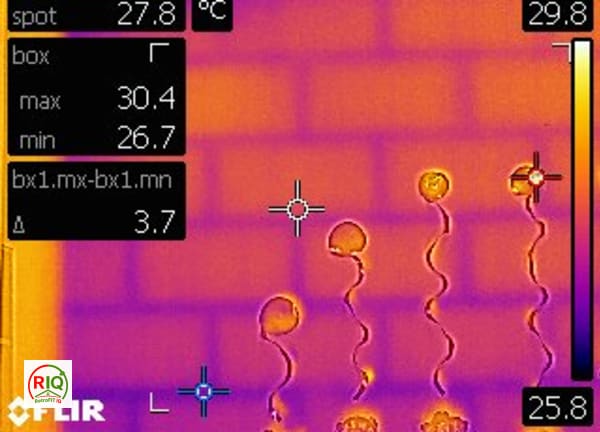
Thermal Bridging Visible Through Masonry Blockwork Wall

Thermal Bridge at Internal Corner Wall Junction

Sample Building Performance Investigation Report — Thermal Imaging
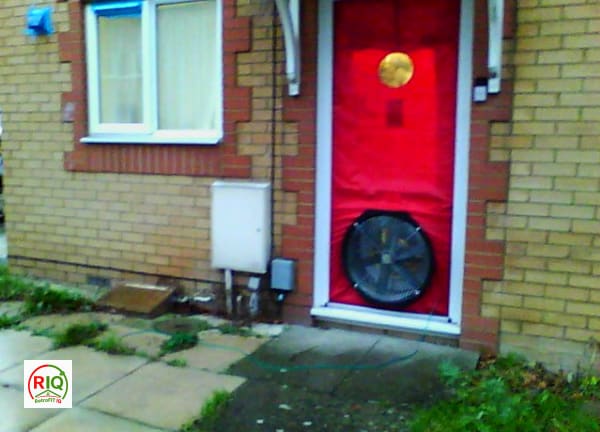
Blower Door Airtightness Test Setup

Thermal Bridge at Wall-Ceiling Junction Near Window
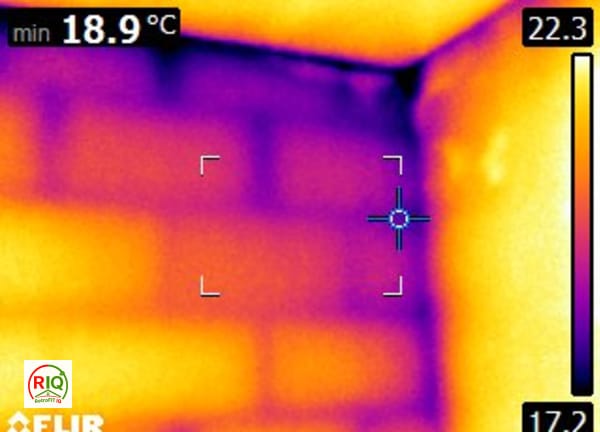
Cold wall surface vs warm ceiling
No related investigations yet.
Browse all investigationsFrequently asked questions
Why is my house cold even with the heating on?+
Because the building is losing heat as fast as the heating supplies it, and the surfaces are cold. Until the fabric loss is reduced, more heating just means higher bills.
Will a new boiler fix a cold house?+
Rarely. The boiler is seldom the issue — the rate of heat loss is. A new boiler in a leaky, uninsulated home will still struggle and cost more to run.
Why do my walls feel cold even when the room is warm?+
Uninsulated walls sit well below room temperature, and you lose body heat to them by radiation. Insulating raises the surface temperature and the room feels warmer.
Is it cheaper to insulate or to heat more?+
Over any reasonable period, reducing heat loss is far cheaper than continually paying to replace heat that escapes. Insulation and airtightness pay back; heating harder does not.
How do I know where my house is losing heat?+
A thermal imaging survey shows where heat escapes and a blower door test measures and locates air leakage. Together they turn guesswork into a prioritised plan.
Should I insulate everything at once?+
Not blindly. Measures interact, and sealing or insulating in the wrong order can move damp risk. A whole-house plan sequences the work safely.
Can a cold house cause damp?+
Yes. Cold surfaces below the dew point cause condensation and mould, so a cold-home and a damp problem often share the same root cause.
Stop guessing — find the real cause
Do not spend money fixing symptoms before you understand the cause. Every home behaves differently, and the only reliable way to know what is happening in yours is professional building performance diagnostics. At RetrofitIQ we verify buildings using the right combination of investigations:
- Thermal imaging
- Blower door testing
- Moisture & dew point readings
- Ventilation review
- Building physics assessment
- Passive House methodology