
What thermal imaging actually measures
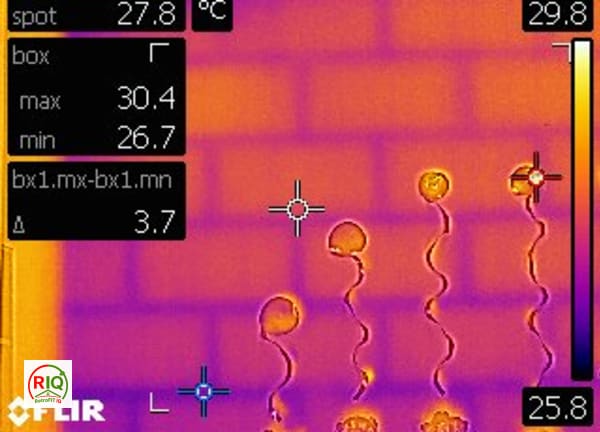
A calibrated thermal (infrared) camera doesn't measure heat directly — it measures the long-wave infrared radiation emitted by every surface in its field of view and converts that radiation into a surface temperature reading. Every pixel of a FLIR image is a measured temperature, not a colour.
Where the surface is colder than its surroundings — because of missing insulation, a thermal bridge, air leakage, hidden damp or a cold structural element — it shows up as a darker colour on the image. Where it is warmer (overheating pipework, electrical hot-spots, a poorly-routed heating loop) it shows up brighter.
What thermal imaging can clearly see
- Missing, compressed or slumped insulation
- Thermal bridges — lintels, reveals, intermediate floors, slab edges
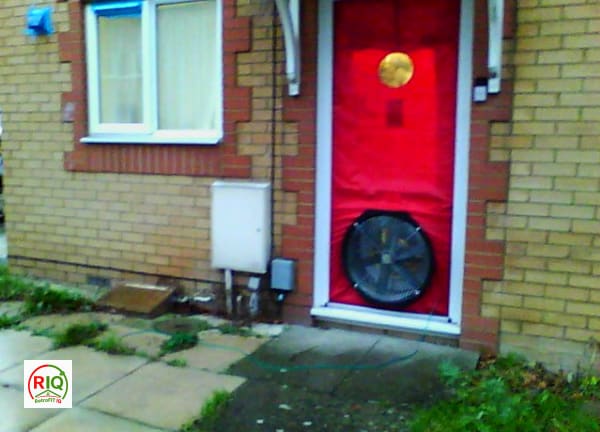
- Air leakage paths (especially under blower-door depressurisation)
- Cold reveals and window frames
- Surface temperatures below the room's dewpoint — direct condensation-risk evidence
- Underfloor heating loops and circuits
- Overheating electrical connections and pipework
- Hidden moisture in walls and ceilings (water cools the surface as it evaporates)
What thermal imaging cannot see
- Inside a wall — only the surface temperature
- Through reflective materials (glass, polished metal, foil)
- Without a temperature differential between inside and outside (≥10 °C is the working minimum)
- Heat in absolute terms — only temperature relative to neighbouring surfaces
- The future — a thermal image is a snapshot of conditions at one moment
Conditions for a useful thermal survey
- Indoor/outdoor temperature differential of at least 10 °C (ideally 15 °C+)
- Heating on for at least 24 hours before the survey to stabilise internal surfaces
- Dry external surfaces — wet façades produce false-cold readings (evaporative cooling)
- No direct sun on the surface being imaged (solar gain produces false-hot readings)
- Calibrated emissivity setting for the surface material being measured
- Reflected-temperature correction set correctly
- Stable internal humidity — high humidity reduces image quality
What a useful thermal report contains
- Visual photo paired with calibrated thermal image for every finding
- Surface temperature scale clearly shown on every image
- Emissivity and reflected-temperature settings noted
- Indoor/outdoor temperature and RH at time of survey
- Locations referenced to a floor plan
- Each finding classified by mechanism (heat loss / thermal bridge / air leakage / moisture)
- Prioritised remediation plan with costed options
Why thermal imaging belongs alongside other diagnostics
Thermal imaging is necessary but not sufficient. A cold patch can have several different causes — missing insulation, a thermal bridge, air leakage, hidden moisture or a cold service penetration — and each needs different remediation. The only way to separate them is to combine the thermal image with blower-door depressurisation, moisture readings, humidity logging and an experienced eye for construction details. That's the diagnostic process we use on every RetrofitIQ survey.