
Thermal Bridging vs Air Leakage: Two Hidden Heat Losses
Thermal bridging vs Air leakage (infiltration).
 Reviewed by George Sora, Certified Passive House DesignerUpdated June 2026
Quick answer & key takeaways
4 min read- Bottom line: Thermal bridging is conductive heat loss through interruptions in the insulation; air leakage is convective heat loss carried out by moving air.
- When Thermal bridging is enough: Cold surfaces, corner mould or condensation at junctions
- When Air leakage is the better choice: Draughts and high heat demand point to infiltration
- When you need both: Any serious heat-loss assessment or deep retrofit — the two losses are independent and both matter
- Biggest misconception: “If the house is airtight, thermal bridges don't matter.” — Airtightness stops air movement, not conduction; an airtight junction can still be a cold thermal bridge.
- Retrofit IQ’s approach: We separate the two losses with the right tools — thermal imaging for conductive bridges, a blower door for convective leakage — rather than lumping them into one U-value.
Quick answer
Thermal bridging is conductive heat loss through interruptions in the insulation; air leakage is convective heat loss carried out by moving air. Both are 'hidden' losses that a basic U-value or EPC misses, and both also cause condensation risk — thermal bridges via cold surfaces, air leakage via moisture transport. They need different diagnostics (thermal imaging for bridges, a blower door for leakage) and different fixes, and a serious heat-loss assessment addresses both.
At a glance
| Attribute | Thermal bridging | Air leakage (infiltration) |
|---|---|---|
| Mechanism | Conduction through junctions | Convection — air carries heat out |
| Quantified by | psi/chi values (W/m·K, W/K) | ach@50 / q50 (airtightness) |
| Found with | Thermal imaging, detailing review | Blower door + smoke/anemometer |
| Condensation risk | Cold surfaces at the bridge | Moist air into cold construction |
| Typical fix | Continuous insulation, detailing | Air barrier sealing, tapes, grommets |
| Missed by | Plain U-value / EPC | Plain U-value / EPC |
What is Thermal bridging?
Localised heat loss where the insulation is interrupted or bypassed — at junctions, lintels, reveals, balconies and where elements meet — conducting heat faster than the surrounding fabric. It is quantified by linear (psi) and point (chi) transmittance and also creates cold internal surfaces prone to condensation.
What is Air leakage (infiltration)?
Heat carried out of the building by uncontrolled air moving through gaps in the envelope, driven by wind and the stack effect. It is quantified by airtightness testing (ach@50 / q50) and carries moisture into the construction as well as heat out.
What each method measures — and what it doesn’t
Thermal bridging
- Localised conductive heat loss at junctions, expressed as psi and chi values
- Cold internal surface temperatures where insulation is bypassed
- Air movement — a bridge can be airtight yet still conduct heat
- The whole-house leakage rate
Air leakage
- Total uncontrolled air leakage as an air-change rate or permeability
- How much heat (and moisture) is carried out by moving air
- Conductive losses at junctions — a sealed envelope can still be full of thermal bridges
- Where exactly the heat conducts through the fabric
The building science
Heat leaves a building by two quite different routes that a single U-value cannot capture. Conduction through interruptions in the insulation — thermal bridging — occurs at lintels, reveals, floor and party-wall junctions, balconies and wherever the insulation line is broken. These bridges lose heat faster than the surrounding fabric and, just as importantly, create cold internal surfaces where condensation and mould form. They are quantified by linear (psi) and point (chi) transmittances and assessed by reviewing the detailing and confirming with thermal imaging.
Air leakage is the convective route: wind and the stack effect drive uncontrolled air through gaps, and that moving air carries heat out and moist internal air into cold construction, where it can condense. It is measured as a whole-house figure with a blower door (ach@50 or q50) and located with smoke or an anemometer during the test. In many older homes, infiltration is the single largest and most underestimated heat loss, and it is invisible to a U-value calculation.
The two are independent and need separate treatment. A junction can be perfectly airtight yet still be a serious thermal bridge, and a wall can be well insulated yet leak air badly. That is why a credible heat-loss assessment tackles both — thermal imaging and detailing review for bridges, a blower door for leakage — and why fixing one does not fix the other. Both also feed the condensation-risk picture, so addressing them protects durability as well as energy.
Key differences
- Thermal bridging is conduction; air leakage is convection.
- Bridges are measured by psi/chi values; leakage by airtightness testing.
- Thermal imaging finds bridges; a blower door measures and (with smoke) locates leakage.
- Bridges cause cold-surface condensation; leakage carries moisture into the fabric.
- Both are missed by a plain U-value or EPC, and each needs its own fix.
Common misconceptions
Myth: If the house is airtight, thermal bridges don't matter.
Airtightness stops air movement, not conduction; an airtight junction can still be a cold thermal bridge.
Myth: Insulation thickness alone fixes heat loss.
Continuity matters as much as thickness — a thick wall with bridged junctions still loses heat and risks condensation.
Myth: A U-value captures a wall's real heat loss.
It captures the plain area only; junction bridging and air leakage are additional losses it ignores.
Real-world situations
Cold corners and mould at wall junctions despite insulation
Thermal imaging to map the bridges and detailing review; address insulation continuity at the junctions.
Draughty, expensive-to-heat older home
Blower door test with smoke tracing to quantify and locate air leakage, then targeted sealing.
Deep retrofit planning
Assess both — model thermal bridges and test airtightness — so the design removes conductive and convective losses together.
Which do you actually need?
When Thermal bridging is enough
- Cold surfaces, corner mould or condensation at junctions
- You are detailing a retrofit and need psi values modelled
- Thermal imaging shows localised cold patterns
When Air leakage is the better choice
- Draughts and high heat demand point to infiltration
- You need an airtightness figure for modelling or a heat pump
- Sealing works need targeting
When you need both
- Any serious heat-loss assessment or deep retrofit — the two losses are independent and both matter
What Retrofit IQ checks on site
We separate the two losses with the right tools — thermal imaging for conductive bridges, a blower door for convective leakage — rather than lumping them into one U-value. That tells us which dominates in a given house, so sealing and insulation effort goes where it actually reduces heat loss and condensation risk.
- Thermal imaging to locate and map thermal bridges and cold surfaces
- Blower door testing to quantify air leakage, with smoke tracing to locate paths
- Junction detailing review and psi-value modelling for key thermal bridges
- Surface-temperature and dewpoint analysis where condensation risk is present
- Identification of which losses dominate so spend is prioritised correctly
- A combined plan addressing both conductive and convective losses
What a Certified Passive House Designer recommends
Thermal bridging and air leakage are the two heat losses that a U-value and an EPC quietly ignore, and in real homes they are often where most of the heat — and most of the condensation risk — actually is. They are different physics, conduction versus convection, and they need different diagnostics and different fixes.
I assess both as a matter of course: thermal imaging to map the bridges and a blower door to quantify and locate the leakage. Fixing one does nothing for the other, so a credible heat-loss strategy has to tackle them together, prioritising whichever dominates in that particular building.
— George Sora, Certified Passive House Designer, Founder, RetrofitIQ
Reviewed using current building physics principles and Passive House methodology.
Related services
Related comparisons
Related investigations
Compare another way
Closely related comparisons our clients read next.
U-values vs Thermal Bridging in Heat Loss
U-values describe heat loss through the flat area of walls, roofs and windows; thermal bridges describe extra heat loss at junctions and interruptions.
Read comparisonThermal Imaging vs Blower Door Testing
They answer different questions.
Read comparisonBlower Door vs Smoke Testing for Air Leakage
The blower door measures the quantity of air leakage; smoke tracing reveals its location.
Read comparisonFloor Insulation vs Wall Insulation
Floor insulation tackles cold floors and the draughts that come up through suspended timber floors; wall insulation tackles a larger heat-loss area and cold-wall comfort.
Read comparisonEvidence from Real Projects (19)
Real project and investigation images from our own fieldwork, matched to this page — not stock photography.

Sample Building Performance Investigation Report — Thermal Imaging
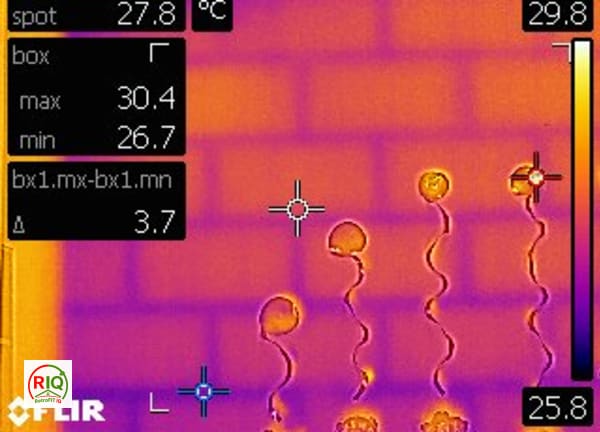
Thermal Bridging Visible Through Masonry Blockwork Wall

Thermal Bridge at Wall-Ceiling Junction Near Window
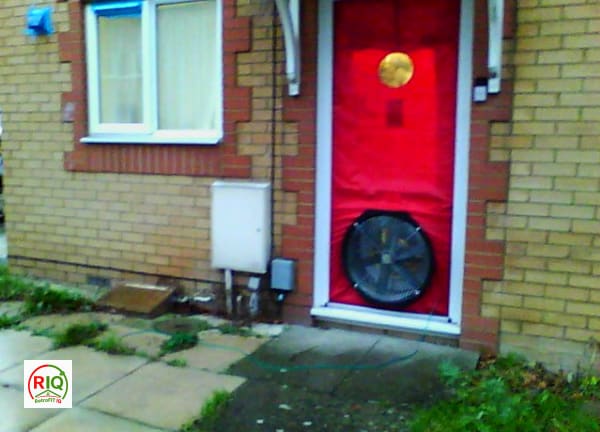
Blower Door Airtightness Test Setup

Thermal Bridge at Internal Corner Wall Junction

Airtightness Testing in a Stratford Victorian Terrace
No related investigations yet.
Browse all investigationsFrequently asked questions
What is the difference between a thermal bridge and air leakage?+
A thermal bridge conducts heat through an interruption in the insulation; air leakage carries heat out with moving air. They are different mechanisms with different fixes.
Can a house be airtight but still lose heat at junctions?+
Yes. Airtightness stops air movement, not conduction, so an airtight junction can still be a significant thermal bridge.
How do you find thermal bridges?+
With thermal imaging, which reveals localised cold patterns at junctions, plus a review of the construction detailing.
How is air leakage measured?+
With a blower door test, giving ach@50 or q50, and located using smoke tracing or an anemometer during the test.
Do both cause condensation?+
Yes — thermal bridges via cold internal surfaces, and air leakage by carrying moist air into cold construction where it condenses.
Does a U-value account for these?+
No — a U-value describes the plain area of an element only. Junction bridging and air leakage are additional losses it does not capture.
Which should I fix first?+
Whichever dominates in your home, established by assessing both. Often air leakage gives the quickest wins, while bridges need design attention in a deeper retrofit.
Why does this matter for a heat pump?+
Both losses inflate the design heat load. Reducing them lowers the load, allowing a smaller, more efficient heat pump.
Need professional advice?
A comparison like this helps you understand the theory, but every property behaves differently. The only reliable way to establish the real cause in your home — rather than guessing — is professional building performance diagnostics. At RetrofitIQ we verify buildings using the appropriate combination of investigations:
- Thermal imaging
- Blower door testing
- Moisture investigation
- Building physics assessment
- Passive House methodology