
Investigate First vs Build First: The Retrofit IQ Difference
Investigation-led retrofit vs Build first, diagnose later.
 Reviewed by George Sora, Certified Passive House DesignerUpdated June 2026
Quick answer & key takeaways
4 min read- Bottom line: Investigation-led retrofit measures and diagnoses the cause before any work is specified; 'build first, diagnose later' recommends work from visible symptoms and fixes problems afterwards.
- When Investigate first is enough: You want the right work done once, correctly
- When Build first is the better choice: The cause is genuinely obvious and contained
- When you need both: A quick repair is needed now but the wider cause should be investigated
- Biggest misconception: “Investigating first just adds cost.” — It is a modest spend that prevents far larger wasted spends on wrong work and rework.
- Retrofit IQ’s approach: This comparison is the Retrofit IQ philosophy in a sentence: most contractors recommend work based on visible symptoms; we investigate first.
Quick answer
Investigation-led retrofit measures and diagnoses the cause before any work is specified; 'build first, diagnose later' recommends work from visible symptoms and fixes problems afterwards. Most contractors take the second approach, which is why so much remedial work fails to last — the symptom is treated, not the cause. Investigating first costs a little at the start and saves a great deal later, by ensuring the right work is done once, correctly, and verified.
At a glance
| Attribute | Investigation-led retrofit | Build first, diagnose later |
|---|---|---|
| Starting point | Measured diagnosis | Visible symptoms |
| Identifies cause | Yes, before work | Often only after failure |
| Risk of wrong fix | Low | High |
| Repeat work | Rare | Common |
| Verification | Built in | Seldom |
| Long-term cost | Lower | Higher (rework) |
What is Investigation-led retrofit?
Measuring and diagnosing the building's real performance — heat loss, airtightness, moisture, thermal bridges — and identifying the cause before any remedial work is specified, so the right fix is chosen and verified.
What is Build first, diagnose later?
Recommending and carrying out work based on visible symptoms and convention, then dealing with problems if they recur. It is the common approach, but it risks wrong specifications, wasted money and repeated work.
What each method measures — and what it doesn’t
Investigate first
- The real causes of comfort, damp and energy problems
- Heat loss, airtightness, moisture and thermal bridges
- Whether a proposed fix will perform and be moisture-safe
- Nothing critical — it is the evidence-led approach
Build first
- Visible symptoms at face value
- Conformance to convention and habit
- The underlying cause before committing
- Whether the chosen measure will actually work
- Moisture and performance consequences
The building science
Buildings express problems as symptoms — a cold room, a damp patch, a high bill — but the symptom is rarely the cause. A cold room might be a thermal bridge, missing insulation, air leakage or a heating-distribution issue; damp might be condensation, penetrating or rising. Acting on the symptom without identifying the cause is how the wrong work gets specified, however skilled the trades carrying it out.
Investigation-led retrofit reverses the usual order. It measures first — thermal imaging, airtightness testing, moisture and ventilation diagnostics, heat-loss modelling — to find the actual cause, and only then specifies a fix, which is checked (for example with condensation-risk modelling) to confirm it will perform and stay moisture-safe. The work is then verified on completion.
'Build first, diagnose later' is the prevailing approach precisely because it feels faster and cheaper at the outset. But it externalises the cost to later: the damp returns because it was condensation not rising damp; the room is still cold because the thermal bridge was never addressed; the insulation causes mould because moisture risk was not modelled. The bill arrives as rework, often more than once.
The economics favour investigating first. A modest diagnostic spend prevents large wasted spends on wrong specifications, repeated remedial visits and the damage of measures that backfire. It also produces a coherent, prioritised plan, so each pound goes to the measure that does the most good — which is the whole point of a building-physics-led approach.
Key differences
- Investigation-led starts with measured diagnosis; build-first starts with symptoms.
- One identifies the cause before work; the other often discovers it after failure.
- Investigating first reduces wrong specifications and rework.
- Verification is built into the investigation-led approach.
Common misconceptions
Myth: Investigating first just adds cost.
It is a modest spend that prevents far larger wasted spends on wrong work and rework.
Myth: An experienced builder doesn't need diagnostics.
Experience helps, but symptoms mislead even experts. Measurement reveals the cause the eye cannot.
Myth: If the work is done well, the problem is solved.
Quality workmanship on the wrong fix still fails. The cause must be diagnosed first.
Real-world situations
Recurring damp despite previous treatment
Investigate the cause with diagnostics; the earlier 'build first' fix likely treated the wrong mechanism.
About to insulate based on a contractor's glance
Diagnose and model first to confirm the cause and that the build-up will be moisture-safe.
Cold room that previous works did not fix
Investigation-led approach — locate the thermal bridge or air path the symptom-led work missed.
Planning a retrofit and want it right first time
Measure, diagnose and plan before building, then verify — the investigation-led route.
Which do you actually need?
When Investigate first is enough
- You want the right work done once, correctly
- Previous symptom-led fixes have failed
- You are about to spend significantly on remedial work
When Build first is the better choice
- The cause is genuinely obvious and contained
- A simple, low-risk repair is all that is needed
- There is no performance or moisture risk
When you need both
- A quick repair is needed now but the wider cause should be investigated
- You want to act fast and still diagnose properly
What Retrofit IQ checks on site
This comparison is the Retrofit IQ philosophy in a sentence: most contractors recommend work based on visible symptoms; we investigate first. We use measured diagnostics, building physics and Passive House methodology to identify the cause before recommending remedial work — which avoids wrong specifications, wasted money and recurring problems.
- Thermal imaging to locate defects and thermal bridges
- Blower door testing to measure air leakage
- Moisture and ventilation diagnostics to identify damp mechanisms
- Heat-loss assessment to prioritise and size works
- Condensation-risk modelling of proposed measures
- Verification on completion that the fix performed
What a Certified Passive House Designer recommends
Almost every failed retrofit I am asked to rescue followed the same pattern: work recommended from a symptom, carried out well, and the problem returned because the cause was never diagnosed. Building first and diagnosing later feels cheaper, but it is the most expensive way to retrofit a home.
Investigating first is simply good engineering. Measure the building, find the real cause, design and model the fix, build it once and verify it. The upfront diagnostic cost is small against the rework it prevents — and the home actually ends up warm, dry and efficient.
— George Sora, Certified Passive House Designer, Founder, RetrofitIQ
Reviewed using current building physics principles and Passive House methodology.
Related services
Related comparisons
Related investigations
Compare another way
Closely related comparisons our clients read next.
Building Performance Diagnostic vs a Standard Survey
A standard survey tells you the condition of the building; a building performance diagnostic tells you how it actually performs — where it loses heat, leaks air, suffers damp and wastes energy — using instruments rather than visual inspection alone.
Read comparisonPAS 2035 Retrofit Assessment vs Building Performance Diagnostics
PAS 2035 is a compliance framework that structures how a retrofit is assessed and delivered; building performance diagnostics measure how the home actually behaves.
Read comparisonBuilding Physics Assessment vs a Standard Survey
A standard survey inspects condition; a building physics assessment predicts performance.
Read comparisonDamp Survey vs Home Health Diagnostics
A damp survey investigates a specific moisture problem; Home Health Diagnostics investigates the whole building's performance, of which damp is one part.
Read comparisonEvidence from Real Projects (16)
Real project and investigation images from our own fieldwork, matched to this page — not stock photography.
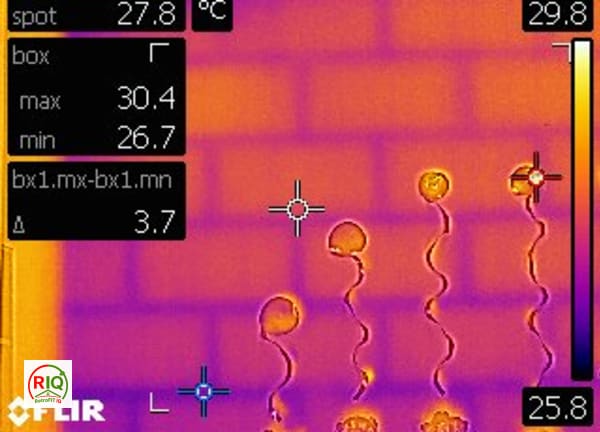
Thermal Bridging Visible Through Masonry Blockwork Wall

Sample Building Performance Investigation Report — Thermal Imaging

Airtightness Testing in a Stratford Victorian Terrace

Thermal Bridge at Internal Corner Wall Junction

Thermal Bridge at Wall-Ceiling Junction Near Window
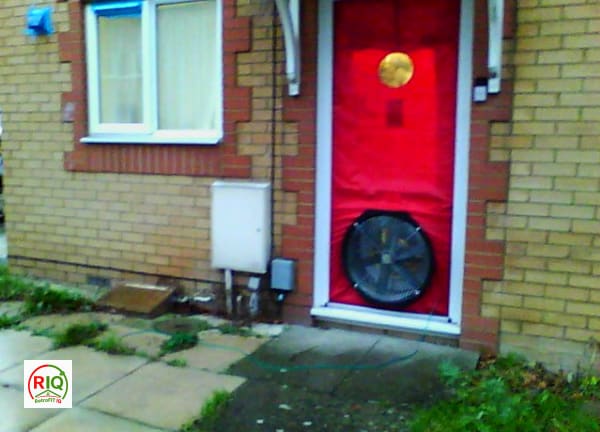
Blower Door Airtightness Test Setup
No related investigations yet.
Browse all investigationsFrequently asked questions
What does investigation-led retrofit mean?+
Measuring and diagnosing the building's real performance and identifying the cause before any remedial work is specified, so the right fix is chosen and verified.
Why is 'build first, diagnose later' a problem?+
Because work is recommended from visible symptoms rather than the cause, so the wrong fix is often specified — leading to recurring problems and rework.
Doesn't investigating first just add cost?+
It is a modest upfront spend that prevents far larger costs from wrong specifications, repeated remedial visits and measures that backfire.
Can't an experienced builder skip diagnostics?+
Experience helps, but symptoms mislead even experts. Measurement reveals causes — thermal bridges, air paths, moisture mechanisms — the eye cannot see.
Why does my previous repair keep failing?+
Usually because it treated the symptom, not the cause — for example damp-proofing for what was actually condensation.
What do you investigate?+
Heat loss, airtightness, moisture mechanisms, ventilation and thermal bridges, using thermal imaging, a blower door and modelling.
Will you verify the work afterwards?+
Yes — verification is part of the approach, confirming the fix performed as predicted.
Is there ever a case for a quick fix?+
Yes — for genuinely obvious, contained, low-risk repairs. But where money or moisture risk is significant, investigate first.
How does this save money overall?+
By ensuring the right work is done once, correctly, avoiding the rework and damage that symptom-led approaches commonly cause.
Who carries out the investigation?+
A Certified Passive House Designer, applying measured diagnostics and building physics to find the cause before recommending work.
Need professional advice?
A comparison like this helps you understand the theory, but every property behaves differently. The only reliable way to establish the real cause in your home — rather than guessing — is professional building performance diagnostics. At RetrofitIQ we verify buildings using the appropriate combination of investigations:
- Thermal imaging
- Blower door testing
- Moisture investigation
- Building physics assessment
- Passive House methodology