
Building Physics Assessment vs a Standard Survey: Predict vs Inspect
Building physics assessment vs Standard survey.
 Reviewed by George Sora, Certified Passive House DesignerUpdated June 2026
Quick answer & key takeaways
4 min read- Bottom line: A standard survey inspects condition; a building physics assessment predicts performance.
- When Building physics assessment is enough: You are making retrofit or performance decisions
- When Standard survey is the better choice: You are assessing condition and buying risk
- When you need both: You are buying and intend to retrofit
- Biggest misconception: “A condition survey tells me how the house performs.” — It records condition, not performance. Heat loss, thermal bridges and condensation risk need modelling.
- Retrofit IQ’s approach: Most contractors recommend work based on what they can see, and most surveys record condition rather than performance.
Quick answer
A standard survey inspects condition; a building physics assessment predicts performance. The survey records what can be seen — cracks, damp staining, the state of finishes — which is exactly what a buyer needs. A building physics assessment goes further, using modelling to calculate heat loss, thermal bridges and condensation risk and to predict how a building (or a proposed fix) will perform. Most contractors recommend work from visible symptoms; the assessment predicts outcomes before anything is built.
At a glance
| Attribute | Building physics assessment | Standard survey |
|---|---|---|
| Approach | Modelling and prediction | Visual inspection |
| Heat loss | Calculated | Not assessed |
| Thermal bridges | Modelled | Not assessed |
| Condensation risk | Predicted | Flagged if visible |
| Predicts fix outcomes | Yes | No |
| Best for | Retrofit decisions, performance | Condition and buying risk |
What is Building physics assessment?
An engineering-led analysis that models how heat and moisture move through the building — heat loss, thermal bridges, condensation risk and insulation options — predicting performance before any work is done.
What is Standard survey?
A visual condition survey recording the state of the building and obvious defects. It is essential for assessing condition and risk, but it does not model or predict thermal and moisture performance.
What each method measures — and what it doesn’t
Building physics assessment
- Calculated heat loss and demand
- Thermal-bridge heat flow and surface temperatures
- Condensation risk of existing and proposed build-ups
- Predicted performance of retrofit options
- Structural condition and visible defects in detail
Standard survey
- Visible condition, cracks and movement
- Obvious defects and water ingress
- State of finishes and components
- Heat loss, thermal bridges or condensation risk
- Predicted performance of any proposed work
The building science
A standard survey is a trained visual assessment: it records the building's condition and the defects that can be seen, which is precisely what a buyer needs to understand risk. But the eye cannot see heat flow, thermal bridges or the dewpoint conditions that drive condensation, so a condition survey says little about how the building performs or how it will respond to changes.
A building physics assessment is built to answer those questions. It models heat loss element by element, simulates thermal bridges at junctions to predict surface temperatures and condensation risk, and tests proposed build-ups before they are constructed. Instead of reporting what is wrong now, it predicts how the building — and any intended remedy — will behave.
This predictive power is what separates engineering from guesswork in retrofit. Most contractors recommend measures based on visible symptoms and convention; the assessment calculates whether a proposed insulation build-up will stay moisture-safe, which junctions need attention, and which measures actually reduce demand. It turns 'this should help' into 'this is predicted to perform like so'.
The two are complementary. A condition survey is the right tool for assessing whether a building is sound and what needs repair; a building physics assessment is the right tool for deciding how to make it perform — warm, efficient and moisture-safe — and for proving the decisions before money is spent on construction.
Key differences
- A standard survey inspects; a building physics assessment predicts.
- The assessment models heat loss, bridges and condensation risk; the survey does not.
- The assessment predicts how a fix will perform before it is built.
- Condition and performance are different questions needing different tools.
Common misconceptions
Myth: A condition survey tells me how the house performs.
It records condition, not performance. Heat loss, thermal bridges and condensation risk need modelling.
Myth: Contractors' recommendations are as good as an assessment.
Recommendations from visible symptoms are not predictions. Modelling tests whether a measure will actually perform and stay moisture-safe.
Myth: A building physics assessment replaces a condition survey.
It does not — condition and buying risk still need a visual survey. They answer different questions.
Real-world situations
Buying a house and assessing risk
A standard condition survey; add a building physics assessment if you plan to retrofit or are concerned about performance.
Planning internal wall insulation
A building physics assessment with condensation-risk modelling to prove the build-up will be moisture-safe.
Deciding which upgrades to fund first
An assessment that predicts each measure's effect, so spending targets the biggest, safest gains.
A contractor recommends insulation from a glance
Have it modelled first; visible symptoms are not a substitute for predicted performance.
Which do you actually need?
When Building physics assessment is enough
- You are making retrofit or performance decisions
- You need to predict heat loss or condensation risk
- You want to prove a fix before building it
When Standard survey is the better choice
- You are assessing condition and buying risk
- You need a record of visible defects
- Performance is not the current concern
When you need both
- You are buying and intend to retrofit
- You want condition and performance understood together
What Retrofit IQ checks on site
Most contractors recommend work based on what they can see, and most surveys record condition rather than performance. A building physics assessment predicts how the building and any proposed fix will perform — heat loss, thermal bridges and condensation risk — so the decision is engineered and moisture-safe before money is spent.
- Heat-loss calculation and identification of dominant losses
- Thermal-bridge modelling for surface temperature and condensation risk
- Condensation-risk analysis of proposed build-ups
- Prediction and comparison of retrofit options before works
- Measured inputs (imaging, airtightness) to ground the model
- An engineered, moisture-safe recommendation, not a symptom-led guess
What a Certified Passive House Designer recommends
A condition survey and a building physics assessment answer different questions, and conflating them costs people money. If you want to know whether a house is sound, get a survey. If you want to know how to make it warm, efficient and moisture-safe — and to prove it before building — you need the assessment.
The value of modelling is that it predicts. Instead of insulating from a glance and hoping, you calculate heat loss, simulate the junctions and test the build-up for condensation, then build the option that is proven to perform. That is the difference between recommending work and engineering it.
— George Sora, Certified Passive House Designer, Founder, RetrofitIQ
Reviewed using current building physics principles and Passive House methodology.
Related services
Related comparisons
Related investigations
Compare another way
Closely related comparisons our clients read next.
Investigation-led Retrofit vs Build First, Diagnose Later
Investigation-led retrofit measures and diagnoses the cause before any work is specified; 'build first, diagnose later' recommends work from visible symptoms and fixes problems afterwards.
Read comparisonMoisture Meter vs Building Physics Assessment
A moisture meter tells you whether a spot is wet; a building physics assessment tells you why it is wet and how to stop it.
Read comparisonBuilding Performance Diagnostic vs a Standard Survey
A standard survey tells you the condition of the building; a building performance diagnostic tells you how it actually performs — where it loses heat, leaks air, suffers damp and wastes energy — using instruments rather than visual inspection alone.
Read comparisonPHPP vs SAP / RdSAP Energy Modelling
PHPP is a design tool that predicts real energy performance accurately; SAP and RdSAP are compliance and EPC tools, simplified for consistency rather than precision.
Read comparisonEvidence from Real Projects (15)
Real project and investigation images from our own fieldwork, matched to this page — not stock photography.

Sample Building Performance Investigation Report — Thermal Imaging

Thermal Bridge at Internal Corner Wall Junction

Thermal Bridge at Wall-Ceiling Junction Near Window
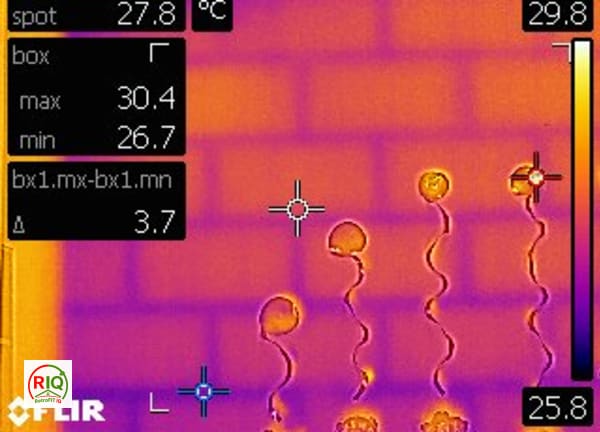
Thermal Bridging Visible Through Masonry Blockwork Wall
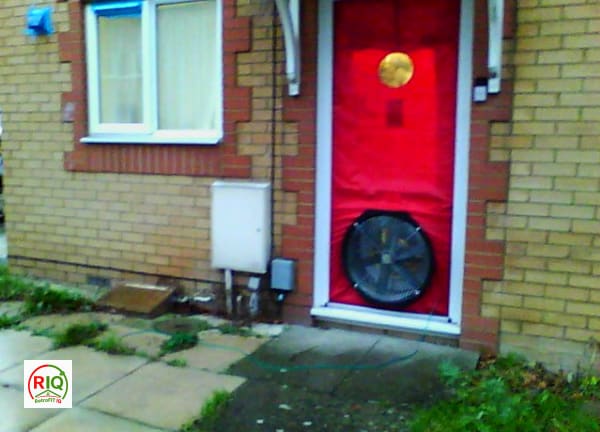
Blower Door Airtightness Test Setup

Wall / ceiling corner with vertical service pipe
No related investigations yet.
Browse all investigationsFrequently asked questions
What is a building physics assessment?+
An engineering-led analysis that models how heat and moisture move through a building — heat loss, thermal bridges and condensation risk — and predicts how the building and proposed fixes will perform.
How is it different from a standard survey?+
A standard survey inspects condition visually; a building physics assessment models and predicts performance, including the outcome of proposed works.
Do I need both?+
When buying, a condition survey is sensible; add a building physics assessment if you plan to retrofit or want to understand and improve performance.
Can it predict whether my insulation will work?+
Yes — condensation-risk modelling and heat-loss calculation predict whether a build-up will perform and stay moisture-safe before it is built.
Why not just trust a contractor's recommendation?+
Recommendations from visible symptoms are not predictions. Modelling tests whether a measure will actually reduce demand and avoid condensation.
Does it replace a condition survey?+
No — condition and buying risk still need a visual survey. The two are complementary, answering different questions.
Is it useful before a heat pump?+
Yes — it quantifies heat loss and the effect of fabric improvements, which is essential to size a heat pump correctly.
Is the assessment disruptive?+
Largely non-invasive — it combines modelling with imaging and measured inputs; any minor checks are agreed in advance.
Who carries out the assessment?+
A Certified Passive House Designer, so heat, moisture and performance are modelled and interpreted to engineering standards.
Need professional advice?
A comparison like this helps you understand the theory, but every property behaves differently. The only reliable way to establish the real cause in your home — rather than guessing — is professional building performance diagnostics. At RetrofitIQ we verify buildings using the appropriate combination of investigations:
- Thermal imaging
- Blower door testing
- Moisture investigation
- Building physics assessment
- Passive House methodology