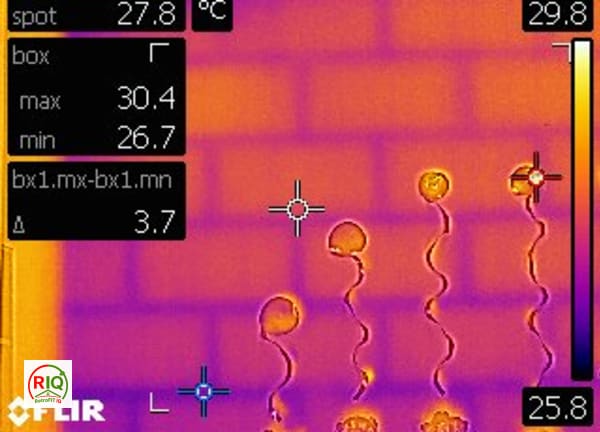

The phrase 'unintended consequences of retrofit' has become a recognised category of failure because it's so common: well-intentioned energy measures, installed without whole-building thinking, that cause damp, mould, condensation and decay. The PAS 2035 standard exists largely to prevent them. The encouraging truth is that these consequences are predictable and avoidable — they come from a handful of recurring mistakes.
The main unintended consequences
| Consequence | Typical cause | Prevention |
|---|---|---|
| Surface condensation & mould | Airtightness/insulation without ventilation | Design ventilation with the fabric |
| Interstitial condensation & decay | Insulation moving the dew point into the structure | Vapour strategy + hygrothermal modelling |
| New thermal bridges / cold spots | Partial or interrupted insulation | Continuous insulation; insulated returns |
| Joist-end / embedded-timber rot | Internal insulation cooling embedded timber | Detailing; assessment; sometimes EWI instead |
| Trapped moisture in solid walls | Vapour-closed system on a rain-loaded wall | Vapour-open build-up; rain management |
| Summer overheating | Insulation/airtightness without solar/ventilation control | Shading, glazing design, summer bypass |
| Poor indoor air quality | Tighter home, inadequate fresh air | CO₂-led ventilation strategy |
The common thread — partial, uncoordinated measures
Look down that list and the pattern is clear: almost every unintended consequence comes from doing one thing in isolation. Insulating without ventilating. Sealing without ventilating. Insulating part of a wall (creating a cold bridge at the un-insulated junction). Adding a vapour-closed layer to a wall that needs to dry. The house is a system, and partial interventions move problems around rather than solving them.
Overheating — the consequence people forget
Insulation and airtightness keep heat in — which is the point in winter, but can cause summer overheating if solar gains and ventilation aren't managed. A well-insulated, airtight home with large unshaded south/west glazing and no purge ventilation or summer bypass can overheat badly. Good retrofit considers the whole year: shading and glazing design to control solar gain, openable windows or mechanical purge for summer ventilation, and (with MVHR) a summer bypass. Overheating is now an explicit design concern, not an afterthought.
How to design the consequences out
- Diagnose — assess the whole building first (airtightness, thermal imaging, moisture, fabric, exposure, occupancy), not just an EPC.
- Model — calculate the energy balance and the moisture risk (Glaser or WUFI) before specifying any measure, so the dew point and drying behaviour are understood.
- Design as a system — fabric, air barrier, thermal-bridge details, vapour strategy, ventilation and (last) heating, coordinated as one whole-house design.
- Sequence and phase safely — never tighten without ventilating; never leave the building worse between phases.
- Verify — blower door, thermal imaging and commissioning to confirm the design was actually achieved on site.