
PAS 2035 Assessment vs Building Performance Diagnostics: Framework vs Measurement
PAS 2035 retrofit assessment vs Building performance diagnostics.
 Reviewed by George Sora, Certified Passive House DesignerUpdated June 2026
Quick answer & key takeaways
4 min read- Bottom line: PAS 2035 is a compliance framework that structures how a retrofit is assessed and delivered; building performance diagnostics measure how the home actually behaves.
- When PAS 2035 assessment is enough: You need a compliant, funded retrofit pathway
- When Performance diagnostics is the better choice: You need measured evidence of real performance
- When you need both: You want a compliant retrofit that genuinely performs
- Biggest misconception: “A PAS 2035 assessment measures everything.” — It is largely a structured, documentation-led process; instrumented measurement of airtightness and heat loss is not guaranteed.
- Retrofit IQ’s approach: A retrofit framework is only as good as the data behind it.
Quick answer
PAS 2035 is a compliance framework that structures how a retrofit is assessed and delivered; building performance diagnostics measure how the home actually behaves. They are complementary: PAS 2035 provides the process and documentation for funded, compliant retrofit, while diagnostics provide the measured evidence — heat loss, airtightness, moisture — that makes the assessment accurate. A PAS 2035 assessment informed by real diagnostics is far stronger than one resting on standard assumptions.
At a glance
| Attribute | PAS 2035 retrofit assessment | Building performance diagnostics |
|---|---|---|
| Nature | Compliance framework / process | Instrumented measurement |
| Airtightness | Not necessarily measured | Measured (blower door) |
| Heat loss | Often assessed conventionally | Measured and modelled |
| Moisture risk | Considered in process | Diagnosed with instruments |
| Output | Compliant assessment and plan | Measured findings and causes |
| Best together | Provides the framework | Provides the evidence |
What is PAS 2035 retrofit assessment?
The assessment stage of the UK PAS 2035 retrofit framework — a structured process covering condition, energy and occupancy to inform a compliant retrofit, largely standardised and documentation-led.
What is Building performance diagnostics?
An instrumented investigation that measures how the building actually performs — thermal imaging, airtightness testing, moisture and ventilation diagnostics — and explains the causes of comfort, damp and energy problems.
What each method measures — and what it doesn’t
PAS 2035 assessment
- Condition, energy and occupancy within a structured process
- A compliant basis for funded retrofit
- Documentation for the retrofit pathway
- Necessarily, the measured real performance of the building
- Instrumented airtightness or detailed thermal bridges
Performance diagnostics
- Real heat loss and where it occurs
- Measured airtightness and air-leakage paths
- Moisture mechanisms and ventilation adequacy
- Compliance with the PAS 2035 framework itself
The building science
PAS 2035 is the UK framework that brought structure and accountability to domestic retrofit, defining roles, an assessment stage, a medium-term improvement plan and quality controls. Its assessment is largely standardised and documentation-led, designed to make funded retrofit consistent and to reduce the unintended consequences that plagued earlier programmes.
Building performance diagnostics are about measurement rather than process. Thermal imaging locates defects, a blower door quantifies air leakage, and moisture and ventilation diagnostics identify the causes of damp and poor air quality. The output is evidence of how the building actually performs, interpreted through building physics.
The two reinforce each other. A PAS 2035 assessment is only as good as the data behind it, and standard assumptions can be wrong in a real, ageing building. Feeding the framework with measured diagnostics — real airtightness, located thermal bridges, diagnosed moisture risk — makes the resulting plan accurate and the chosen measures safe, rather than driven by defaults.
So the relationship is framework plus evidence. PAS 2035 ensures the retrofit is structured, compliant and accountable; diagnostics ensure it is based on how the building really behaves. Used together, they avoid the classic failure of a compliant-on-paper retrofit that underperforms or causes moisture problems because the assessment rested on assumptions.
Key differences
- PAS 2035 is a process; diagnostics are measurement.
- PAS 2035 may rely on assumptions; diagnostics measure reality.
- Diagnostics strengthen a PAS 2035 assessment with real evidence.
- The framework ensures compliance; diagnostics ensure accuracy.
Common misconceptions
Myth: A PAS 2035 assessment measures everything.
It is largely a structured, documentation-led process; instrumented measurement of airtightness and heat loss is not guaranteed.
Myth: Diagnostics replace PAS 2035.
They do not — the framework provides compliance and accountability. Diagnostics provide the evidence that makes it accurate.
Myth: Following the framework guarantees performance.
Only if the assessment is based on real data. Standard assumptions can still lead to underperformance or moisture risk.
Real-world situations
Funded retrofit requiring PAS 2035 compliance
Follow the framework, but commission diagnostics so the assessment is based on measured performance, not defaults.
Concerned a compliant retrofit may cause damp
Add building physics diagnostics and condensation-risk modelling to the PAS 2035 process.
Privately funded deep retrofit
Diagnostics-led design (and EnerPHit where appropriate); PAS 2035 may still structure the process usefully.
Want both compliance and real performance
Combine PAS 2035's framework with measured diagnostics for an accurate, accountable, performing retrofit.
Which do you actually need?
When PAS 2035 assessment is enough
- You need a compliant, funded retrofit pathway
- Accountability and documentation are required
- A structured process is mandated
When Performance diagnostics is the better choice
- You need measured evidence of real performance
- You want causes diagnosed, not assumed
- Moisture safety and sizing depend on real data
When you need both
- You want a compliant retrofit that genuinely performs
- The framework should rest on measured diagnostics
What Retrofit IQ checks on site
A retrofit framework is only as good as the data behind it. We provide the measured evidence — airtightness, heat loss, moisture, thermal bridges — so the assessment reflects how the building actually behaves, rather than standard assumptions that can lead to underperformance or damp.
- Thermal imaging to locate defects and thermal bridges
- Blower door testing for measured airtightness
- Moisture and ventilation diagnostics
- Condensation-risk modelling for proposed measures
- Heat-loss assessment to size and prioritise works
- Measured evidence to strengthen the retrofit assessment and plan
What a Certified Passive House Designer recommends
PAS 2035 was a genuine step forward: it brought structure and accountability to retrofit. But it is a framework, and a framework fed with assumptions produces an assessment built on assumptions. The diagnostics are what make it real — measured airtightness, located bridges, diagnosed moisture risk.
I treat the two as partners. Use the framework for process and compliance; use measurement for accuracy and safety. A PAS 2035 plan grounded in building performance diagnostics is far more likely to deliver a warm, efficient, moisture-safe home than one resting on defaults.
— George Sora, Certified Passive House Designer, Founder, RetrofitIQ
Reviewed using current building physics principles and Passive House methodology.
Related services
Related comparisons
Related investigations
Compare another way
Closely related comparisons our clients read next.
Investigation-led Retrofit vs Build First, Diagnose Later
Investigation-led retrofit measures and diagnoses the cause before any work is specified; 'build first, diagnose later' recommends work from visible symptoms and fixes problems afterwards.
Read comparisonBuilding Performance Diagnostic vs a Standard Survey
A standard survey tells you the condition of the building; a building performance diagnostic tells you how it actually performs — where it loses heat, leaks air, suffers damp and wastes energy — using instruments rather than visual inspection alone.
Read comparisonBuilding Physics Assessment vs a Standard Survey
A standard survey inspects condition; a building physics assessment predicts performance.
Read comparisonEnerPHit vs Standard Retrofit
EnerPHit applies verified Passive House targets and a whole-house plan to retrofit; standard retrofit fits individual measures without that framework.
Read comparisonEvidence from Real Projects (13)
Real project and investigation images from our own fieldwork, matched to this page — not stock photography.

Sample Building Performance Investigation Report — Thermal Imaging
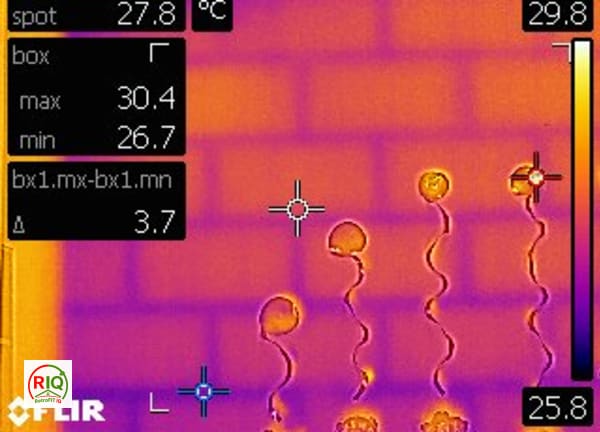
Thermal Bridging Visible Through Masonry Blockwork Wall
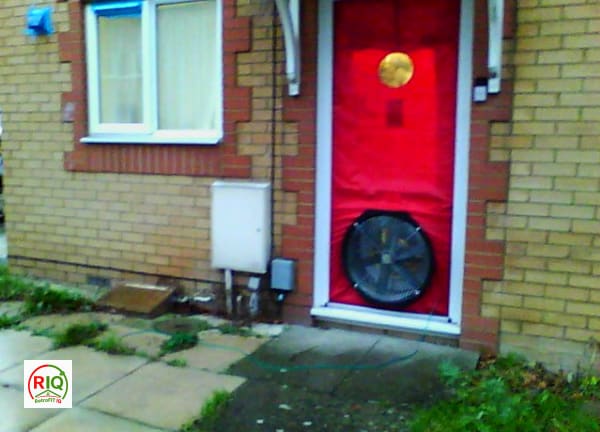
Blower Door Airtightness Test Setup

Airtightness Testing in a Stratford Victorian Terrace

Thermal Bridge at Internal Corner Wall Junction

Thermal Bridge at Wall-Ceiling Junction Near Window
No related investigations yet.
Browse all investigationsFrequently asked questions
What is PAS 2035?+
The UK framework for domestic retrofit, defining roles, an assessment stage, an improvement plan and quality controls to deliver compliant, accountable retrofit and reduce unintended consequences.
How do diagnostics differ from a PAS 2035 assessment?+
PAS 2035 is a structured, documentation-led process; building performance diagnostics measure how the home actually behaves with instruments such as thermal imaging and a blower door.
Do diagnostics replace PAS 2035?+
No. The framework provides compliance and accountability; diagnostics provide the measured evidence that makes the assessment accurate and the measures safe.
Can a compliant retrofit still cause damp?+
Yes, if the assessment relied on assumptions. Diagnostics and condensation-risk modelling reduce that risk.
Is airtightness measured under PAS 2035?+
Not necessarily; the framework is largely process-led. A blower door test provides the measured airtightness diagnostics add.
Should I do both?+
For a retrofit that is both compliant and genuinely performs, yes — combine the framework with measured diagnostics.
Do diagnostics help size measures?+
Yes — measured heat loss and airtightness help size and prioritise works accurately, beyond standard assumptions.
Is this relevant to private retrofit?+
Yes — diagnostics-led design benefits any retrofit, with PAS 2035 structuring the process where applicable.
Who carries out the diagnostics?+
A Certified Passive House Designer, so the measured evidence is interpreted in proper building physics and feeds a sound retrofit plan.
Need professional advice?
A comparison like this helps you understand the theory, but every property behaves differently. The only reliable way to establish the real cause in your home — rather than guessing — is professional building performance diagnostics. At RetrofitIQ we verify buildings using the appropriate combination of investigations:
- Thermal imaging
- Blower door testing
- Moisture investigation
- Building physics assessment
- Passive House methodology