
EnerPHit vs Standard Retrofit: Verified Targets vs Piecemeal Measures
EnerPHit retrofit vs Standard retrofit.
 Reviewed by George Sora, Certified Passive House DesignerUpdated June 2026
Quick answer & key takeaways
4 min read- Bottom line: EnerPHit applies verified Passive House targets and a whole-house plan to retrofit; standard retrofit fits individual measures without that framework.
- When EnerPHit is enough: You want a verified, coordinated retrofit
- When Standard retrofit is the better choice: Only a single, contained measure is needed
- When you need both: You will fit measures over time but want them coordinated
- Biggest misconception: “Doing measures one by one is just a slower EnerPHit.” — Without a whole-house plan and modelling, uncoordinated measures can create thermal bridges, condensation risk and lock-in.
- Retrofit IQ’s approach: Standard retrofit often fits measures based on grants or visible symptoms, without a whole-house plan — which is how insulation creates condensation or an early measure locks out a better one.
Quick answer
EnerPHit applies verified Passive House targets and a whole-house plan to retrofit; standard retrofit fits individual measures without that framework. EnerPHit models the building in PHPP, sets airtightness and fabric targets, manages condensation risk and verifies the result — staged or not, it follows a coherent plan. Standard retrofit can improve a home, but uncoordinated measures risk thermal bridges, interstitial condensation and lock-in that a planned approach avoids. The difference is a verified system versus piecemeal improvement.
At a glance
| Attribute | EnerPHit retrofit | Standard retrofit |
|---|---|---|
| Framework | Verified standard + PHPP plan | Individual measures |
| Whole-house plan | Yes (even if staged) | Often absent |
| Airtightness target | ≤1.0 ach@50, verified | Usually unmeasured |
| Condensation risk | Modelled | Frequently overlooked |
| Lock-in risk | Managed | Common |
| Verification | Blower door, quality checks | Rare |
What is EnerPHit retrofit?
The Passive House Institute's retrofit standard, with verified targets for fabric, airtightness and heating demand, modelled in PHPP, achieved via a component or energy-demand route, and planned whole-house even when carried out in stages.
What is Standard retrofit?
Fitting individual measures — loft insulation, new windows, a boiler — to convention or grant criteria, often without a whole-house plan, condensation-risk modelling or verification. Improvements happen, but interactions and risks may be overlooked.
What each method measures — and what it doesn’t
EnerPHit
- Verified airtightness and fabric performance
- Whole-house heating demand via PHPP
- Moisture safety through condensation-risk modelling
- Nothing critical for retrofit performance
Standard retrofit
- The performance of each individual measure, in isolation
- Compliance with grant or convention criteria
- How measures interact across the whole house
- Airtightness and condensation risk
- Whether early measures lock out later ones
The building science
Retrofit is a system problem. Insulating one element changes the temperature and moisture behaviour of its neighbours; improving airtightness changes ventilation needs; new windows change where the next-coldest surface is. EnerPHit treats the house as that system: a PHPP model coordinates the measures, sets verified targets, and a whole-house plan ensures each stage moves towards the goal without creating problems.
Standard retrofit often tackles measures one at a time, driven by budget or grants, without that overview. The individual improvements are real, but the interactions are easy to miss — a newly insulated wall with an unmanaged thermal bridge, or improved airtightness without ventilation leading to condensation. Worse, an early measure can lock out a better later one, forcing compromise or rework.
EnerPHit also takes moisture seriously, because retrofit is where moisture risk concentrates. Internal insulation in particular can move the condensation plane into the wall, so the standard expects condensation-risk modelling and careful detailing. Standard retrofit frequently omits this, which is how well-intentioned insulation creates hidden interstitial condensation and decay.
The standard's pragmatism matters too. EnerPHit offers a component route (upgrade each element to specified quality) as well as an energy-demand route, so a phased, budget-led retrofit can still follow a verified plan rather than drifting. That is the essential difference: not whether you improve the house, but whether the improvements form a coordinated, moisture-safe, verified whole.
Key differences
- EnerPHit is a verified, whole-house standard; standard retrofit is piecemeal.
- EnerPHit models interactions and condensation risk; standard retrofit often does not.
- EnerPHit verifies airtightness; standard retrofit usually leaves it unmeasured.
- A plan avoids lock-in; uncoordinated measures invite it.
Common misconceptions
Myth: Doing measures one by one is just a slower EnerPHit.
Without a whole-house plan and modelling, uncoordinated measures can create thermal bridges, condensation risk and lock-in.
Myth: EnerPHit must be done all at once.
The component route supports phased retrofit, provided there is a whole-house plan to avoid compromise.
Myth: Insulation always improves a wall safely.
Without condensation-risk modelling, internal insulation can cause interstitial condensation. Detailing and analysis matter.
Real-world situations
Phased deep retrofit over several years
EnerPHit component route with a whole-house plan, so each stage is coordinated and avoids lock-in.
Considering grant-funded single measures
Get a whole-house plan first so the measures fit a coherent, moisture-safe strategy rather than conflicting.
Wall insulation planned with no moisture check
Add condensation-risk modelling before proceeding; internal insulation needs it to stay safe.
Want verified, comfortable, low-energy outcome
EnerPHit — verified targets, PHPP modelling and blower door testing prove the result.
Which do you actually need?
When EnerPHit is enough
- You want a verified, coordinated retrofit
- Moisture safety and comfort are priorities
- You are willing to plan whole-house, even if staged
When Standard retrofit is the better choice
- Only a single, contained measure is needed
- Budget restricts to one improvement now
- A grant dictates a specific measure
When you need both
- You will fit measures over time but want them coordinated
- A whole-house plan guides piecemeal funding
What Retrofit IQ checks on site
Standard retrofit often fits measures based on grants or visible symptoms, without a whole-house plan — which is how insulation creates condensation or an early measure locks out a better one. We plan and model the whole house first, so each measure is coordinated, moisture-safe and verified.
- Whole-house retrofit plan modelled in PHPP
- Verified airtightness target and blower door testing
- Condensation-risk modelling for insulation build-ups
- Thermal-bridge-free junction detailing
- A staged sequence that avoids lock-in
- Verification of achieved performance at each stage
What a Certified Passive House Designer recommends
The danger in standard retrofit is not the individual measures — most are improvements — but the lack of a plan that sees the house as a system. Insulate without managing the thermal bridge, seal without ventilating, and you trade one problem for another. EnerPHit exists precisely to coordinate this.
Its component route makes it practical: you can retrofit in stages as budget allows, but to a verified whole-house plan with condensation risk modelled and airtightness tested. That is the difference between a home that genuinely improves and one that accumulates compromises.
— George Sora, Certified Passive House Designer, Founder, RetrofitIQ
Reviewed using current building physics principles and Passive House methodology.
Related services
Related comparisons
Related investigations
Compare another way
Closely related comparisons our clients read next.
Passive House vs Building Regulations
Building Regulations set the legal minimum a building must reach; Passive House sets a measured performance standard far above it.
Read comparisonEnerPHit vs New-Build Passive House
Passive House (classic) is the new-build standard; EnerPHit is its retrofit counterpart, with slightly relaxed targets that reflect the constraints of working with an existing building.
Read comparisonPAS 2035 Retrofit Assessment vs Building Performance Diagnostics
PAS 2035 is a compliance framework that structures how a retrofit is assessed and delivered; building performance diagnostics measure how the home actually behaves.
Read comparisonInternal vs External Wall Insulation
EWI is generally the better building-physics solution because it keeps the wall warm and the insulation continuous, reducing thermal bridges and condensation risk.
Read comparisonEvidence from Real Projects (8)
Real project and investigation images from our own fieldwork, matched to this page — not stock photography.
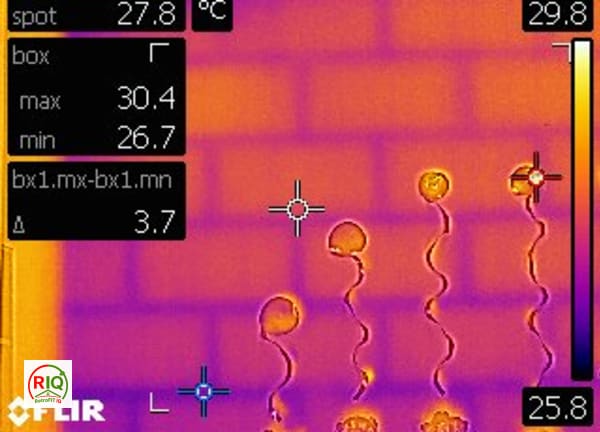
Thermal Bridging Visible Through Masonry Blockwork Wall

Sample Building Performance Investigation Report — Thermal Imaging

Thermal Bridge at Internal Corner Wall Junction
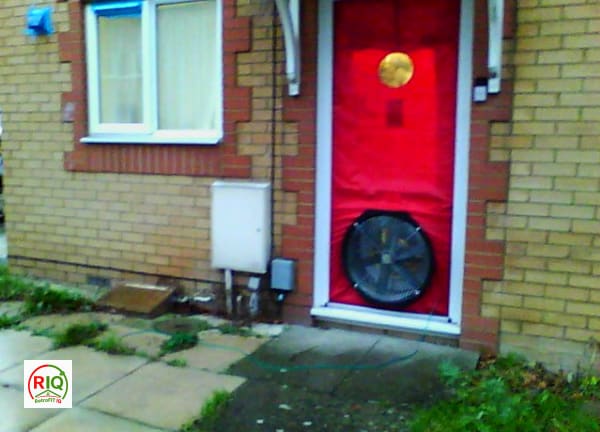
Blower Door Airtightness Test Setup

Internal door head and reveal next to a framed picture on a warmer external wall

Thermal Bridge at Wall-Ceiling Junction Near Window
No related investigations yet.
Browse all investigationsFrequently asked questions
What is EnerPHit?+
The Passive House Institute's retrofit standard, with verified targets for fabric, airtightness and heating demand, modelled in PHPP and achievable via a component or energy-demand route.
How is it different from a standard retrofit?+
EnerPHit coordinates measures within a verified whole-house plan with condensation-risk modelling and testing; standard retrofit fits individual measures, often without that framework.
Can EnerPHit be done in stages?+
Yes — the component route supports phased retrofit, provided there is a whole-house plan to avoid lock-in and compromise.
What airtightness does EnerPHit require?+
1.0 air changes per hour at 50 Pa, verified with a blower door test.
Why is condensation risk modelling important?+
Because retrofit, especially internal insulation, can move the condensation plane into the wall. Modelling keeps the build-up moisture-safe.
What is lock-in?+
When an early measure prevents or compromises a better later one — for example insulation that blocks a future improvement. A whole-house plan avoids it.
Are single grant-funded measures a bad idea?+
Not inherently, but they are best fitted within a whole-house plan so they support, rather than conflict with, future improvements.
Does EnerPHit guarantee comfort?+
It targets verified performance, which strongly improves comfort, warmth and running cost compared with piecemeal measures.
Who designs an EnerPHit retrofit?+
A Certified Passive House Designer, who models in PHPP, manages moisture risk and verifies the result.
Need professional advice?
A comparison like this helps you understand the theory, but every property behaves differently. The only reliable way to establish the real cause in your home — rather than guessing — is professional building performance diagnostics. At RetrofitIQ we verify buildings using the appropriate combination of investigations:
- Thermal imaging
- Blower door testing
- Moisture investigation
- Building physics assessment
- Passive House methodology