
Passive House vs Building Regulations: Minimum vs Performance
Passive House standard vs Building Regulations (Part L).
 Reviewed by George Sora, Certified Passive House DesignerUpdated June 2026
Quick answer & key takeaways
4 min read- Bottom line: Building Regulations set the legal minimum a building must reach; Passive House sets a measured performance standard far above it.
- When Passive House is enough: You want verified, real-world performance
- When Building Regulations is the better choice: You need to satisfy the legal minimum
- When you need both: You must comply but want to exceed the minimum meaningfully
- Biggest misconception: “A building that meets Building Regs is energy efficient.” — It meets a legal minimum. Real performance can fall well short due to the performance gap.
- Retrofit IQ’s approach: We design to verified performance and prove it by measurement, rather than treating the Building Regulations minimum as a target — because compliance on paper routinely fails to deliver the comfort and low running costs the standard guarantees.
Quick answer
Building Regulations set the legal minimum a building must reach; Passive House sets a measured performance standard far above it. Regulations are demonstrated through compliance modelling and are satisfied once the threshold is met; Passive House specifies verified heating-demand and airtightness targets and proves them in PHPP and on site. The well-known performance gap — buildings using far more energy than their compliance figures imply — is largely why a measured standard like Passive House delivers comfort and efficiency that minimum compliance does not.
At a glance
| Attribute | Passive House standard | Building Regulations (Part L) |
|---|---|---|
| Nature | Performance standard | Legal minimum |
| Heating demand | ≤15 kWh/m².a target | No absolute target — relative compliance |
| Airtightness | 0.6 ach@50 (verified) | Higher limit; sometimes defaulted |
| Thermal bridges | Designed out | Approximated |
| Verification | PHPP + on-site testing | SAP compliance |
| Real-world performance | Closely predicted | Performance gap common |
What is Passive House standard?
An international performance standard with verified targets for heating demand, airtightness, thermal-bridge-free detailing and comfort, modelled in PHPP and proven on site. It is about how the building actually performs.
What is Building Regulations (Part L)?
The UK's legal minimum for energy efficiency, demonstrated mainly through SAP compliance. It sets a floor that all new and altered buildings must reach, but it is a compliance threshold, not a guarantee of real-world performance.
What each method measures — and what it doesn’t
Passive House
- A verified annual heating-demand limit
- Measured airtightness to 0.6 ach@50
- Thermal-bridge-free detailing and comfort criteria
- It is voluntary — not a legal requirement in itself
Building Regulations
- Compliance against a legal energy threshold
- A relative improvement over a notional building
- Minimum fabric and system standards
- Guaranteed real-world energy use or comfort
- Verified airtightness unless tested
- Thermal bridges in detail
The building science
Building Regulations exist to set a baseline that every building must clear. Part L compliance is normally shown with SAP, comparing the design against a notional equivalent, and once the target is met the legal duty is satisfied. The method is built for consistency and minimum standards across the whole stock — not for predicting precisely how a specific home will perform.
Passive House works to a different ambition: verified performance. It specifies an absolute heating-demand target (typically ≤15 kWh/m².a), an airtightness limit of 0.6 ach@50 proven by a blower door, thermal-bridge-free detailing and stringent comfort criteria, all modelled in PHPP and validated on site. The standard is designed so the building genuinely behaves as predicted.
Between the two lies the performance gap — the well-documented tendency for buildings designed only to compliance to use far more energy than the assessment implied. The simplifications that make compliance modelling practical (default airtightness, approximated thermal bridges) hide real losses, so a building can pass Part L and still be draughty, cold in places and expensive to run.
This does not make Building Regulations wrong; they are a minimum, and a necessary one. But meeting the minimum is not the same as achieving comfort and low energy use. Passive House closes the gap by measuring what compliance assumes — which is why, for anyone who wants the building to perform rather than merely comply, the measured standard is the meaningful target.
Key differences
- Regulations are a legal minimum; Passive House is a performance standard.
- Passive House sets absolute, verified targets; compliance is relative.
- Airtightness and thermal bridges are proven in Passive House, approximated in compliance.
- The performance gap affects compliance-only buildings, not measured ones.
Common misconceptions
Myth: A building that meets Building Regs is energy efficient.
It meets a legal minimum. Real performance can fall well short due to the performance gap.
Myth: Passive House is just stricter Building Regs.
It is a different approach — measured, verified performance rather than relative compliance.
Myth: Passive House is unaffordable for normal projects.
It is an investment in comfort and running cost; designing to the principles, certified or not, pays back in performance.
Real-world situations
New home and you want it genuinely warm and cheap to run
Design to Passive House — verified targets and PHPP modelling deliver real performance, not just compliance.
Project must satisfy the legal minimum on a tight budget
Meet Building Regulations, but understand the performance gap and capture the cheapest performance wins where you can.
Disappointed that a 'compliant' build feels cold
The compliance method hid real losses; a measured assessment and Passive House detailing would have closed the gap.
Retrofit aiming high
Consider EnerPHit, the Passive House retrofit standard, rather than minimum compliance.
Which do you actually need?
When Passive House is enough
- You want verified, real-world performance
- Comfort and low running cost are priorities
- You are willing to design and build to a measured target
When Building Regulations is the better choice
- You need to satisfy the legal minimum
- Budget caps the ambition
- Compliance is the immediate requirement
When you need both
- You must comply but want to exceed the minimum meaningfully
- You are designing to Passive House while satisfying Part L
What Retrofit IQ checks on site
We design to verified performance and prove it by measurement, rather than treating the Building Regulations minimum as a target — because compliance on paper routinely fails to deliver the comfort and low running costs the standard guarantees.
- Clarification of whether the goal is compliance or performance
- PHPP modelling to a heating-demand target where performance matters
- Airtightness strategy and blower door verification
- Thermal-bridge-free detailing of key junctions
- Comfort and condensation-risk assessment
- A clear view of the gap between minimum compliance and real performance
What a Certified Passive House Designer recommends
Building Regulations are a floor, not a goal. Meeting them is mandatory and sensible, but it guarantees only that you have cleared the minimum — not that the building will be comfortable or cheap to run. The performance gap is real, and it bites people who assumed compliance meant performance.
Passive House is the answer when you actually want the building to perform: absolute targets, modelled in PHPP and proven on site. Even where full certification is not pursued, designing to the principles closes the gap and delivers a home that behaves as promised.
— George Sora, Certified Passive House Designer, Founder, RetrofitIQ
Reviewed using current building physics principles and Passive House methodology.
Related services
Related comparisons
Related investigations
Compare another way
Closely related comparisons our clients read next.
EnerPHit vs New-Build Passive House
Passive House (classic) is the new-build standard; EnerPHit is its retrofit counterpart, with slightly relaxed targets that reflect the constraints of working with an existing building.
Read comparisonPassive House Methodology vs Standard Building Practice
Passive House methodology predicts and verifies performance; standard building practice builds to convention and hopes the result is good enough.
Read comparisonEnerPHit vs Standard Retrofit
EnerPHit applies verified Passive House targets and a whole-house plan to retrofit; standard retrofit fits individual measures without that framework.
Read comparisonPHPP vs SAP / RdSAP Energy Modelling
PHPP is a design tool that predicts real energy performance accurately; SAP and RdSAP are compliance and EPC tools, simplified for consistency rather than precision.
Read comparisonEvidence from Real Projects (8)
Real project and investigation images from our own fieldwork, matched to this page — not stock photography.

Sample Building Performance Investigation Report — Thermal Imaging
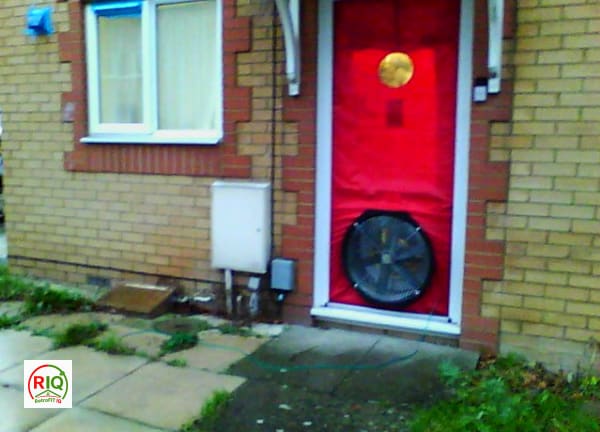
Blower Door Airtightness Test Setup

Completed brick cladding system on a contemporary new-build

Loft Thermal Investigation — Scope & Methodology
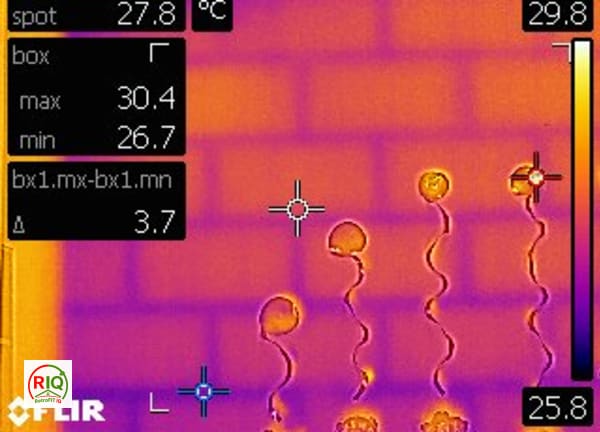
Thermal Bridging Visible Through Masonry Blockwork Wall

Thermal Bridge at Internal Corner Wall Junction
No related investigations yet.
Browse all investigationsFrequently asked questions
Is Passive House the same as Building Regulations?+
No. Building Regulations are a legal minimum shown through SAP compliance; Passive House is a measured performance standard with verified heating-demand and airtightness targets.
Does meeting Building Regs mean my home is efficient?+
It means you met the legal minimum. Real-world performance can fall short because of the performance gap between modelled and actual energy use.
What is the performance gap?+
The difference between a building's modelled compliance performance and its actual energy use, often caused by simplifications that hide thermal bridging and infiltration.
What heating demand does Passive House target?+
Typically a space-heating demand of no more than 15 kWh/m².a, with airtightness of 0.6 ach@50, verified in PHPP and on site.
Is Passive House a legal requirement?+
No — it is a voluntary standard. Building Regulations are the legal minimum; Passive House is a higher, performance-based target you choose to meet.
Can I exceed Building Regs without full certification?+
Yes — designing to Passive House principles and modelling in PHPP improves real performance even without formal certification.
Why does a compliant new home sometimes feel cold?+
Because compliance modelling can hide real losses such as thermal bridges and air leakage. A measured approach closes that gap.
Is Passive House worth the extra cost?+
It is an investment in comfort and low running costs; for many owners the long-term performance justifies it.
What about retrofits?+
EnerPHit is the Passive House retrofit standard, offering verified performance targets for existing buildings rather than minimum compliance.
Who can advise on this?+
A Certified Passive House Designer, who can model in PHPP and design to genuine performance rather than minimum compliance.
Need professional advice?
A comparison like this helps you understand the theory, but every property behaves differently. The only reliable way to establish the real cause in your home — rather than guessing — is professional building performance diagnostics. At RetrofitIQ we verify buildings using the appropriate combination of investigations:
- Thermal imaging
- Blower door testing
- Moisture investigation
- Building physics assessment
- Passive House methodology