
Passive House Methodology vs Standard Practice: Predict vs Hope
Passive House methodology vs Standard building practice.
 Reviewed by George Sora, Certified Passive House DesignerUpdated June 2026
Quick answer & key takeaways
4 min read- Bottom line: Passive House methodology predicts and verifies performance; standard building practice builds to convention and hopes the result is good enough.
- When Passive House method is enough: You want certainty of performance
- When Standard practice is the better choice: Only minimum convention and compliance are required
- When you need both: You build conventionally but want the methodology's key disciplines
- Biggest misconception: “A good builder doesn't need the methodology.” — Good building is necessary but not sufficient. Without modelling and verification, real performance is still assumed, not known.
- Retrofit IQ’s approach: Standard practice builds to convention and finds out how the building performs only afterwards — often via a cold room or a high bill.
Quick answer
Passive House methodology predicts and verifies performance; standard building practice builds to convention and hopes the result is good enough. The methodology models the building in PHPP, designs out thermal bridges, details the air barrier and verifies with testing — so performance is known in advance and proven on completion. Standard practice relies on assumptions and experience, which can work, but leaves real performance unmeasured. The difference is engineering versus hope.
At a glance
| Attribute | Passive House methodology | Standard building practice |
|---|---|---|
| Performance | Predicted and verified | Assumed |
| Modelling | PHPP, detailed | Compliance or none |
| Thermal bridges | Designed out | Often overlooked |
| Air barrier | Designed and tested | Incidental |
| Verification | Blower door, measurement | Rare |
| Outcome certainty | High | Variable |
What is Passive House methodology?
A rigorous, physics-led way of working: model performance in PHPP, design out thermal bridges, detail the air barrier, specify ventilation, and verify with measurement. Performance is predicted before building and proven afterwards.
What is Standard building practice?
Building to convention, regulations and experience, with performance largely assumed rather than modelled or measured. It can produce sound buildings, but real performance is rarely predicted or verified.
What each method measures — and what it doesn’t
Passive House method
- Predicted heating demand and comfort via PHPP
- Designed continuity of insulation and air barrier
- Verified airtightness and performance on site
- Nothing critical — it is the rigorous approach
Standard practice
- Conformance to convention and regulations
- Experience-based construction quality
- Predicted real performance
- Thermal-bridge and airtightness outcomes
- Whether the result matches expectations
The building science
The defining feature of Passive House methodology is that performance is engineered, not assumed. Before anything is built, the design is modelled in PHPP — fabric, thermal bridges, ventilation, shading and climate — so the heating demand and comfort are known. The air barrier is designed as a continuous layer, junctions are detailed to be thermal-bridge-free, and the whole is verified on site with a blower door and measurement.
Standard building practice, by contrast, leans on convention, regulation and the builder's experience. Much of it is sound, and good builders produce good buildings, but performance is generally assumed rather than predicted. Thermal bridges are frequently overlooked, the air barrier is incidental rather than designed, and the finished building's real performance is rarely measured.
The consequence is certainty versus variability. With the methodology, you commit to a performance figure and prove it; with standard practice, you find out how the building performs only after you are living in it — and the performance gap means it is often worse than hoped. The same materials can give very different results depending on whether the junctions and air barrier were engineered or left to chance.
None of this is a criticism of tradespeople; it is about the framework they work within. The methodology gives construction a measurable target and a verification step, turning 'build it well and hope' into 'predict it, build to the prediction, and prove it'. That discipline is what makes Passive House buildings perform as promised, and it can inform any project even short of full certification.
Key differences
- The methodology predicts and verifies; standard practice assumes.
- Thermal bridges and the air barrier are designed in Passive House, incidental in standard practice.
- Performance is measured in the methodology, rarely in standard practice.
- Certainty of outcome is high with the method, variable without it.
Common misconceptions
Myth: A good builder doesn't need the methodology.
Good building is necessary but not sufficient. Without modelling and verification, real performance is still assumed, not known.
Myth: Standard practice always performs fine.
It can, but the performance gap shows that assumed performance frequently falls short of expectations.
Myth: The methodology is only for certified Passive Houses.
Its disciplines — modelling, thermal-bridge detailing, airtightness, verification — improve any project.
Real-world situations
You want predictable, low-energy performance
Apply Passive House methodology — model, detail, build to the design and verify.
A conventional build that underperformed
The gap usually traces to unmodelled thermal bridges and an undesigned air barrier — exactly what the methodology addresses.
High-quality project but not seeking certification
Adopt the methodology's disciplines to get most of the benefit without full certification.
Retrofit aiming for real improvement
Use the methodology (EnerPHit) so performance is predicted and proven, not hoped for.
Which do you actually need?
When Passive House method is enough
- You want certainty of performance
- Comfort and energy use must be predictable
- You value verification, not just good intentions
When Standard practice is the better choice
- Only minimum convention and compliance are required
- Performance is not a priority
- Budget rules out modelling and verification
When you need both
- You build conventionally but want the methodology's key disciplines
- You apply modelling and airtightness to a standard project
What Retrofit IQ checks on site
Standard practice builds to convention and finds out how the building performs only afterwards — often via a cold room or a high bill. The Passive House methodology predicts performance first, builds to that prediction, and verifies it, so the outcome is engineered rather than left to chance.
- PHPP modelling to predict performance before building
- Thermal-bridge-free detailing of critical junctions
- A designed, continuous air-barrier strategy
- Ventilation strategy specified alongside airtightness
- Blower door testing and verification on completion
- A predict-build-verify record rather than assumed performance
What a Certified Passive House Designer recommends
The real difference between the Passive House methodology and standard practice is not the materials — it is whether performance is engineered or assumed. Modelling in PHPP, designing out thermal bridges, detailing the air barrier and verifying with a blower door turns construction from hopeful into predictable.
You do not have to chase full certification to benefit. Borrow the disciplines — predict, detail, verify — and even a conventional project performs closer to its promise. Skip them, and you are trusting that a building assembled to convention will behave well, which the performance gap repeatedly disproves.
— George Sora, Certified Passive House Designer, Founder, RetrofitIQ
Reviewed using current building physics principles and Passive House methodology.
Related services
Related comparisons
Related investigations
Compare another way
Closely related comparisons our clients read next.
Passive House vs Building Regulations
Building Regulations set the legal minimum a building must reach; Passive House sets a measured performance standard far above it.
Read comparisonEnerPHit vs Standard Retrofit
EnerPHit applies verified Passive House targets and a whole-house plan to retrofit; standard retrofit fits individual measures without that framework.
Read comparisonPHPP vs SAP / RdSAP Energy Modelling
PHPP is a design tool that predicts real energy performance accurately; SAP and RdSAP are compliance and EPC tools, simplified for consistency rather than precision.
Read comparisonInvestigation-led Retrofit vs Build First, Diagnose Later
Investigation-led retrofit measures and diagnoses the cause before any work is specified; 'build first, diagnose later' recommends work from visible symptoms and fixes problems afterwards.
Read comparisonEvidence from Real Projects (10)
Real project and investigation images from our own fieldwork, matched to this page — not stock photography.

Sample Building Performance Investigation Report — Thermal Imaging
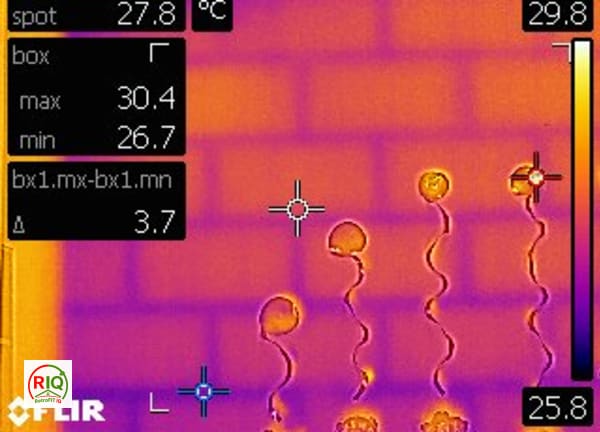
Thermal Bridging Visible Through Masonry Blockwork Wall

Thermal Bridge at Internal Corner Wall Junction

Thermal Bridge at Wall-Ceiling Junction Near Window

Wall / ceiling corner with vertical service pipe
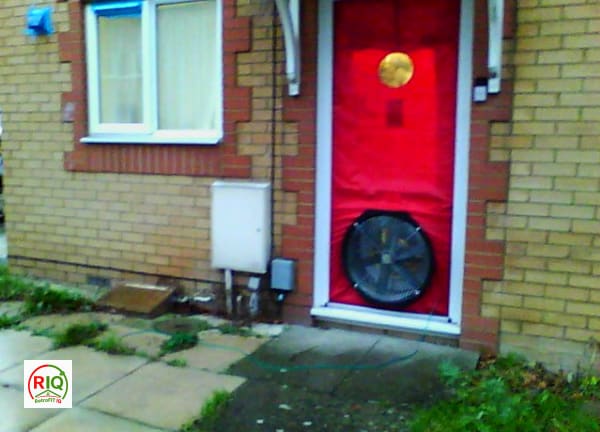
Blower Door Airtightness Test Setup
No related investigations yet.
Browse all investigationsFrequently asked questions
What is Passive House methodology?+
A physics-led way of working: model performance in PHPP, design out thermal bridges, detail the air barrier, specify ventilation and verify with testing — so performance is predicted and proven.
Isn't good building practice enough?+
Good building is necessary but not sufficient. Without modelling and verification, real performance is still assumed rather than known.
Why do conventional buildings underperform?+
Usually because thermal bridges go unmodelled and the air barrier is incidental, so the building leaks heat and air more than expected.
Do I need certification to use the methodology?+
No — its disciplines improve any project. Certification is optional; the modelling, detailing and verification deliver the performance.
What is PHPP?+
The Passive House Planning Package, a validated model that predicts a building's energy performance from its fabric, bridges, ventilation and climate.
How is performance verified?+
Primarily with a blower door test for airtightness, alongside the PHPP model and on-site quality checks at key junctions.
Can the methodology apply to retrofit?+
Yes — EnerPHit applies the same methodology to existing buildings, predicting and verifying performance for retrofits.
Is this more expensive than standard practice?+
There is design effort upfront, but it reduces the risk of underperformance and the cost of fixing it later, and improves comfort and running cost.
Who applies the methodology?+
A Certified Passive House Designer, who models, details and verifies so performance is engineered rather than hoped for.
Need professional advice?
A comparison like this helps you understand the theory, but every property behaves differently. The only reliable way to establish the real cause in your home — rather than guessing — is professional building performance diagnostics. At RetrofitIQ we verify buildings using the appropriate combination of investigations:
- Thermal imaging
- Blower door testing
- Moisture investigation
- Building physics assessment
- Passive House methodology