
Anti-mould Paint vs Solving the Moisture Source: Cover-up or Cure
Anti-mould paint vs Solving the moisture source.
 Reviewed by George Sora, Certified Passive House DesignerUpdated June 2026
Quick answer & key takeaways
5 min read- Bottom line: Anti-mould paint suppresses growth on a surface temporarily; solving the moisture source removes the reason mould grows at all.
- When Anti-mould paint is enough: The moisture source has already been solved
- When Solving the source is the better choice: Mould keeps coming back
- When you need both: Fix the source first, then apply a resistant finish for reassurance
- Biggest misconception: “Anti-mould paint cures mould.” — It suppresses growth on the surface temporarily. The cold, damp condition remains, so the mould returns once the biocide fades.
- Retrofit IQ’s approach: Anti-mould paint is the classic symptom treatment: it makes the wall look better for a while and changes nothing underneath.
Quick answer
Anti-mould paint suppresses growth on a surface temporarily; solving the moisture source removes the reason mould grows at all. The paint is a cosmetic, short-lived measure — once the biocide depletes or while the surface keeps getting damp, the mould returns. The lasting fix identifies and removes the moisture source, which in most homes means warming cold surfaces and improving ventilation. Paint can tidy up after the cause is fixed, never instead of it.
At a glance
| Attribute | Anti-mould paint | Solving the moisture source |
|---|---|---|
| What it does | Suppresses surface growth | Removes the cause of dampness |
| Addresses the cause | No | Yes |
| Longevity | Temporary — biocide depletes | Permanent |
| Surface stays damp? | Yes — still cold/humid | No — kept above dewpoint |
| Right use | Cosmetic finish after the fix | The actual solution |
What is Anti-mould paint?
A coating containing a fungicide (a biocide) that suppresses mould growth on the painted surface for a period. It treats the surface, not the conditions, and its effect fades as the biocide depletes or the surface stays damp.
What is Solving the moisture source?
Removing the cause of the dampness — usually condensation from cold surfaces and inadequate ventilation, sometimes a leak or penetrating damp — so the surface no longer stays wet enough for mould to grow.
What each method measures — and what it doesn’t
Anti-mould paint
- Suppresses fungal growth on the coated area
- Provides a temporary clean appearance
- The cold surface or poor ventilation behind the mould
- Any moisture source such as a leak or thermal bridge
Solving the source
- Raises surface temperature above dewpoint
- Reduces indoor humidity and improves ventilation
- Eliminates the conditions mould depends on
- Nothing critical — it is the cure
The building science
Mould needs a surface that stays cool and damp. Anti-mould paint adds a fungicide to that surface, which suppresses growth for a while, but it changes none of the underlying physics: the wall is still cold, the air is still humid, and the surface still reaches dewpoint. As the biocide depletes — and it always does — the mould returns to exactly the same place.
Solving the moisture source works on the conditions instead of the symptom. In most homes the source is condensation, so the remedy is to warm the cold surface with insulation, correct any thermal bridge that chills it, and improve ventilation to carry moisture away. Where the dampness comes from a leak or penetrating damp, the remedy is to find and repair that defect. Either way, the surface stops being persistently wet, and mould has nothing to grow on.
The distinction matters because anti-mould paint is so often sold and used as if it were a cure. It is not; it is a finish. Applied over an unsolved condensation problem, it buys a few months of clean wall before the mould comes back, and the homeowner repeats the cycle. The biocide also slowly washes and wears away, especially on a surface that keeps getting damp.
Used correctly, the paint has a place: once the moisture source has been solved and the surface stays dry, a mould-resistant coating can be a sensible final finish for added reassurance. The order is everything — fix the cause, then, if you wish, paint. Paint first and you have decorated over the problem.
Key differences
- Anti-mould paint treats the surface; solving the source treats the cause.
- The paint is temporary; the fix is permanent.
- The paint leaves the surface cold and damp; the fix keeps it warm and dry.
- Paint belongs after the cause is solved, not instead of it.
Common misconceptions
Myth: Anti-mould paint cures mould.
It suppresses growth on the surface temporarily. The cold, damp condition remains, so the mould returns once the biocide fades.
Myth: If the mould is painted over, the problem is solved.
The cause is hidden, not removed. The dampness continues behind the coating.
Myth: Special paint is cheaper than fixing the cause.
Repeated repainting and the unresolved cold, damp room cost more over time than addressing the source once.
Real-world situations
Mould keeps returning despite repainting
Stop repainting and diagnose the moisture source — almost always condensation; warm the surface and ventilate.
Mould in a bathroom or kitchen
Address ventilation and surface temperature at source; a mould-resistant finish afterwards adds resilience in a humid room.
Selling a house and want it presentable
Be aware that painting over mould is cosmetic; disclose and ideally fix the cause, as it will return for the new owner.
Cold external-wall corner with recurring mould
Insulate and correct the thermal bridge to keep the surface above dewpoint; paint only once it stays dry.
Which do you actually need?
When Anti-mould paint is enough
- The moisture source has already been solved
- You want a resilient finish in a humid room
- You need a tidy appearance after the real fix
When Solving the source is the better choice
- Mould keeps coming back
- The room is cold or poorly ventilated
- You want to stop the problem permanently
When you need both
- Fix the source first, then apply a resistant finish for reassurance
What Retrofit IQ checks on site
Anti-mould paint is the classic symptom treatment: it makes the wall look better for a while and changes nothing underneath. We investigate and remove the moisture source first — usually condensation from cold surfaces and poor ventilation — so the mould has no reason to return, with a resistant finish only as a final touch.
- Diagnosis of the moisture source — condensation, leak or penetrating damp
- Surface-temperature and humidity logging to confirm condensation risk
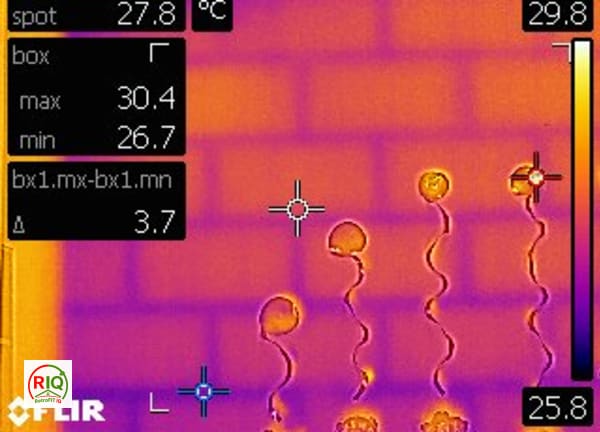
- Thermal imaging to locate cold surfaces and thermal bridges
- Ventilation assessment to check moisture removal
- A fabric-and-ventilation plan to keep the surface dry
- Advice on when a mould-resistant finish is appropriate — after the fix
What a Certified Passive House Designer recommends
Painting over mould is decorating over a building-physics problem. The fungicide suppresses growth until it depletes, the surface stays cold and damp throughout, and the mould comes back — so people repaint, and repaint again. It is effort and money spent on the symptom.
Solve the source instead: warm the surface, correct the bridge, ventilate. Once the wall stays dry, the mould cannot grow, and if you then want a mould-resistant finish for peace of mind in a wet room, fine. But the paint is the last step, never the first.
— George Sora, Certified Passive House Designer, Founder, RetrofitIQ
Reviewed using current building physics principles and Passive House methodology.
Related services
Related comparisons
Related investigations
Compare another way
Closely related comparisons our clients read next.
Dehumidifier vs Fixing the Building Fabric
A dehumidifier manages the symptom by drying the air; fixing the fabric removes the cause by stopping condensation forming.
Read comparisonCondensation vs Rising Damp
Condensation comes from warm, humid indoor air meeting cold surfaces; rising damp draws groundwater up through the wall.
Read comparisonMould vs Condensation
Mould is the symptom; condensation is usually the cause.
Read comparisonThermal Imaging vs a Damp Survey
Thermal imaging is one tool within a proper damp survey, not a replacement for it.
Read comparisonEvidence from Real Projects (12)
Real project and investigation images from our own fieldwork, matched to this page — not stock photography.

Sample Building Performance Investigation Report — Thermal Imaging
Thermal Bridging Visible Through Masonry Blockwork Wall

Thermal Bridge at Internal Corner Wall Junction

Thermal Bridge at Wall-Ceiling Junction Near Window

Airtightness Testing in a Stratford Victorian Terrace

Loft Thermal Investigation — Report Cover
No related investigations yet.
Browse all investigationsFrequently asked questions
Does anti-mould paint work?+
It suppresses mould on the painted surface for a period, but it does not address the cold, damp conditions causing the mould, so the growth returns once the biocide fades.
Why does mould return after I paint over it?+
Because the surface is still cold and damp. The paint treats the symptom; until the moisture source is solved, the mould keeps coming back.
What is the moisture source usually?+
In most homes it is condensation — humid indoor air on cold surfaces — sometimes a leak or penetrating damp. A survey identifies which.
Should I never use anti-mould paint?+
It has a place as a resistant finish after the moisture source is solved, particularly in humid rooms. The order matters: fix first, then paint.
Is painting over mould safe?+
Remove the visible mould safely first, but be aware painting over it without fixing the cause only hides the problem temporarily.
How do I solve the cause?+
Warm the cold surfaces with insulation, correct thermal bridges and improve ventilation, so the surface stays above dewpoint and dry.
Will better ventilation alone fix it?+
It helps by removing moisture, but cold surfaces usually need warming too. The two together are most effective.
Is this condensation or something else?+
Most recurring mould is condensation, but a survey checks for leaks and penetrating damp so the right source is addressed.
How long does anti-mould paint last?+
It varies, but the biocide depletes over time and faster on a surface that keeps getting damp, so it is inherently temporary.
Can you tell me which surfaces are at risk?+
Yes — thermal imaging and surface-temperature logging identify the cold surfaces where condensation and mould form.
Is fixing the cause expensive?+
It depends on the measures, but it is usually better value than repeated repainting and a permanently cold, damp room.
Who carries out the diagnosis?+
A Certified Passive House Designer, so the real moisture source is identified and removed rather than painted over.
Need professional advice?
A comparison like this helps you understand the theory, but every property behaves differently. The only reliable way to establish the real cause in your home — rather than guessing — is professional building performance diagnostics. At RetrofitIQ we verify buildings using the appropriate combination of investigations:
- Thermal imaging
- Blower door testing
- Moisture investigation
- Building physics assessment
- Passive House methodology