
Did insulating my walls cause damp or mould?
Wall insulation should make a home warmer and drier, and done correctly it does. But damp or mould appearing after insulating walls — especially internally, and especially on older solid-wall homes — is a recognised failure mode. It happens when the insulation traps vapour in the wall, leaves cold thermal bridges where moisture condenses, or reduces ventilation. The cause is in the detailing and the building physics, not the idea of insulation itself.
 Reviewed by George Sora, Certified Passive House DesignerUpdated June 2026
Quick answer & key takeaways
7 min read- Wall insulation can cause damp when vapour is trapped, bridges are left, or ventilation falls.
- Internal wall insulation makes the original wall colder and the dew point can move into the construction.
- Gaps and uninsulated junctions become cold spots where condensation and mould concentrate.
- A vapour-open, continuous, well-detailed build-up avoids these failures.
- Biggest misconception: insulation always dries a wall. Wrongly detailed, it can wet it.
- Retrofit IQ's approach: assess the wall and moisture risk before insulating, and verify after.
What this usually means
Insulating a wall changes its temperature profile. With internal wall insulation, the insulation keeps the room side warm but leaves the original masonry colder than before, because the heat that used to keep it warm is now held inside. If warm, moist indoor air can reach that now-colder masonry — through gaps, joints or a vapour-open finish without the right control — it can condense within or behind the insulation, a phenomenon called interstitial condensation. The wall gets wetter, not drier, and that moisture can feed mould and decay.
Thermal bridges are the second mechanism. It is rarely possible to insulate every part of a wall continuously: floor junctions, window reveals, party walls and structural penetrations often stay uninsulated. Once the main wall is warm, these untreated spots become the coldest surfaces in the room, so the room's moisture now condenses there and mould follows. The insulation did not create the moisture, but by warming everything else it concentrated condensation onto the bits that were missed.
The third mechanism is ventilation. Insulation work is often accompanied by sealing, new linings or new windows that tighten the home, reducing the accidental ventilation that kept humidity down. With more moisture staying indoors and some surfaces still cold, condensation and mould can appear even where the wall build-up itself is sound. This is why wall insulation has to be considered alongside moisture and ventilation, not as an isolated thermal measure.
Common causes
Vapour trapped in the wall
An internal build-up without correct vapour control lets moist air reach the cold masonry and condense inside the construction.
Uninsulated thermal bridges
Reveals, floor and party-wall junctions left cold become the new condensation points once the main wall is warm.
Gaps and discontinuities
Voids behind internal insulation let warm moist air circulate to the cold wall and condense out of sight.
Reduced ventilation
Sealing that accompanies insulation raises indoor humidity, so cold spots condense more readily.
Incompatible materials on old walls
Vapour-closed systems on breathable solid walls can trap moisture the wall used to release.
Signs and symptoms
Mould at reveals and junctions after insulating
Condensation concentrating at the spots the insulation could not reach is the classic thermal-bridge signature.
Damp patches behind the new lining
Moisture appearing behind or through internal insulation suggests vapour reaching the cold wall.
A musty smell from the wall
A musty odour can indicate hidden moisture accumulating within the construction.
Mould appearing only since the work
Mould that started after insulating points to the work changing surface temperatures or ventilation.
Cold corners despite warm walls
Walls that feel warm while corners stay cold reveal untreated bridges drawing condensation.
What most people check first
- Whether the mould or damp appeared after the insulation was installed.
- Whether it concentrates at reveals, corners and junctions (bridges) rather than mid-wall.
- Whether the build-up has proper vapour control and no hidden voids.
- Whether ventilation was reduced by sealing or linings at the same time.
What most people miss
- That internal insulation makes the original wall colder, raising interstitial condensation risk.
- That untreated reveals and junctions become the new condensation points.
- That vapour control and continuity matter as much as insulation thickness.
- That old breathable walls need vapour-open, compatible systems.
The building physics
Where dew point falls within a wall depends on the temperature gradient through it and the vapour pressure on each side. Internal wall insulation shifts the gradient so the original masonry sits closer to outdoor temperature; if indoor water vapour can diffuse or leak to that cold zone faster than it can dry outward, the dew point is reached inside the construction and condensation accumulates. Vapour-control layers, vapour-open build-ups and airtight detailing are the tools that keep moisture from reaching, or able to leave, the cold zone — which is why the build-up must be designed, not assembled by habit.
Thermal bridges are a geometry and continuity problem. Heat flows most easily through the least-insulated path, so an uninsulated reveal or floor junction stays cold while the insulated field warms up. Because condensation forms on the coldest surface available, warming the wall simply moves the condensation risk to those bridges. Modelling the junction temperatures, and insulating reveals and returns, raises their surface temperature above the dew point and removes the new mould sites the retrofit would otherwise create.
Ventilation closes the loop. Insulation and its associated sealing usually lower the air-change rate, so a given amount of moisture produces a higher indoor humidity and a higher dew point. With surfaces warmer overall, that may be tolerable — but only if any remaining cold spots are above the new dew point and ventilation removes the moisture. Assessing the wall, the junctions and the ventilation together, before and after the work, is what separates an insulation job that dries a home from one that quietly wets it.
How to insulate walls without causing damp
Design the build-up for moisture as well as heat, treat the junctions, and keep the home ventilated. Where damp has already appeared, find which mechanism caused it before correcting.
- 01
Diagnose the mechanism
Use thermal imaging and moisture readings to tell interstitial condensation, thermal bridges and ventilation loss apart.
- 02
Get the vapour control right
Ensure the build-up either controls vapour reaching the cold wall or is vapour-open enough to dry, matched to the wall's construction.
- 03
Insulate the junctions and reveals
Carry insulation around reveals and returns and treat floor and party-wall junctions so no cold bridge is left.
- 04
Close hidden voids
Eliminate gaps behind internal insulation so warm moist air cannot reach and condense on the cold wall.
- 05
Provide ventilation
Add controlled ventilation so the moisture the tighter home retains is removed rather than condensed.
- 06
Verify it stays dry
Re-check surface temperatures, humidity and the wall through cold weather to confirm the fix holds.
How to prevent it coming back
- Have the wall build-up designed for moisture, not just thickness.
- Insulate reveals and junctions to remove thermal bridges.
- Use vapour-open, compatible systems on breathable solid walls.
- Plan ventilation as part of any wall-insulation project.
How Retrofit IQ investigates this
We establish whether insulation has trapped vapour, left bridges or cut ventilation before recommending a correction.
Do not spend money fixing symptoms before you understand the cause — investigate first, then build with confidence.
Do I need a professional investigation?
If damp or mould has appeared since walls were insulated, or before insulating a solid-wall home, it is worth assessing the build-up, the junctions and the ventilation — so the work dries the home rather than trapping moisture in the wall.
Where to go next
Relevant services
Related comparisons
From the Academy
- Internal Wall Insulation — how to upgrade a solid wall without causing hidden mould.
- Interstitial condensation explained — the damp you can't see.
- Vapour diffusion and permeability — μ-values, sd-values and 'breathability'.
- Moisture transport mechanisms — the five ways water moves through buildings.
Evidence from Real Projects (30)
Real project and investigation images from our own fieldwork, matched to this page — not stock photography.
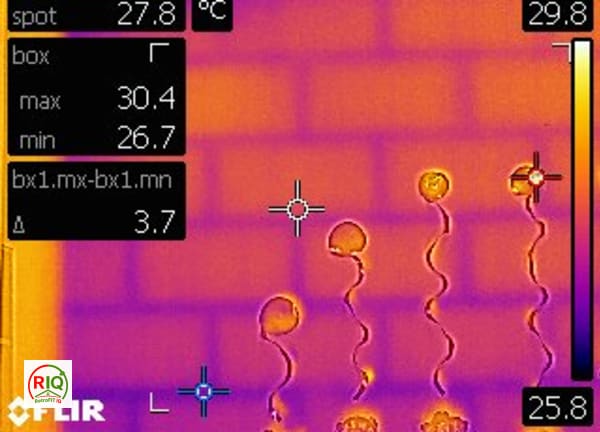
Thermal Bridging Visible Through Masonry Blockwork Wall

Sample Building Performance Investigation Report — Thermal Imaging

Thermal Bridge at Internal Corner Wall Junction
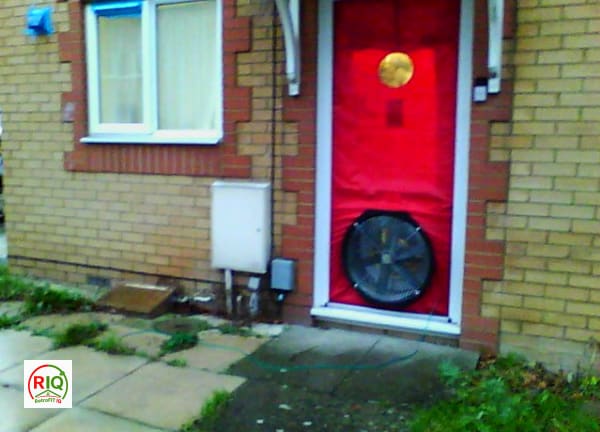
Blower Door Airtightness Test Setup

Thermal Bridge at Wall-Ceiling Junction Near Window

Acoustic Floor Upgrades: Mineral Wool Insulation Between Joists
No related investigations yet.
Browse all investigationsFrequently asked questions
Did insulating my walls cause damp or mould?+
It can, when the build-up traps vapour in the now-colder wall, when reveals and junctions are left as cold bridges, or when accompanying sealing reduces ventilation. The cause is the detailing and physics, not insulation itself.
Why is there mould at my window reveals after insulating?+
Once the main wall is warm, the uninsulated reveal becomes the coldest surface, so the room's moisture condenses there. Insulating the reveals raises their temperature above the dew point.
Can internal wall insulation make a wall wetter?+
Yes. It keeps the original masonry colder, so if indoor vapour reaches it without proper control, condensation forms inside the construction. A correctly designed, vapour-managed build-up prevents this.
Does external wall insulation avoid these problems?+
It generally keeps the masonry warm and dry and reduces bridges, but it still needs careful junction detailing and a ventilation strategy. It is not automatically risk-free.
Are old solid-wall homes more at risk?+
Yes. Breathable solid walls release moisture, so a vapour-closed insulation system can trap what the wall used to lose. Compatible, vapour-open systems are usually needed.
How do I stop mould that appeared after insulating?+
Diagnose whether it is interstitial condensation, a thermal bridge or lost ventilation, then correct the specific cause — vapour control, insulating junctions, or adding ventilation.
How do you check if insulation caused my damp?+
We use thermal imaging to find cold bridges, moisture readings to see where water is reaching, review the build-up's vapour behaviour and assess ventilation, then specify a moisture-safe correction.
Stop guessing — find the real cause
Do not spend money fixing symptoms before you understand the cause. Every home behaves differently, and the only reliable way to know what is happening in yours is professional building performance diagnostics. At RetrofitIQ we verify buildings using the right combination of investigations:
- Thermal imaging
- Blower door testing
- Moisture & dew point readings
- Ventilation review
- Building physics assessment
- Passive House methodology