
Why do quick fixes like anti-mould paint keep failing?
Anti-mould paint, plug-in dehumidifiers, a bigger boiler, mould sprays, sealant around a window — these are the quick fixes homes reach for, and they share a common fate: they keep failing because they treat the symptom while the cause carries on. A cold, humid surface that grows mould will keep growing it under the paint; a home that loses heat faster than it is made will stay cold with any boiler. The fix that lasts is the one aimed at the underlying building physics, not the visible symptom.
 Reviewed by George Sora, Certified Passive House DesignerUpdated June 2026
Quick answer & key takeaways
7 min read- Quick fixes treat symptoms; the underlying cause keeps the problem coming back.
- Anti-mould paint does not warm a cold surface or remove the moisture feeding the mould.
- Dehumidifiers mask high humidity rather than fixing the ventilation or fabric behind it.
- A bigger boiler cannot cure a home that loses heat faster than it can supply it.
- Biggest misconception: the cheapest visible fix is the efficient one. Repeated failure costs more.
- Retrofit IQ's approach: diagnose the cause so a single, lasting fix replaces endless quick ones.
What this usually means
Most home comfort problems are symptoms of how the building handles heat, air and moisture. Mould grows where a surface stays cold and humid; condensation forms where moist air meets a cold surface; a room stays cold because it loses heat faster than the heating replaces it. Quick fixes target the visible symptom — the black spots, the wet glass, the cool room — without changing the cold surface, the humidity or the heat loss that produces them, so the symptom inevitably returns.
Anti-mould paint is the clearest example. It contains a biocide that resists mould on its own surface for a while, but it does nothing to warm the cold wall or reduce the humidity that made the wall mouldy. The conditions for mould are unchanged, so as the biocide depletes the mould comes back, often through the new paint. The same logic applies to mould sprays, which remove what is there but not the reason it grew. Dehumidifiers help while running but address the high humidity only, not the ventilation shortfall or cold fabric behind it, so the problem persists whenever they are off.
Heating quick fixes fail the same way. A bigger boiler or hotter radiators raise the heat supplied, but if the home loses heat rapidly through uninsulated fabric and air leakage, it stays cold or expensive regardless. The boiler was never the limiting factor — the fabric was. In every case the quick fix is cheaper in the moment but more expensive over time, because it is paid for repeatedly while the real cause continues. Diagnosing that cause once allows a single, durable fix.
Common causes
Treating the symptom, not the cause
Paint, sprays and sealant address the visible result while the cold surface, moisture or heat loss continues.
Cold surfaces left cold
Anti-mould paint and cleaning do not warm a wall, so condensation and mould conditions remain.
Humidity not actually removed
Dehumidifiers and sprays do not fix the ventilation shortfall or moisture source feeding the damp.
Heat loss left unaddressed
A bigger boiler cannot overcome a fabric that loses heat faster than the system can supply it.
No diagnosis of the real driver
Without measuring the cause, each fix is a guess that targets the wrong thing.
Signs and symptoms
Mould returning through fresh paint
Mould reappearing on or through anti-mould paint shows the conditions that grow it are unchanged.
Damp that returns when the dehumidifier is off
Damp coming back without the machine running confirms the cause was only being masked.
Still cold after a new, bigger boiler
A home no warmer with more heating output points to heat loss the boiler cannot overcome.
Repeated cleaning of the same spots
Having to re-treat the same mould or condensation shows the underlying cause persists.
Sealant that does not stop the damp
Sealing a window that is not leaking does nothing for condensation on a cold reveal.
What most people check first
- Whether the same problem keeps returning despite repeated quick fixes.
- Whether the surface is cold (a fabric issue) or the room humid (a ventilation issue).
- Whether the home loses heat faster than it is heated (a fabric, not boiler, issue).
- Whether the cause has ever actually been measured.
What most people miss
- That comfort problems are symptoms of heat, air and moisture behaviour.
- That a biocide paint does not change the cold, humid conditions that grow mould.
- That a dehumidifier masks rather than removes the cause of high humidity.
- That repeated quick fixes cost more than one diagnosed, lasting fix.
The building physics
Mould requires a surface that is damp for long enough, which in homes means a surface whose temperature lets the surrounding humid air condense or stay near saturation against it. Two levers control that: the surface temperature, set by insulation and heat, and the local humidity, set by moisture generation and ventilation. Anti-mould paint changes neither lever; it only adds a temporary chemical hostility to the surface itself. Once that depletes, the unchanged temperature and humidity allow mould to recolonise — which is why it returns through the paint.
Dehumidifiers act on the humidity lever, but only locally and only while running, and they treat the consequence rather than the cause — a ventilation shortfall or a moisture source that continues to load the air. They can be a useful crutch, but the durable answer is to remove the moisture at source with ventilation and to warm the cold surfaces, so the dew point no longer meets them. Sealant and sprays do not touch either lever and so cannot solve condensation or recurring mould at all.
Heating problems obey conservation of energy: a room's temperature settles where heat input equals heat loss. Increasing input with a bigger boiler raises that balance point only modestly if losses are large, and at high running cost; reducing losses with insulation and airtightness lowers the heat needed and raises comfort at lower cost. The boiler is rarely the binding constraint in a cold home — the fabric is. Diagnosing which lever actually limits comfort, and acting on it, is what replaces a string of failing quick fixes with one effective measure.
How to replace failing quick fixes with a lasting one
Find the cause behind the symptom, then act on the right lever — surface temperature, humidity or heat loss — so the problem is solved once.
- 01
Diagnose the real cause
Measure surface temperatures, humidity, ventilation and heat loss to see which lever is driving the symptom.
- 02
Warm the cold surfaces
Where mould and condensation are the issue, insulate the cold spots so surfaces stay above the dew point.
- 03
Remove moisture at source
Provide ventilation and reduce moisture generation so humidity drops, rather than masking it with a dehumidifier.
- 04
Reduce heat loss, not just add heat
Where rooms stay cold, address insulation and air leakage instead of a bigger boiler.
- 05
Treat the symptom only after the cause
Clean off mould or redecorate once the conditions are corrected, so it does not simply return.
- 06
Verify it stays solved
Re-measure to confirm the problem does not come back through cold weather and normal use.
How to prevent it coming back
- Treat recurring problems as symptoms and diagnose the cause first.
- Warm cold surfaces and ventilate rather than relying on paint and machines.
- Address heat loss before upsizing heating.
- Spend once on the cause rather than repeatedly on the symptom.
How Retrofit IQ investigates this
We measure which underlying driver is producing the symptom so the lasting fix targets the cause.
Do not spend money fixing symptoms before you understand the cause — investigate first, then build with confidence.
Do I need a professional investigation?
If mould, condensation or a cold room keeps coming back despite quick fixes, it is worth measuring the cause — surface temperature, humidity, ventilation or heat loss — so a single, lasting fix replaces the repeated cost and frustration of treating the symptom.
Where to go next
Relevant services
Related comparisons
From the Academy
Evidence from Real Projects (14)
Real project and investigation images from our own fieldwork, matched to this page — not stock photography.
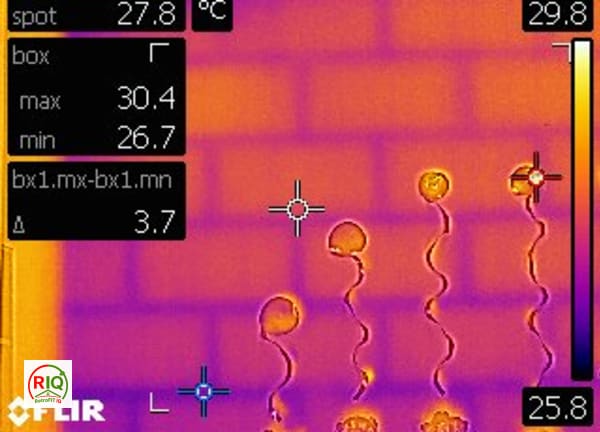
Thermal Bridging Visible Through Masonry Blockwork Wall

Sample Building Performance Investigation Report — Thermal Imaging

Thermal Bridge at Internal Corner Wall Junction

Thermal Bridge at Wall-Ceiling Junction Near Window
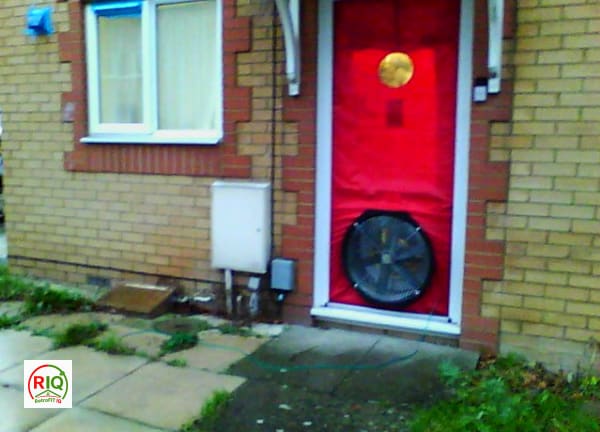
Blower Door Airtightness Test Setup

Airtightness Testing in a Stratford Victorian Terrace
No related investigations yet.
Browse all investigationsFrequently asked questions
Why does anti-mould paint keep failing?+
Because it does not change the conditions that grow mould. The wall stays cold and the air stays humid, so once the paint's biocide depletes the mould returns — often straight through the new paint.
Why doesn't my dehumidifier fix the damp?+
A dehumidifier lowers humidity only while it runs and treats the consequence, not the cause. The ventilation shortfall or moisture source continues, so the damp returns whenever the machine is off.
I bought a bigger boiler and the house is still cold — why?+
Because the limiting factor was heat loss, not heating output. If the fabric loses heat faster than the system supplies it, a bigger boiler just costs more to run while the rooms stay cold.
Are quick fixes ever worth it?+
They can give short-term relief, but because they treat the symptom they have to be repeated, which usually costs more over time than diagnosing and fixing the cause once.
What should I do instead of painting over mould?+
Diagnose why the surface is cold and humid, then warm the surface with insulation and remove the moisture with ventilation. Redecorate only once the conditions are corrected.
Why does sealant not stop my window damp?+
If the damp is condensation on a cold reveal rather than a leak, sealant addresses a problem you do not have. The reveal needs warming and the room needs ventilating.
How do you find the real cause?+
We measure surface temperatures, humidity, ventilation and heat loss to identify which lever is driving the symptom, then recommend the single, lasting measure that replaces the failing quick fixes.
Stop guessing — find the real cause
Do not spend money fixing symptoms before you understand the cause. Every home behaves differently, and the only reliable way to know what is happening in yours is professional building performance diagnostics. At RetrofitIQ we verify buildings using the right combination of investigations:
- Thermal imaging
- Blower door testing
- Moisture & dew point readings
- Ventilation review
- Building physics assessment
- Passive House methodology