
Why does mould keep coming back?
Mould keeps coming back because cleaning and painting over it treats the symptom, not the cause. Mould grows wherever a surface stays cool and humid for long enough — so until those conditions change, it returns.
 Reviewed by George Sora, Certified Passive House DesignerUpdated June 2026
Quick answer & key takeaways
5 min read- Mould returns because the conditions that grow it — cold, damp surfaces — haven't changed.
- It's almost always a condensation problem: humid air meeting surfaces below the dew point.
- Cleaning, bleach and anti-mould paint remove the growth but not the cause.
- The durable fix warms cold surfaces and controls moisture through ventilation.
- Biggest misconception: mould is a hygiene problem solved by cleaning. It's a building-physics problem.
- Retrofit IQ's approach: find the cold surfaces and moisture source with thermal imaging, RH and dew-point analysis.
What this usually means
Mould is a living organism that needs moisture, a surface to grow on and moderate warmth. In homes, the moisture comes from humid indoor air condensing on surfaces that sit below the dew point — cold corners, uninsulated walls, window reveals and the wall behind furniture. Wherever those conditions persist, mould colonises, and if you only clean it off, it grows straight back because nothing has changed.
So recurring mould is a reliable signal of a cold-surface-and-moisture problem. The lasting solution is to remove the conditions: raise the surface temperatures so they stay above the dew point, and remove the moisture through controlled ventilation. Then the mould has nothing to grow on.
Common causes
Condensation on cold surfaces
Humid air condensing on cold walls, corners and reveals keeps them damp enough for mould — by far the most common cause.
Thermal bridges
Junctions, lintels and corners run colder than the surrounding wall, so they condense first and grow mould repeatedly.
Inadequate ventilation
Without continuous extract or background ventilation, indoor humidity stays high and feeds the growth.
High moisture production
Indoor drying, unvented cooking and occupancy raise humidity, tipping cold surfaces into condensation.
Surface treatments only
Bleach and anti-mould paint kill visible growth but leave the cold, damp conditions intact, so it returns.
Signs and symptoms
Mould returns within weeks of cleaning
It regrows on the same spots because the cold, damp conditions have not changed.
Black spotting in cold spots
Corners, reveals and walls behind furniture grow mould first, marking the coldest surfaces.
Worse in winter and poorly ventilated rooms
Colder surfaces and trapped moisture combine to feed the growth.
Musty smell and damp-feeling cold walls
The surfaces stay cool and humid enough to support mould even without visible water.
What most people check first
- Where the mould forms — corners, behind furniture, around windows (suggests condensation).
- Whether it's worse in winter and in poorly ventilated rooms.
- Ventilation provision and use.
- Moisture sources like indoor laundry drying.
What most people miss
- That cleaning and painting treat the symptom, not the cause, so mould returns.
- That cold surfaces (insulation, thermal bridges) are usually the real driver.
- That ventilation must remove the moisture, not just mask the smell.
- That a damp meter reading alone doesn't explain why the surface is wet.
The building physics
Mould germination depends on the relative humidity at the surface, not just in the room. Where a surface is cold, the air immediately against it is cooled and its relative humidity rises — and once it stays above roughly 80% for long enough, mould can grow even without visible liquid water. That's why cold corners and bridges grow mould before condensation is obvious.
The drivers are therefore surface temperature and indoor humidity. Cold surfaces (uninsulated walls, thermal bridges, areas behind furniture with no air movement) and high humidity (poor ventilation, indoor moisture production) combine to keep the surface relative humidity high. Cleaning resets the symptom but leaves both drivers in place.
The durable remedy works on the physics: raise surface temperatures with insulation and by treating thermal bridges, and lower humidity with controlled ventilation. Lift the surface above the conditions mould needs and it cannot re-establish — which is why investigation-led fabric and ventilation work succeeds where repeated cleaning fails.
How to fix it — the right way
Mould stops returning only when the conditions that grow it change — warmer surfaces and lower humidity, not repeated cleaning.
- 01
Find the cold surfaces and moisture source
Thermal imaging plus surface humidity and dew-point readings show why the spot supports growth.
- 02
Warm the cold surfaces
Insulate the wall and treat thermal bridges so the surface stays above the conditions mould needs.
- 03
Ventilate to remove moisture
Continuous extract or balanced ventilation keeps indoor humidity below the level that feeds growth.
- 04
Reduce moisture production
Vent cooking and showering, and avoid drying laundry indoors without ventilation.
- 05
Remove existing growth properly
Clean the visible mould, but only after the cold-and-damp conditions are being addressed so it cannot re-establish.
How to prevent it coming back
- Keep ventilation running to hold humidity down.
- Maintain warmer surfaces through continuous insulation.
- Leave gaps behind furniture on external walls.
- Avoid drying laundry indoors without extraction.
How Retrofit IQ investigates this
We treat recurring mould as a building-physics problem and find the cold-surface and moisture conditions behind it, rather than just removing the growth.
Do not spend money fixing symptoms before you understand the cause — investigate first, then build with confidence.
Do I need a professional investigation?
If mould keeps returning however often you clean it, thermal imaging, surface humidity and dew-point analysis will locate the cold surfaces and moisture conditions behind it — so the fix targets the real cause.
It is worth investigating before paying for any 'damp' treatment, as recurring mould is almost always condensation, not rising or penetrating damp.
Where to go next
Relevant services
Related comparisons
From the Academy
Related case studies
Evidence from Real Projects (11)
Real project and investigation images from our own fieldwork, matched to this page — not stock photography.
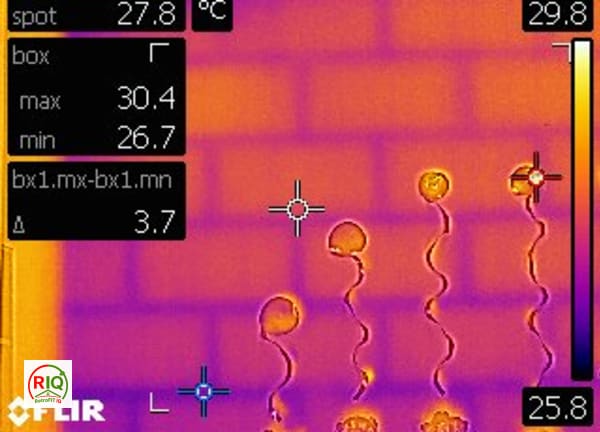
Thermal Bridging Visible Through Masonry Blockwork Wall

Sample Building Performance Investigation Report — Thermal Imaging

Thermal Bridge at Internal Corner Wall Junction

Thermal Bridge at Wall-Ceiling Junction Near Window

Airtightness Testing in a Stratford Victorian Terrace

Bathroom external wall
No related investigations yet.
Browse all investigationsFrequently asked questions
Why does mould keep coming back after I clean it?+
Because cleaning removes the growth but not the cold, damp conditions that grow it. Until the surface is warmer and drier, mould returns.
Does anti-mould paint work?+
It suppresses growth on the surface for a while, but it doesn't change the cold-surface-and-moisture conditions, so the mould eventually returns.
Is mould a sign of damp?+
Usually condensation rather than rising or penetrating damp. It marks where humid air meets cold surfaces below the dew point.
How do I stop mould permanently?+
Warm the cold surfaces (insulation, treating thermal bridges) and control the moisture with ventilation, so the conditions mould needs no longer exist.
Why does mould grow in the corners?+
Corners are thermal bridges that run colder, so the surface humidity stays high there and mould forms first.
Is a dehumidifier the answer?+
It can help temporarily, but the lasting fix addresses cold surfaces and ventilation rather than running an appliance indefinitely.
How do you find the cause?+
We map cold surfaces with thermal imaging, measure surface humidity and dew point, and assess ventilation — so the fix targets the real conditions.
Stop guessing — find the real cause
Do not spend money fixing symptoms before you understand the cause. Every home behaves differently, and the only reliable way to know what is happening in yours is professional building performance diagnostics. At RetrofitIQ we verify buildings using the right combination of investigations:
- Thermal imaging
- Blower door testing
- Moisture & dew point readings
- Ventilation review
- Building physics assessment
- Passive House methodology